The Art of Massage Therapy Types: From Sports to Swedish, Choosing the Right Technique
You’re not just unwinding when you choose a massage-you’re targeting recovery. Swedish eases first-timers with gliding strokes and light kneading, while deep tissue tackles chronic tightness with focused pressure. Athletes rely on sports massage to speed recovery and prevent injury, and hot stone therapy uses penetrating heat to melt stubborn stiffness. Each type offers distinct benefits, so your ideal match depends on your body’s needs and activity level-your next move could reshape your recovery routine.
Notable Insights
- Swedish massage uses gentle strokes and aromatherapy to promote relaxation and improve circulation for first-time recipients.
- Deep tissue massage applies firm pressure to release chronic muscle tension and correct long-standing postural imbalances.
- Sports massage targets athlete-specific muscle groups to enhance recovery, prevent injury, and optimize performance around training schedules.
- Hot stone massage delivers deep heat with basalt stones to relax tight muscles and improve circulation where other methods fall short.
- Choosing the right technique depends on individual needs such as pain level, activity level, and desired relaxation or recovery outcomes.
How Massage Therapy Works
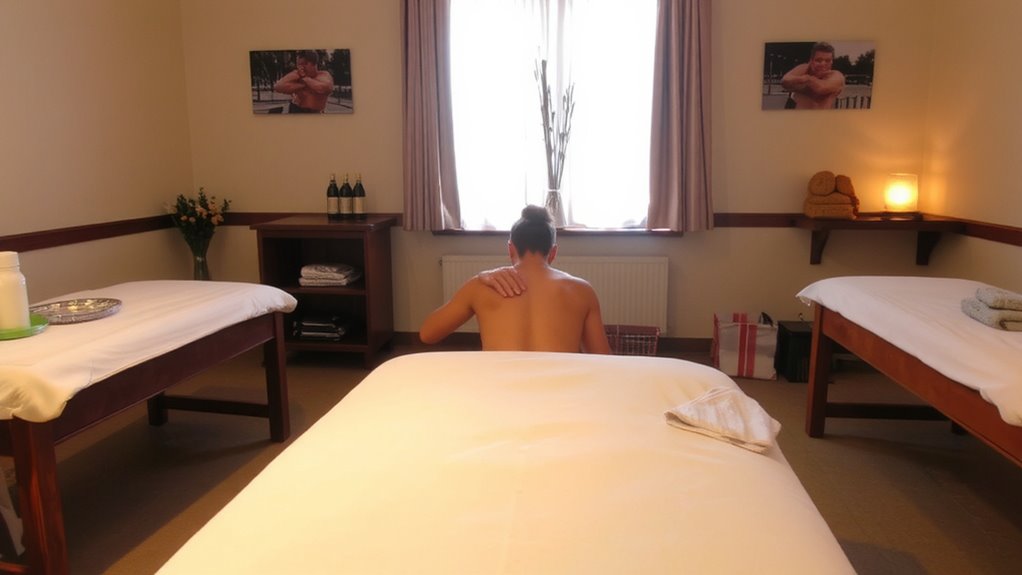
Think of your muscles as elastic bands-overstretched and knotted from daily tension, they lose their natural spring. When you receive massage therapy, skilled pressure and deliberate strokes work to unknot these bands, restoring flexibility and circulation. This isn’t just soothing-it triggers real physiological effects. Blood flow increases, delivering oxygen and flushing metabolic waste like lactic acid. At the same time, massage calms your nervous system, shifting it from fight-or-flight to rest-and-digest mode. That’s why recovery feels quicker and sleep often improves. For fitness recovery, this means reduced soreness and better muscle function between workouts. Unlike passive recovery or basic foam rolling, massage actively enhances tissue quality. While fitness gear supports performance, it doesn’t replicate this deep internal reset. The hands-on precision of massage addresses both muscular strain and nervous system stress, making it a uniquely effective recovery tool-not just for comfort, but for measurable gains in function and resilience.
Swedish Massage: Gentle Relaxation for First-Timers
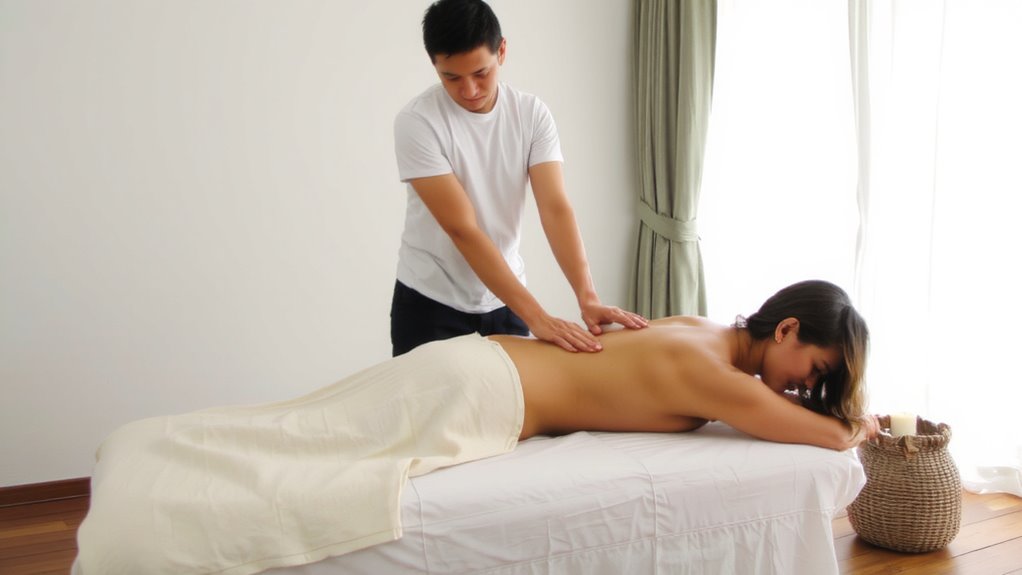
You’ve likely felt how massage therapy eases both muscle stiffness and mental tension, acting as a reset button for your body’s recovery systems. Swedish massage offers gentle, flowing techniques perfect for first-timers seeking relaxation and improved circulation. Long, gliding strokes combined with light kneading help loosen superficial muscle layers without discomfort. Many therapists enhance the experience with aromatherapy benefits, using lavender or eucalyptus oils to deepen calm. Observing basic massage etiquette-like communicating preferences and showering beforehand-ensures a respectful session. Unlike intense options, this modality focuses on recovery, not deep correction. For those looking to extend the benefits of relaxation at home, incorporating a massage gun can help maintain muscle suppleness between sessions.
| Feature | Benefit for First-Timers |
|---|---|
| Light pressure | Minimizes soreness post-session |
| Aromatherapy use | Enhances mental relaxation |
| Slow rhythm | Supports nervous system regulation |
| Clear etiquette | Builds comfort and session predictability |
Deep Tissue Massage: For Chronic Pain and Tight Muscles
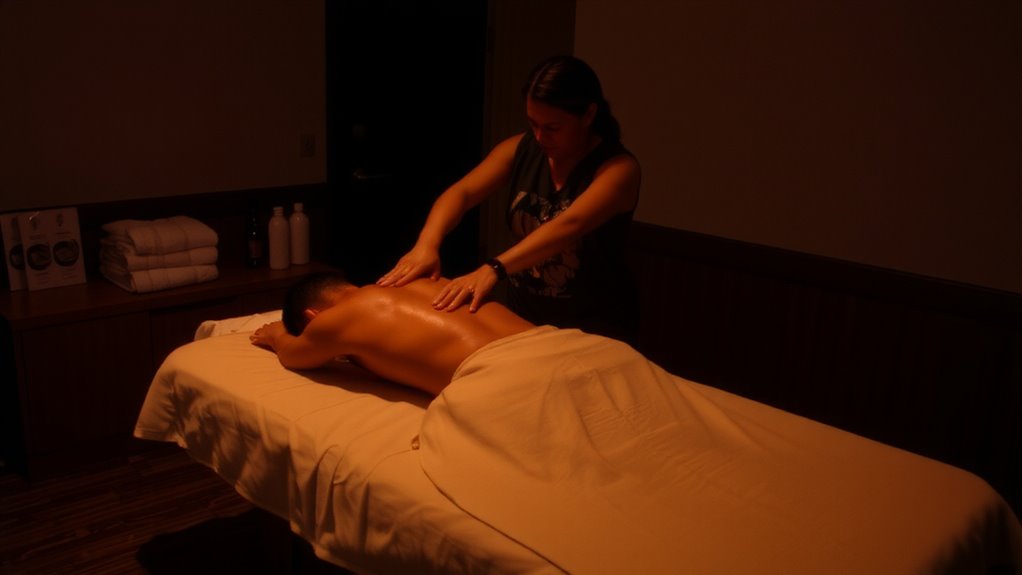
Deep-tissue massage targets the inner layers of muscles and connective tissue, making it a go-to choice for those dealing with chronic tension or recurring pain. You’ll benefit most if you’re struggling with tight knots or long-standing stiffness that lighter techniques haven’t resolved. Therapists use slow, firm strokes and deep finger pressure to break up adhesions, applying methods like myofascial release to loosen restricted fascia and improve mobility. Trigger point therapy is often incorporated, focusing on hyperirritable spots that refer pain elsewhere. While not as gentle as Swedish massage, it’s highly effective for correcting postural imbalances and relieving discomfort rooted in the deeper tissues. You might feel sore afterward, but that’s normal and usually fades in a day or two. It’s not meant for relaxation, but rather for targeted correction. If you’re dealing with persistent muscle tightness or injury patterns, deep-tissue work offers measurable relief and supports better long-term function. A growing number of people are turning to best deep tissue massagers for at-home relief between professional sessions.
Sports Massage: For Athletes and Active Recovery
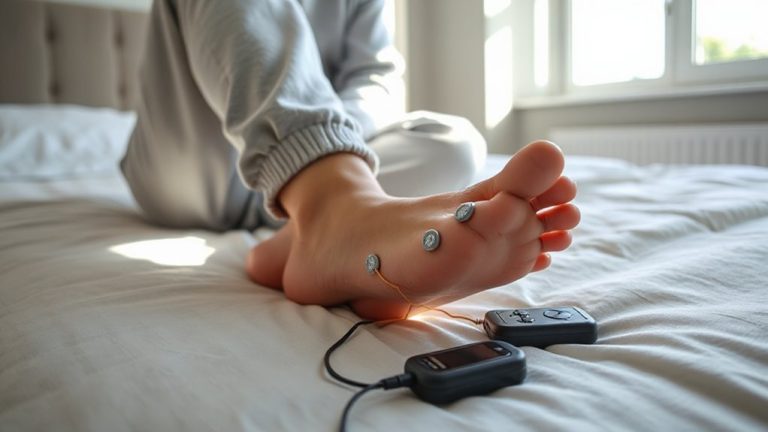
What if recovery could be as strategic as training? With sports massage, it is. Designed specifically for athletes and active individuals, this technique targets muscle groups used most in your sport, boosting circulation and speeding recovery. You’ll notice improved flexibility and reduced soreness after intense workouts, making it a smart addition to any fitness routine. More than just relaxation, it supports injury prevention by releasing tight tissues and correcting imbalances before they become problems. Coaches and trainers often recommend it as part of a thorough plan for performance enhancement. Unlike general treatments, sports massage uses deep, focused strokes, stretching, and compression timed around your training schedule. Whether you’re preparing for an event or recovering from one, this method adapts to your body’s needs, helping you train harder and recover faster-all vital in achieving athletic goals. For even greater recovery support, integrating a best muscle stimulator can enhance muscle activation and reduce downtime between workouts.
Hot Stone Massage: Deep Heat for Muscle Relaxation
Smooth, heated basalt stones rest along your back, radiating warmth deep into tight muscles-an experience distinct from the targeted pressure of sports massage but equally valuable in recovery. This form of thermal therapy uses carefully controlled heat to loosen stiff tissues, making it ideal for chronic tension or post-workout stiffness. You’ll feel the therapist integrate stone placement strategically along energy points and muscle groups, allowing heat to penetrate deeper than manual pressure alone. The stones, typically retained between 120–130°F, enhance circulation and promote muscle relaxation. Unlike fitness recovery tools that rely on mechanical action, hot stone massage delivers passive, consistent warmth with minimal effort on your part. It’s particularly effective when muscle tightness resists stretching or foam rolling. While it doesn’t replace active recovery methods, its ability to ease neuromuscular tension supports long-term flexibility and comfort. Stone placement precision determines treatment effectiveness-improper positioning reduces heat transfer and therapeutic benefit.
Choosing the Right Massage for Your Needs
How do you know which massage technique will truly address your recovery goals? It depends on your physical needs, lifestyle, and desired outcomes. If you’re dealing with muscle tightness from intense fitness routines, deep tissue or sports massage offers targeted relief. For stress reduction and relaxation, you’ll benefit from Swedish massage, especially when enhanced with aromatherapy benefits-essential oils like lavender or eucalyptus can improve mood and ease mental fatigue. Short on time? Consider chair massage convenience; it’s ideal for quick sessions at work or events, focusing on shoulders, neck, and back. Aromatherapy benefits extend beyond scent-some oils have anti-inflammatory properties that complement muscle recovery. While chair massage convenience sacrifices full-body attention, it’s efficient for posture-related tension. Always match the technique to your recovery plan: chronic pain needs deeper work, while maintenance and prevention thrive on regular, shorter care.
On a final note
You’ve seen how massage therapy aids fitness recovery, from Swedish’s gentle flow to deep tissue’s targeted pressure. Each technique offers distinct benefits, whether you’re an athlete needing sports massage or someone seeking stress relief. When paired with quality fitness gear-like foam rollers or recovery boots-these therapies enhance circulation and muscle repair. Choosing the right massage depends on your body’s needs, activity level, and goals. It’s not just indulgence; it’s strategic recovery.