Contrast Therapy 101: Alternating Hot and Cold for Rapid Recovery From Exercise Stress
You’ll boost recovery by alternating hot and cold exposure, using heat to expand blood vessels and cold to trigger constriction-this pump effect flushes metabolic waste and delivers oxygen-rich blood more efficiently than rest. It reduces soreness and inflammation, especially post-workout. Start with brief, controlled sessions to condition your system safely. For best results, time the cycles right and maintain proper hydration. Smart use of contrast therapy enhances resilience, and there’s more to optimizing your routine just ahead.
Notable Insights
- Contrast therapy alternates hot and cold exposure to boost circulation and speed recovery after exercise.
- Heat dilates blood vessels, increasing oxygen flow to muscles, while cold reduces swelling and soreness.
- The push-pull effect helps flush metabolic waste and deliver nutrients more effectively than rest alone.
- Beginners should start with 3–4 cycles of 3 minutes warm and 30–60 seconds cold post-workout.
- Limit sessions to 3 times weekly, avoid extreme durations, and stay hydrated for safe, effective results.
What Is Contrast Therapy and How Does It Work?
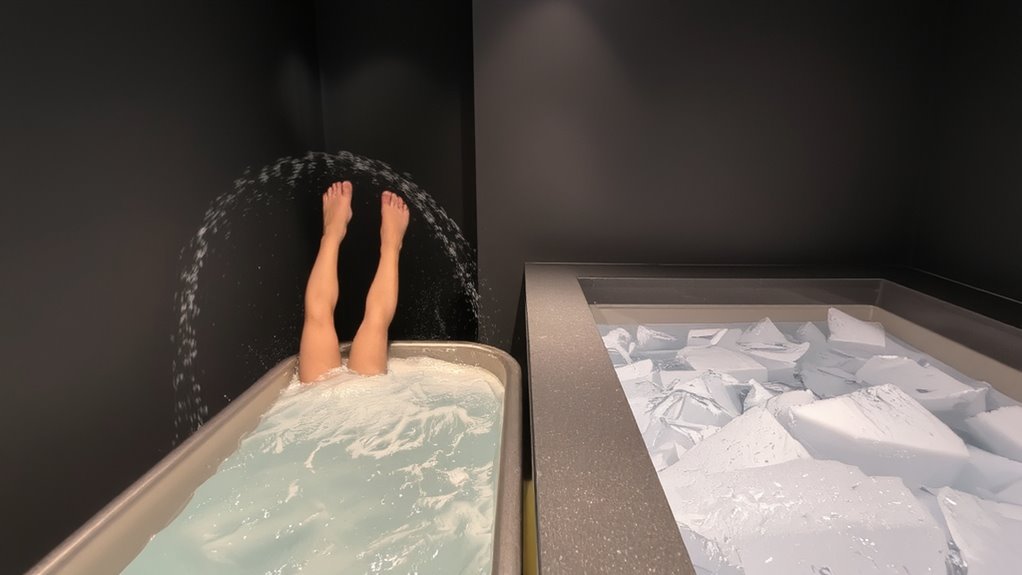
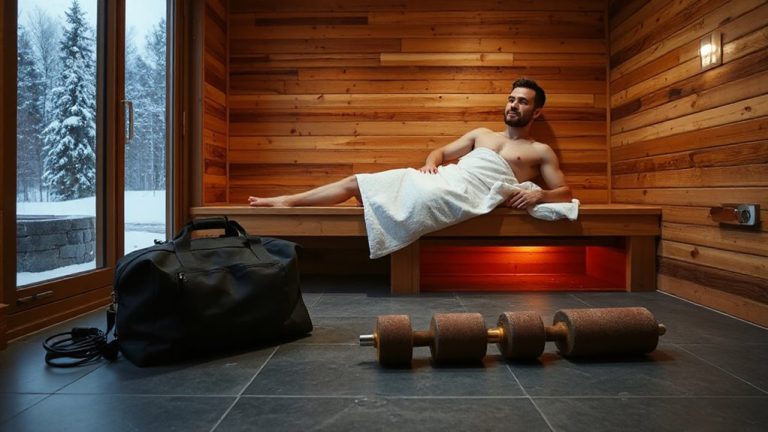
While you might already use ice baths or saunas separately, combining them in contrast therapy-alternating between cold and heat exposure-can enhance recovery by leveraging the body’s physiological responses to temperature shifts. You trigger distinct vascular responses: heat causes vasodilation, increasing blood flow, while cold induces vasoconstriction, reducing circulation temporarily. This push-pull effect is believed to flush metabolic waste and deliver oxygen-rich blood more efficiently. These physiological mechanisms may accelerate tissue repair and reduce soreness over time. Though research isn’t definitive, many athletes report quicker readiness for subsequent training sessions. Practical setups-like pairing a portable sauna with a cold tub-offer flexibility, though consistent temperature control and hygiene are essential. While not all recovery gear delivers equal results, contrast systems with accurate thermostats and durable insulation tend to perform best. It’s a method grounded in science, but your results depend heavily on correct application.
How Heat and Cold Boost Post-Workout Recovery
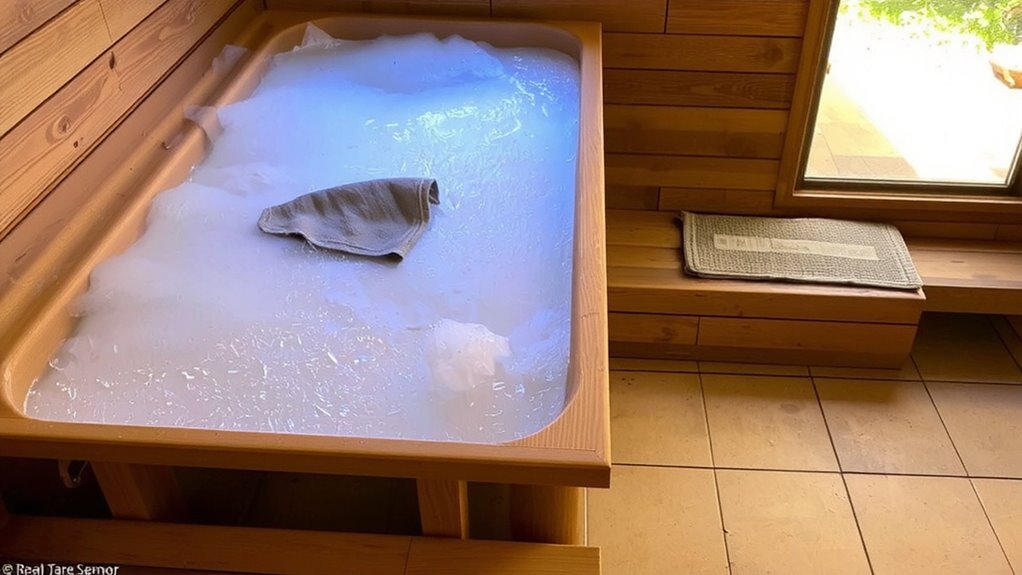
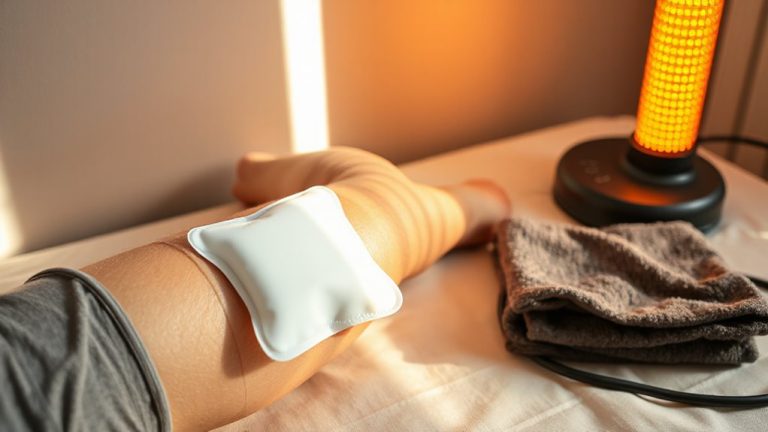
Because your muscles endure micro-tears and inflammation during intense training, applying heat and cold strategically can significantly influence recovery speed and quality. Heat adaptation increases blood flow, helping deliver oxygen and nutrients to fatigued tissues, while also loosening tight muscles and improving flexibility. You’ll find heat especially useful before mobility work or on rest days. Cold acclimatization, on the other hand, constricts blood vessels, reducing swelling and numbing soreness post-exercise. You’ll benefit most by using cold exposure shortly after intense workouts. When layered correctly, these stimuli trigger a pumping effect in circulation-flushing metabolic waste, then enriching muscles with reparative resources. Though individual responses vary, consistent use of heat and cold builds your body’s resilience over time. Recovery gear like thermal wraps or immersion tubs can enhance this process, provided they’re used with proper timing and duration.
3 Science-Backed Benefits of Contrast Therapy
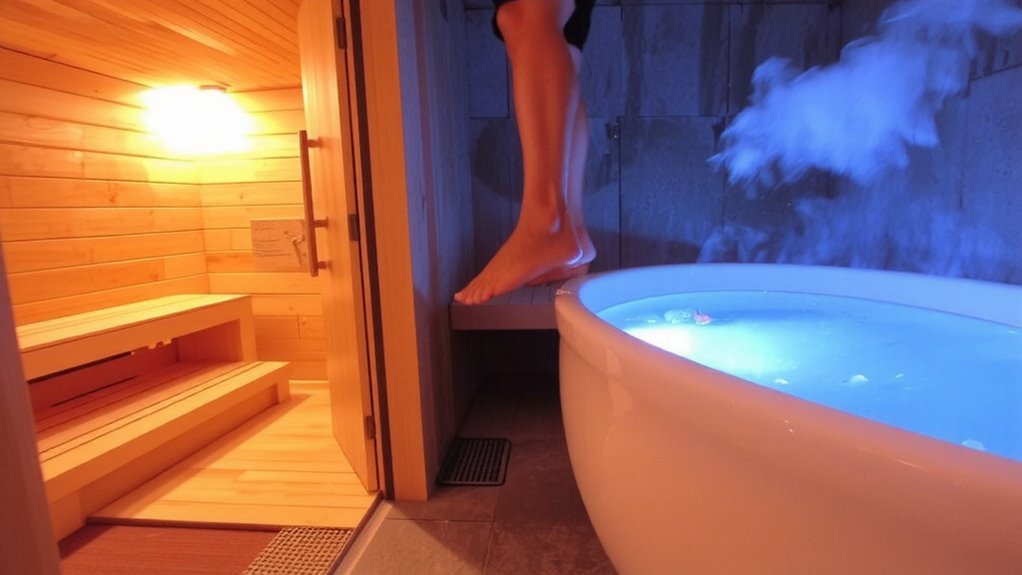
Contrast therapy’s real power lies in its cyclical rhythm of heat and cold, a method proven to accelerate recovery more effectively than either modality alone. You trigger vasoconstriction and vasodilation with each shift, boosting circulation and flushing metabolic waste faster than passive rest. This isn’t just soothing-it drives measurable cellular adaptation, helping your muscles rebuild stronger and more resilient over time. The alternating stress also sparks metabolic activation, increasing nutrient delivery and energy utilization where you need it most. Research shows reduced markers of muscle soreness and inflammation, especially after intense training. While not a magic fix, it’s a strategic tool that complements smart recovery practices. When paired with quality recovery gear-like precise temperature-controlled baths or wraps-you amplify consistency and control. It’s not about comfort; it’s about optimizing physiological response. Done right, you’re not just recovering-you’re adapting.
Beginner Contrast Therapy Routine
A well-structured beginner contrast therapy routine starts with accessible, controlled shifts between heat and cold to gently condition your body’s circulatory response. You’ll begin with 3–4 contrast cycles, spending 3 minutes in warm water (around 98–104°F) followed by 30–60 seconds in cold water (50–60°F). This gradual exposure helps your blood vessels adapt without shock. Maintaining beginner safety is essential-always listen to your body and avoid extreme temperatures at first. Start post-workout, when muscles are already warm, and never push through dizziness or sharp discomfort. Three cycles per week provide measurable recovery benefits without overloading your system. Quality recovery gear like insulated tubs or temperature-stable baths improve consistency, but even basic setups work if used correctly. As your tolerance improves, you can adjust duration and intensity. The focus remains on steady adaptation, not speed.
DIY Contrast Therapy: Options Without a Sauna
How do you tap into the benefits of contrast therapy without access to a sauna? You can replicate the hot-cold cycle using accessible tools like your shower and a bathtub. Start with warm showers-around 100–104°F-for three to five minutes to dilate blood vessels and boost circulation. Immediately follow with cold showers set to 50–60°F for 30 to 60 seconds, triggering vasoconstriction to flush out metabolic waste. Repeat this cycle three to five times. If you want deeper cold exposure, ice baths are a solid alternative; fill a tub with water and 5–10 pounds of ice to reach 50–59°F. Though less intense than saunas, these DIY methods deliver measurable recovery benefits. They’re cost-effective, easy to maintain, and don’t require specialized fitness gear-just consistency and attention to temperature and timing.
When to Use Contrast Therapy for Best Results
When should you time your contrast therapy for maximum recovery? The ideal timing typically falls within the first 60 minutes post-exercise, aligning with the body’s most active recovery phases. During this window, alternating hot and cold exposure enhances circulation, helping flush metabolic waste and deliver oxygen-rich blood to fatigued muscles. If you’re engaging in intense training or back-to-back workouts, applying contrast therapy immediately after cool-down improves adaptation and reduces delayed onset muscle soreness. While some athletes use it pre-workout to prime blood flow, evidence stronger supports post-exercise use for recovery-specific benefits. Performance data suggests consistency matters-integrating contrast therapy into your routine after key sessions boosts long-term gains. Don’t just rely on timing though; guarantee your method maintains clear temperature shifts. Whether using baths, showers, or recovery gear, precision in application enhances results.
Stay Safe: Common Mistakes to Avoid
Why risk undermining your recovery with avoidable errors? You might think more is better, but overhydration risks can sneak up during contrast therapy, especially if you’re sweating in the heat phase and then drinking excessively without balancing electrolytes. It’s easy to overlook, but too much fluid too fast can dilute sodium levels, leading to nausea or worse. Then there’s improper timing-lingering too long in the hot or cold can backfire. Stays exceeding 15–20 minutes in heat or 2–3 minutes in cold increase shock or hypotension risks. You’re aiming for 3–5 alternating rounds, not marathon sessions. Also, skipping a proper cool-down or jumping into contrast therapy before inflammation has peaked post-injury? That’s asking for trouble. Always dry off between phases to protect your skin and monitor your body’s signals. Safety isn’t just comfort-it’s effectiveness.
On a final note
You’ll find contrast therapy a practical tool for managing exercise stress, blending heat and cold to enhance circulation and speed recovery. Scientific support is solid, though results vary by person. It’s accessible-tubs, showers, or towels work-requiring little gear. While not magic, when used correctly, it complements smart training and recovery routines worth maintaining.