Basketball Layup Approaches With Emphasis on Non-Dominant Leg Takeoff
You’re limiting your offense if you always take off from your dominant leg. Using your non-dominant leg improves balance, reduces predictability, and sharpens neuromuscular control. Drills like weak-leg hops and slow layup lines build coordination, while proper footwear with lateral support and a snug heel keeps your ankle stable at speed. Mastering crossovers and finishes with either hand opens new angles and beats tough defense. There’s more to revealing consistent, explosive approaches than you might think.
Notable Insights
- Use weak-leg takeoffs to attack the basket from unexpected angles, enhancing offensive unpredictability.
- Perform stationary hop drills to improve balance and correct footwork on your non-dominant side.
- Incorporate resistance band walks to activate glutes and hips for stronger weak-leg layup stability.
- Practice low-speed layup lines focusing on hand-to-foot coordination using the non-dominant leg.
- Execute crossover hesitations to draw defenders, creating openings for non-dominant leg takeoff opportunities.
Why Mastering Weak-Side Layups Changes Everything
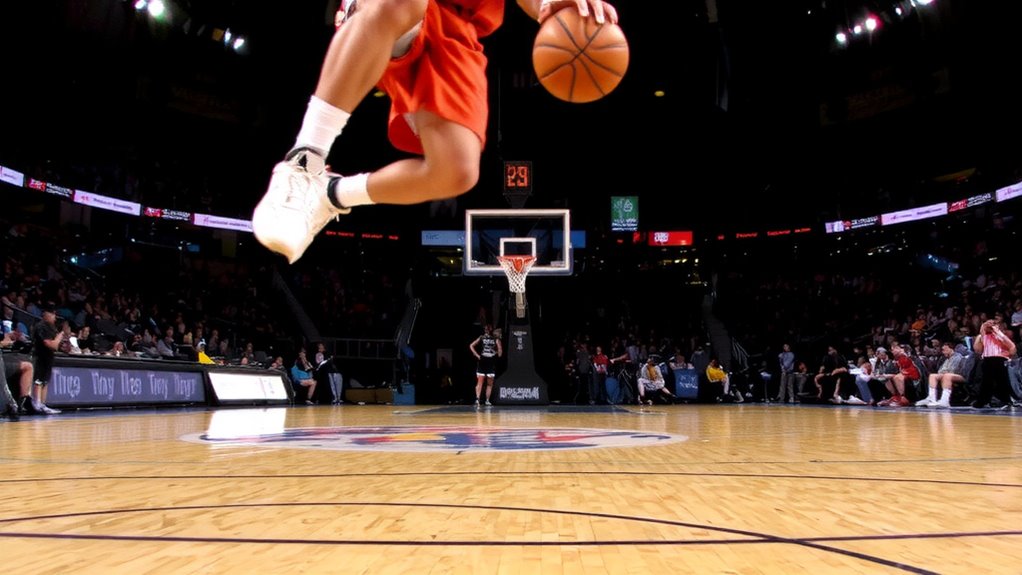
What if the key to releasing your full offensive potential isn’t just more reps, but *which* leg you use to take off? When you master weak-side layups, your game versatility skyrockets. Driving from your non-dominant side lets you attack defenses from unexpected angles, forcing reactions you can exploit. You’re no longer predictable-coaches notice, defenders adjust, and opportunities multiply. Beyond tactics, it’s confidence building. Knowing you can finish strong off either foot makes you resilient under pressure. You’ll hesitate less, commit faster, and maintain rhythm in traffic. It’s not just about equalizing both sides; it’s about maximizing efficiency and balance. Training this skill demands deliberate practice-focus on proper footwork, cushioning your landing, and controlled knee flexion to reduce joint strain. Pair it with recovery routines and supportive gear to sustain performance. The result? A smarter, sharper, and physically durable game.
Signs You’re Struggling on Your Non-Dominant Side
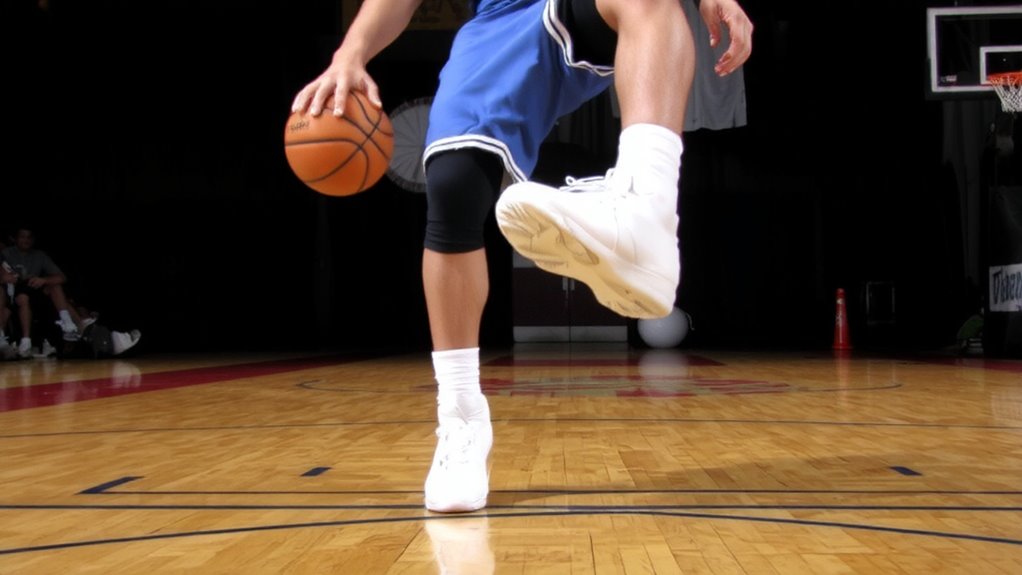
You’re making the right move by focusing on weak-side layups, but if your body resists the motion or your finish lacks control, it might be more than just skill-it could reflect deeper imbalances. Common signs include balance issues during ascent and awkward landings that disrupt momentum. You may notice one side of your body favoring familiar patterns, reducing efficiency. These inefficiencies aren’t just mechanical-they can lead to overuse injuries and hinder game consistency.
| Symptom | What It Suggests |
|---|---|
| Leaning or wobbling at takeoff | Balance issues due to muscular asymmetry |
| Stumbling or overstepping after release | Awkward landings from poor proprioception |
| Inconsistent arc or touch | Lack of neuromuscular coordination on weak side |
Addressing these early improves symmetry, supports recovery, and enhances overall performance durability.
3 Drills to Master Layups Off Your Weak Leg
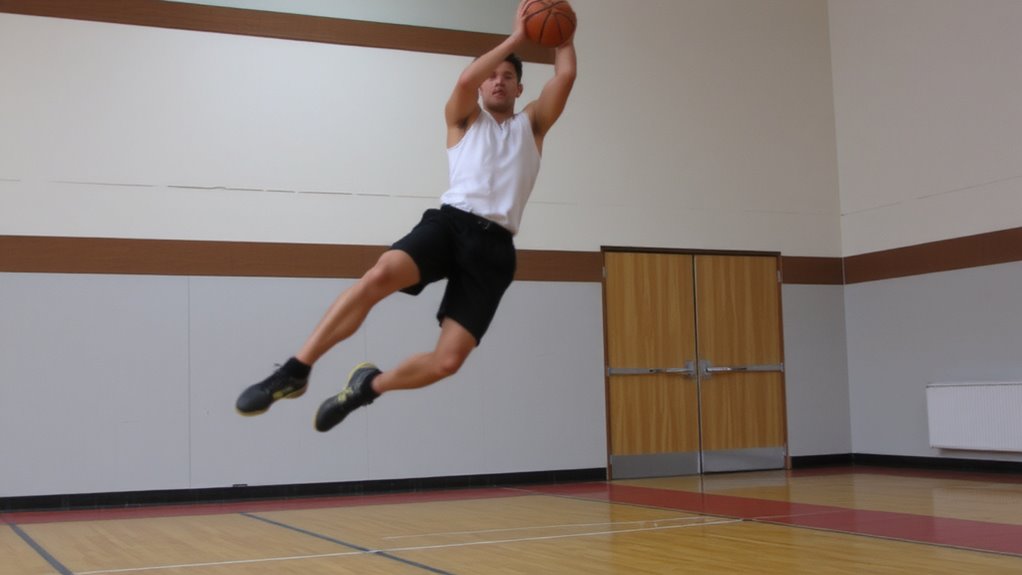
A few well-structured drills can make a significant difference in developing confidence and control when taking off from your non-dominant leg. Start with stationary hop drills, pushing off your weak leg into a balanced landing-this corrects weak footwork and builds stability. Progress to low-speed layup lines using only your non-dominant leg for takeoff, focusing on proper hand-to-foot coordination. Resistance band walks also help activate the glutes and hips, reducing poor coordination during motion. Incorporate cone drills that force awkward angles, mimicking game-like shifts while reinforcing correct mechanics. Use non-slip training shoes with lateral support to maintain ankle integrity during repetitive pivoting. Consistent practice with these drills reshapes muscle memory and promotes symmetrical development. Over time, what once felt unnatural becomes instinctive, closing the performance gap between dominant and non-dominant actions on the court.
Stay in Control at Full Speed
Even as your speed increases, maintaining control during a layup off your non-dominant leg demands more than just repetition-it requires deliberate mechanics and the right support from your gear. Proper foot placement guarantees you’re not overstriding, allowing a smooth shift into the jump step. You need that last stride to set your body balance, aligning hips and shoulders squarely to the rim. Stability is key, and that starts with a shoe offering responsive cushioning and lateral support-think snug heel counters and durable outsoles. These features help you stay grounded during high-speed adjustments. Even on your weak side, controlled landings reduce joint stress and improve recovery. Compression sleeves or ankle supports can further stabilize joints post-takeoff. Investing in performance-fit gear isn’t just about comfort; it’s about refining control under pressure. Smart foot placement and consistent body balance, backed by reliable footwear and support, let you attack the basket confidently-without sacrificing form.
Use Crossovers to Attack New Angles
How do you turn a predictable drive into a scoring advantage? Use crossovers to create angle deception and keep defenders guessing. A well-timed crossover hesitation doesn’t just slow your momentum-it shifts your approach, opening lanes to the basket. By attacking new angles, you set up opportunities to take off from your non-dominant leg, making your finish less predictable. This move isn’t just flashy; it’s functional, especially when paired with body control and balance. Below is a quick comparison of crossover effects:
| Technique | Benefit |
|---|---|
| Sharp Crossover | Creates immediate direction shift |
| Crossover Hesitation | Invites defender to overcommit |
| Behind-the-Back | Adds flair but higher turnover risk |
| Low Dribble | Maintains control at full speed |
| Angle Deception | Opens non-dominant leg takeoff |
Master these, and you dictate the terms at the rim.
Finish Strong in Traffic: Either Hand, Either Leg
You’ve used crossovers to shift angles and set up your approach, but now it’s time to prove that control under pressure. Finishing strong in traffic demands body control-your ability to adjust mid-drive, absorb contact, and still release the ball cleanly. You won’t always get a clean path to the rim, so expanding your finishing range is critical. Train yourself to take off from either leg, especially your non-dominant, so you can float past defenders with balance. Using either hand at the rim isn’t just a skill-it’s a necessity when bodies close in. Develop soft touch on both sides and practice gathering in stride without losing momentum. This adaptability keeps defenders guessing and maximizes scoring efficiency. Strong finishes aren’t just about power; they’re about precision, timing, and the subtle mastery of space. Master these, and you turn tough attempts into routine conversions.
On a final note
You’ll gain balance and efficiency by training layups off your non-dominant leg, turning weakness into adaptability. Equipment like supportive ankle braces and grippy court shoes enhances stability during these drills, reducing injury risk. Recovery tools-foam rollers, compression sleeves-help maintain leg symmetry. Consistent, mindful practice with proper gear doesn’t just correct imbalances; it elevates overall performance, making you a more complete, resilient athlete on both sides of the court.