Foam Rolling Techniques for the Thoracic Spine to Relieve Upper Back Tension
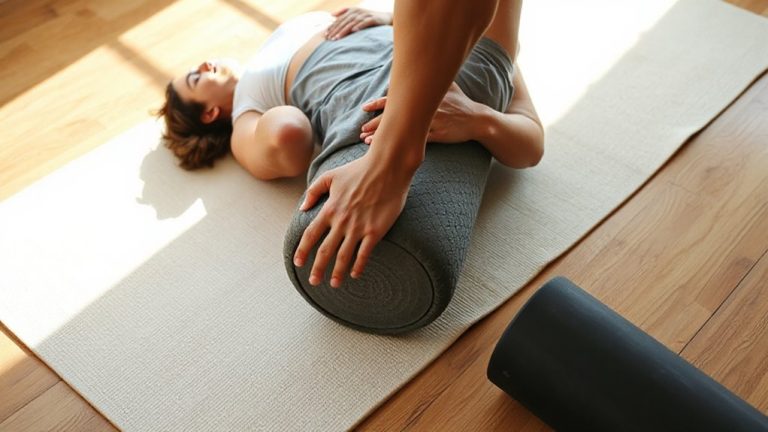
Place a high-density foam roller under your upper back and support your neck by cradling your head with both hands. Roll slowly from mid-back up toward your shoulder blades, avoiding the neck area. Move with control-going too fast or using poor posture reduces effectiveness and increases injury risk. Pair this with dynamic stretches like arm circles to lock in mobility. You’ll get better results when muscles are warm, especially post-workout. The right technique combined with quality gear enhances recovery, and there’s more to optimizing your routine just ahead.
Notable Insights
- Position the foam roller under your upper back and support your head with hands to maintain proper spine alignment.
- Roll slowly from the mid-back up toward the shoulder blades, avoiding the lower neck area.
- Use a high-density foam roller to ensure consistent pressure and better support for deep tissue release.
- Combine rolling with controlled breathing to enhance muscle relaxation and reduce tension in the thoracic spine.
- Follow foam rolling with dynamic stretches like cat-cow or arm circles to improve mobility and maintain gains.
Try These 3 Thoracic Foam Rolling Techniques
You’ll want to approach thoracic foam rolling with both caution and purpose, since the upper back is more complex than it might first appear. Proper technique enhances thoracic mobility and promotes effective muscle release. Start by positioning the foam roller horizontally beneath your upper back, hands behind your head to support the neck. Gently roll from the mid-back to just below the shoulder blades, avoiding the lower cervical spine. A high-density foam roller offers better support and durability, improving performance during each session. For targeted relief, pause on stiff areas for 20–30 seconds to encourage tension release. Incorporating controlled movements boosts circulation and reduces stiffness, aiding long-term posture correction. Compared to softer rollers, firmer models provide deeper pressure with less compression over time. When used consistently, these techniques enhance recovery, optimize spinal flexibility, and contribute to balanced musculature-key factors in effective fitness recovery and efficient gear utilization. For best results, choose one of the best foam rollers based on density and texture to match your recovery needs.
Avoid These Common Foam Rolling Mistakes
Why do some people feel worse after foam rolling despite aiming for relief? Often, it’s due to poor posture during use or applying excessive pressure. Misalignment shifts stress to the neck or lower back, increasing tension instead of relieving it. Using too much force can trigger muscle guarding, making tightness worse. To get the most from your foam rolling routine, avoid these common errors:
| Mistake | Effect | Solution |
|---|---|---|
| Rolling too fast | Reduces tissue response | Slow, controlled motions |
| Poor posture | Strains spine | Keep core engaged, neutral spine |
| Excessive pressure | Causes bruising, soreness | Use body weight wisely |
| Rolling the neck | Increases injury risk | Avoid cervical spine |
| Holding breath | Limits relaxation | Breathe deeply and steadily |
Correct form guarantees safe, effective recovery. Incorporating a vibrating foam roller can enhance tissue relaxation and improve circulation during recovery.
When to Foam Roll for Best Results
Timing your foam rolling sessions properly can greatly influence how well your muscles respond and recover. For best results, aim to foam roll either after a workout or during a separate session when your muscles are warm. Post-exercise rolling helps reduce soreness and supports recovery by improving circulation. Some also find pre-workout rolling beneficial, but limit intensity to avoid overstimulating the muscles. Your timing frequency matters-ideally, roll the thoracic spine 3–4 times per week. Daily light sessions can be helpful if done correctly. The consistency benefits are clear: regular use enhances mobility, reduces chronic tension, and improves tissue quality over time. Unlike passive recovery methods, foam rolling actively supports muscle health with minimal equipment. High-density rollers perform best, maintaining shape and delivering reliable pressure. With proper timing frequency and regular use, you’ll notice tangible improvements in how your upper back feels and functions.
How Foam Rolling Releases Upper Back Tension
While the exact mechanisms are still being studied, foam rolling appears to release upper back tension through a combination of mechanical pressure and neuromuscular feedback. You’re likely to feel immediate relief as the roller applies sustained pressure, triggering myofascial release in tight connective tissue. This process helps break up adhesions and improves tissue mobility along the thoracic spine. At the same time, the nervous system responds with reflexive muscle relaxation, reducing hypertonicity in overworked muscles. High-density foam rollers deliver consistent pressure without collapsing, making them effective for targeting deeper layers. You’ll notice that slow, controlled movements enhance this effect, allowing time for tissues to adapt. Although results vary, most users report decreased stiffness and greater ease of movement after just a few minutes. It’s not a cure-all, but used correctly, foam rolling is a practical recovery tool that supports long-term musculoskeletal health.
Stretch After Rolling for Lasting Relief
Since foam rolling helps loosen tight fascia and relax tense muscles in the upper back, following it with targeted stretches can lock in those gains and promote lasting relief. After rolling, dynamic stretching primes your thoracic spine for improved mobility by gently moving joints through their range. Exercises like arm circles or cat-cow flows activate soft tissue without triggering strain. This combo not only boosts flexibility but also supports muscle symmetry, correcting imbalances caused by poor posture or asymmetrical workouts. Think of foam rolling as the reset button and stretching as the follow-up tune-up. Together, they’re more effective than either used alone. Quality recovery gear-like textured rollers and supportive mats-enhances both phases, improving comfort and consistency. Over time, this routine reduces stiffness, lowers injury risk, and keeps your upper back functioning ideally. For long-term gains, don’t skip the stretch-it’s key to making relief stick.
On a final note
You’ll find foam rolling an effective, low-cost recovery tool, especially for upper back tension. These thoracic techniques boost mobility and muscle relaxation when done correctly. Avoid common mistakes like rolling too fast or overextending the neck. Done consistently and paired with stretching, foam rolling enhances recovery. Quality foam rollers offer firm, consistent support-key for durable, effective use. For best results, integrate rolling into your routine wisely.