Using Wearable Posture Correctors to Reduce Neural Tension Affecting Recovery
Slouching compresses nerves by misaligning your spine, which slows recovery through impaired signaling. Wearable posture correctors counter this by gently guiding your shoulders and spine into proper alignment, reducing neural tension. They work best when designed with flexible support, breathable fabrics, and ergonomic fit. Real-time vibration alerts help correct slouching before strain builds. Used daily, they retrain muscles and improve functional posture-key for effective recovery. You’ll see how small, consistent use leads to lasting gains.
Notable Insights
- Poor posture compresses nerves, impairing recovery by reducing muscle repair and workout efficiency.
- Posture correctors alleviate neural tension by guiding spine and shoulders into natural alignment.
- Ergonomic, adjustable designs enhance comfort and promote sustained use during recovery.
- Real-time vibration or pulse alerts effectively reinforce posture correction without distraction.
- Daily use retrains muscles and improves neuromuscular adaptation, supporting long-term recovery.
How Poor Posture Causes Nerve Compression
While you might not think twice about slouching at your desk, that slumped position can gradually compress nerves, especially in the cervical and thoracic spine, where prolonged flexion narrows the spaces through which nerves travel. This sustained pressure often stems from spinal misalignment, where vertebrae shift out of their natural curvature, irritating nearby nerve pathways. Over time, poor posture creates muscle imbalance-tightened chest muscles pull shoulders forward, while weakened upper back muscles fail to support proper alignment. This imbalance further distorts spinal positioning, increasing neural compression risk. You’re likely unaware this occurs subtly, without immediate pain, yet it undermines recovery and function. Such postural faults don’t just strain joints; they impede nerve signaling, potentially delaying muscle repair and reducing workout efficiency. Ignoring these mechanics compromises long-term fitness gains, making corrective awareness essential-especially when recovery hinges on maximal neurological function. Choosing the right pillow, such as those designed for best pillow for occipital neuralgia, can help maintain proper cervical alignment and reduce nerve irritation during sleep.
How Posture Correctors Relieve Neural Tension
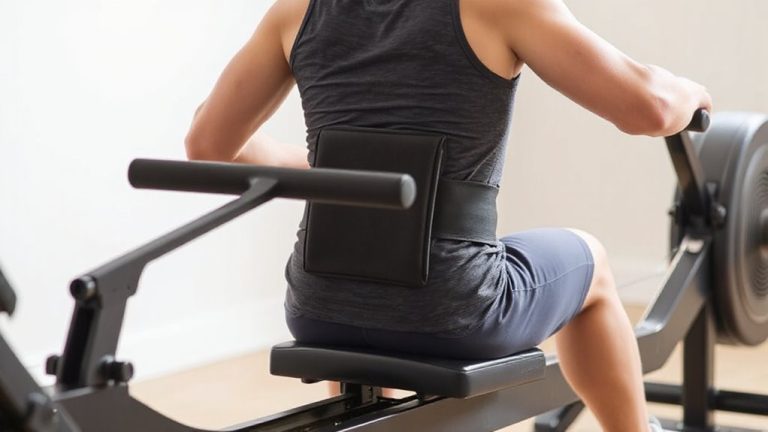
Posture correctors work by gently guiding your spine and shoulders back into proper alignment, reducing the unnatural strain that compresses nerves over time. Their ergonomic design guarantees a snug, comfortable fit that supports your natural posture without restricting movement. As you wear one regularly, it promotes better muscle engagement, retraining weakened or imbalanced muscles to maintain correct alignment on their own. This active support helps alleviate pressure on compressed nerves, reducing neural tension that can delay recovery. Unlike passive supports, quality posture correctors don’t just hold you upright-they encourage neuromuscular adaptation. You’ll likely notice less tingling or radiating discomfort as nerve pathways open up. While not a cure-all, consistent use during daily activities enhances postural endurance. When paired with movement and recovery practices, wearables become a practical tool in the fitness recovery toolkit, bridging the gap between passive rest and functional strength.
Choose the Right Posture Corrector for Recovery
Because your recovery journey depends on consistent support and proper biomechanics, picking the right posture corrector matters more than just comfort-it can influence how quickly and effectively your body heals. You need a device with ergonomic design that aligns naturally with your spine’s curvature, reducing strain on neural pathways without restricting movement. Look for adjustable straps and structured support zones that adapt to your body’s unique shape. Material breathability is equally important; moisture-wicking, lightweight fabrics prevent irritation during extended wear, especially post-activity. Many high-performing models use mesh panels and hypoallergenic materials to enhance airflow and comfort. Avoid bulky, rigid frames-they may correct posture but can increase tension. Instead, choose smartly engineered wearables that balance correction with flexibility. Your ideal corrector should feel like a seamless extension of your recovery routine, not a distraction.
How Real-Time Alerts Fix Slouching Habits
You’ve already picked a posture corrector that fits well and supports your recovery with breathable materials and adaptive structure, so now it’s time to focus on how you use it. The real power lies in real-time alerts that deliver instant behavioral feedback, gently correcting slouching before it worsens neural tension. Thanks to ergonomic design, these alerts-vibrations or sounds-don’t distract but guide, training your body to maintain alignment. Over time, this consistent input reshapes habits at a neurological level.
| Alert Type | Effectiveness |
|---|---|
| Vibration | High – subtle and private |
| Audio | Moderate – useful at home |
| App reminder | Low – delayed response |
| Light | Low – easily missed |
| Pulse | High – mimics natural cues |
These alerts aren’t just signals-they’re tools that bridge posture awareness and long-term recovery.
Make Posture Correction a Daily Habit
Often, long-term improvements in posture stem not from occasional use but from consistent, daily integration of corrective tools into your routine. Wearing a posture corrector every day reinforces proper spinal alignment, especially if you spend hours at a desk or on your feet. These devices gently pull your shoulders back, guiding your spine into its natural curvature. Over time, this sustained positioning helps train your muscle memory, so your body begins to maintain good posture without assistance. Think of it like training wheels-eventually, your muscles learn to balance correctly on their own. Research suggests consistent use enhances neuromuscular adaptation, which supports recovery by reducing neural tension. For fitness recovery and overall musculoskeletal health, consistency beats intensity. Daily wear, even for just 30 minutes, outperforms sporadic longer sessions. Make posture correction as routine as brushing your teeth, and your body will respond with improved alignment and lasting resilience.
On a final note
You’re likely to see better recovery when using wearable posture correctors that actively reduce neural tension caused by slouching. These devices support spinal alignment, easing compression on nerves often aggravated by poor posture. Real-time alerts help retrain muscle memory, making correct posture a habit. While not a cure-all, quality models with adjustable straps and ergonomic designs perform well over time. Used consistently, they’re a practical tool in fitness recovery, complementing rehab and mobility work without replacing them.