Seated Lotus Preparation With Blocks to Open Hips Without Knee Pressure
You can ease into Seated Lotus safely by placing one or two yoga blocks under your sit bones to elevate the hips and reduce knee pressure. This lift encourages proper external hip rotation, helping your spine stay long and your knees point forward without strain. Cork blocks offer firmer support than foam, especially for longer holds. Use the right height-possibly stacked-to align your pelvis and protect your joints, letting you build mobility gradually with smarter biomechanics. Better alignment today sets the stage for deeper progress tomorrow.
Notable Insights
- Use yoga blocks under sit bones to elevate hips and reduce knee strain during Seated Lotus preparation.
- Choose block height based on hip elevation needs, stacking two if hips are more than two inches above the floor.
- Maintain a neutral spine and slight pelvic tilt to enhance hip mobility and protect knee joints.
- Ensure knees point forward and thighs rotate outward to achieve proper alignment without joint stress.
- Progress gradually by lowering block height only when hip flexibility and pelvic stability safely allow.
How to Set Up Seated Lotus With Blocks
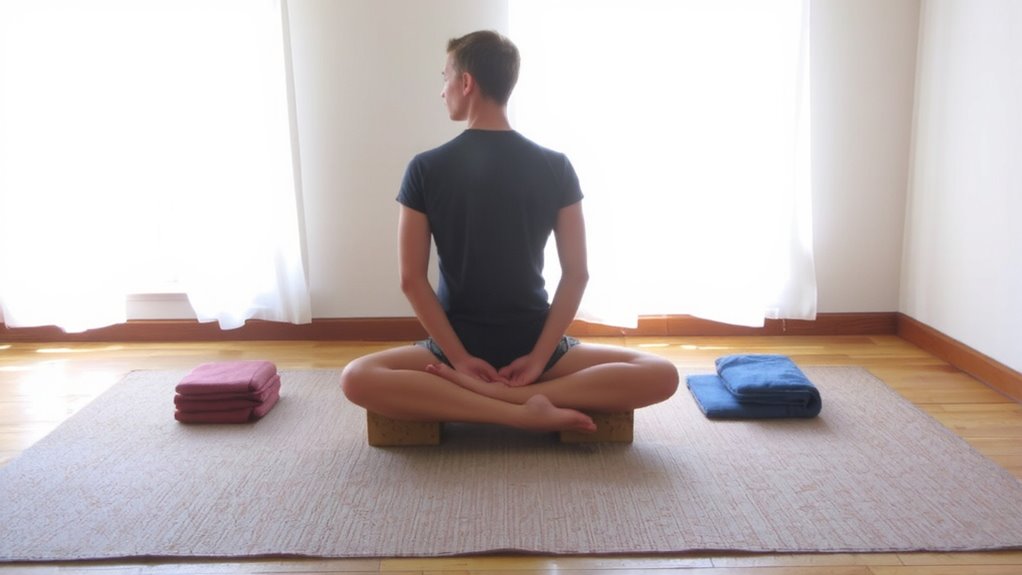
With proper support, getting into Seated Lotus with blocks becomes far more accessible, especially if tight hips or stiff knees make the full pose challenging. You’ll want to sit on one or two yoga blocks to elevate your hips, reducing strain on the knees and allowing the thighs to settle naturally. Effective block placement is key-position the block(s) under your sit bones, with the widest or medium height setting initially, depending on flexibility. This elevation offers necessary hip support, helping maintain a neutral spine and encouraging deeper opening over time. Foam or cork blocks both work well, though cork offers more stability for sustained holds. Regular use supports long-term joint health, making Seated Lotus safer and more sustainable. Proper setup doesn’t just aid form-it enhances recovery by minimizing compression, aligning the posture correctly, and letting you focus on breath and release without discomfort.
Choose the Right Block Height for Your Hips
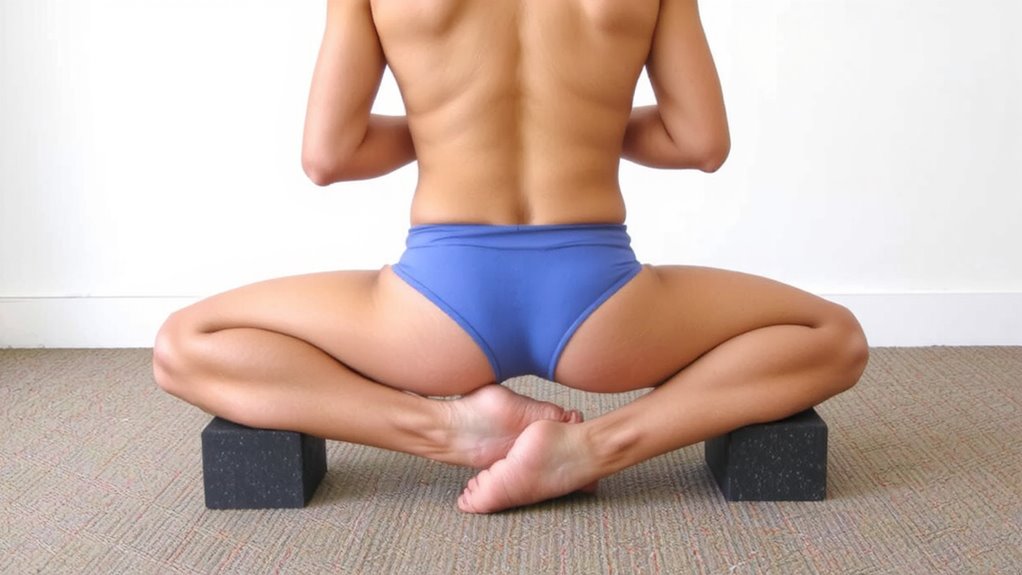
Some practitioners will need just one block, but many benefit from stacking two to achieve ideal hip elevation in Seated Lotus. Proper block selection is essential-too low, and your hips won’t release; too high, and you’ll lose stability. Start with a hip measurement: sit on the floor with legs extended and note how far your hip bones are above the ground. If the gap exceeds two inches, a single block under your sitting bones may not suffice. Foam blocks offer cushioning but compress over time, while cork ones provide firm, lasting support-ideal for consistent hip alignment. Your goal is a slight pelvic tilt that encourages natural spine curvature. Adjust block height until your knees rest comfortably below hip level without strain. This small refinement in block selection enhances mobility and prevents joint compression, making it one of the most effective gear-based adjustments in seated hip-opening practices.
Fix Common Lotus Pose Alignment Mistakes
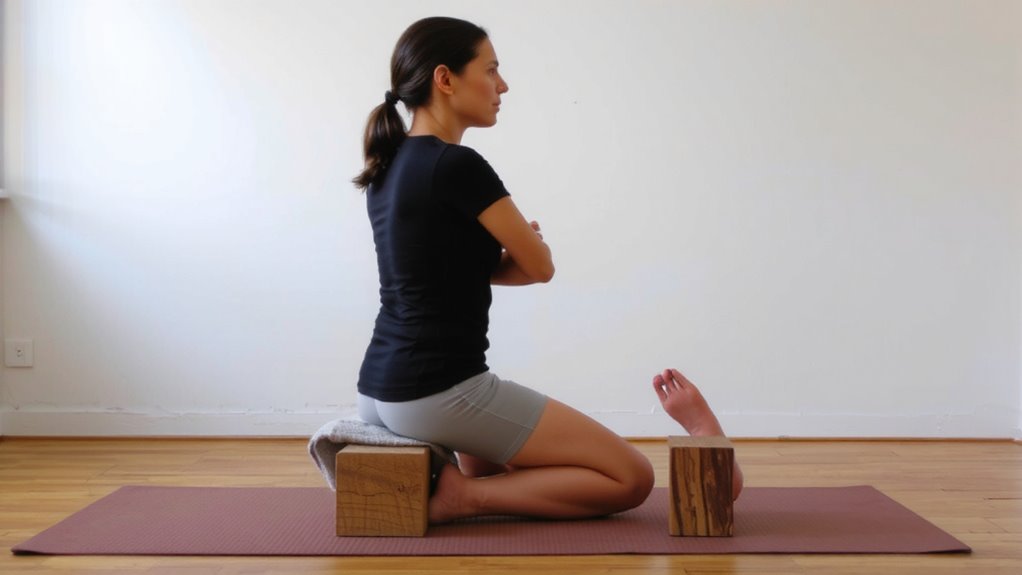
Getting your block height right sets the foundation, but even with proper support, small misalignments can undermine your Seated Lotus. You might not realize it, but poor knee alignment is one of the most common issues-your knees should point forward, not splay out or collapse inward. Misaligned knees increase joint stress and reduce the pose’s effectiveness. Proper hip rotation is equally essential; your hips must externally rotate deeply so the femurs nestle into the sockets rather than forcing the knees. Without it, you’re relying on tension, not structure. Rotate your thighs outward, letting your shins stack naturally. Keep your spine tall and avoid rounding, as slouching limits hip mobility. These details guarantee stability and safety, helping you progress without strain. Attention to alignment transforms effort into sustainable practice. Using a stretching strap can enhance your external hip rotation by allowing greater control and support during preparation poses.
Why Blocks Make Lotus Safer and Easier
Though you might think flexibility alone determines your readiness for Seated Lotus, using blocks actually reshapes the equation by addressing structural limitations more effectively than stretching ever could. By elevating your hips with blocks, you naturally improve hip mobility, allowing your pelvis to tilt forward and reduce strain on the lower back. This slight lift aligns your spine and decreases rotational force on the knees-the leading cause of injury in this pose. Blocks support proper alignment, enhancing knee stability by preventing excessive external rotation that compromised anatomy can’t safely handle. Instead of forcing the legs into position, you work *with* your body’s structure, making the pose accessible and sustainable. Over time, this supported practice builds the strength and openness needed safely. Blocks aren’t a shortcut-they’re a smart modification that prioritizes joint health while optimizing biomechanics, making them essential recovery-friendly gear for long-term progress in demanding asanas.
How to Progress Out of Blocks Over Time
As your hip mobility and pelvic stability improve through consistent, supported practice, you’ll naturally begin to contemplate reducing your reliance on blocks in Seated Lotus-this progression isn’t about discarding support prematurely but about moving mindfully when your body demonstrates sufficient openness and control. Start your gradual progression by slightly lowering the block height or using only one under the sitting bone that needs more lift. Over weeks, assess comfort, alignment, and knee position each time. If your pelvis stays level and your spine lengthens without strain, you’re ready to test support-free sitting. This method guarantees joint safety and reinforces functional alignment. Remember, progress isn’t linear-some days may require returning to full support. Prioritizing sustainable hip mobility over ego protects your knees and fosters lasting flexibility.
On a final note
You’re giving your hips the support they need without straining your knees, and that’s smart practice. Blocks reduce joint stress while improving alignment, making lotus accessible and safer. This isn’t cheating-it’s strategic use of gear to build openness gradually. Over time, you may need less height, but the progress comes from consistency, not force. Quality recovery and mindful gear use enhance long-term mobility far more than pushing too hard ever will.