Kettlebell Swing Progression From Two-Handed to One-Arm for Hip Hinge Mastery
You start with two-handed swings to build power, coordination, and proper hip hinge mechanics safely. This foundation guarantees you drive force from your glutes and hamstrings, not your lower back. Once you’ve mastered the hinge and keep a neutral spine, you can progress to one-arm swings, which challenge core stability and prevent imbalances. A lighter bell and controlled reps help shift smoothly-stick to crisp form, and you’ll develop strength and movement efficiency that lasts. There’s more to optimize in your swing progression just ahead.
Notable Insights
- Start with two-handed swings to build power, coordination, and proper hip hinge mechanics safely.
- Master the hip hinge by driving movement through the hips, maintaining a neutral spine and engaged glutes.
- Correct common mistakes like rounded back, arm-pulling, or momentum reliance to maximize posterior chain engagement.
- Progress to one-arm swings only after demonstrating consistent hip extension and core stability in two-handed swings.
- Use a lighter kettlebell for one-arm swings to ensure control, bracing, and proper shoulder and spinal alignment.
Start With Two Hands: Here’s Why
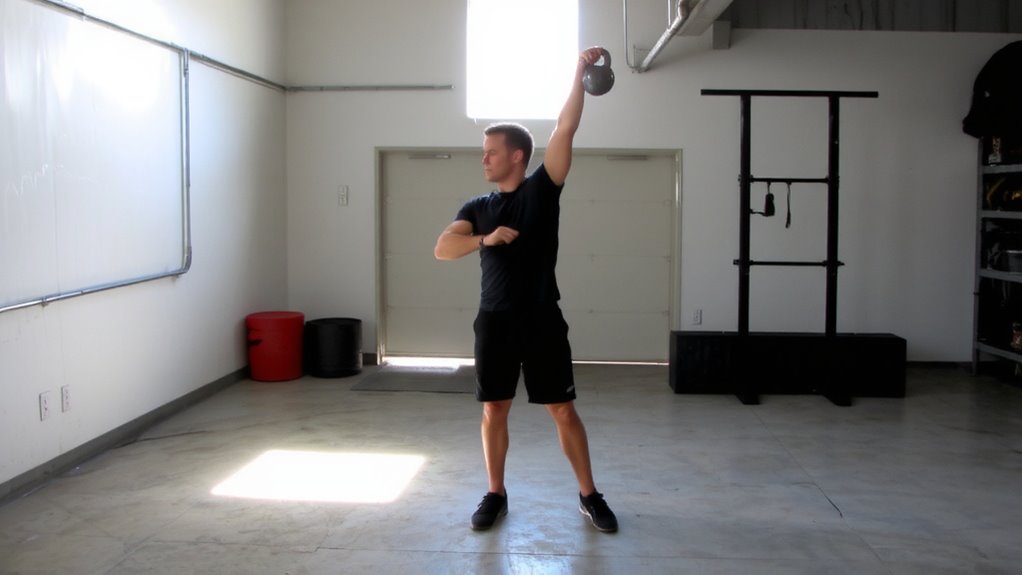
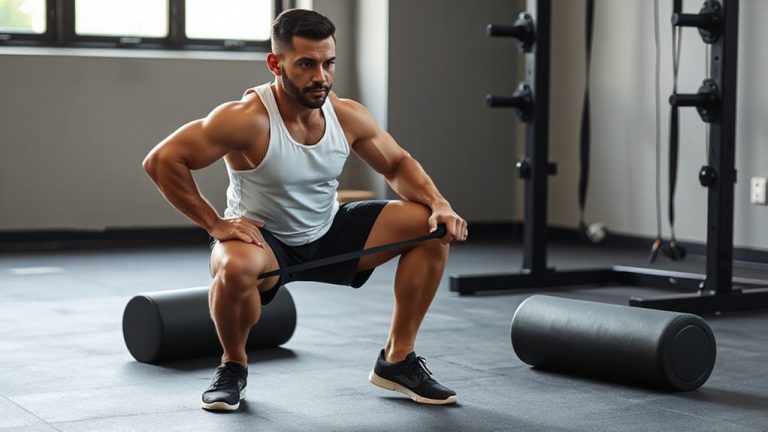
While you might be keen to dive into advanced kettlebell techniques, starting with two hands is not just beginner advice-it’s a smart foundation for building power and coordination safely. Using both hands enhances grip strength gradually, reducing early fatigue and minimizing strain on tendons. This approach promotes bilateral coordination, guaranteeing both sides of your body develop symmetrically and reducing imbalance risks. Most entry-level kettlebells feature smooth, chip-resistant coatings and balanced handles, ideal for repeated two-handed swings. These designs improve durability and user comfort, supporting consistent form. Fitness recovery tools like foam rollers pair well post-session, helping manage muscle tightness from new movement patterns. A high-quality foam roller selection can further aid in recovery by improving circulation and reducing soreness. While one-arm variations demand more advanced control, mastering two-handed swings first guarantees safer progress. You’ll build resilience and neuromuscular efficiency, setting a reliable base for later progression-without sacrificing joint health or technique integrity.
Master the Hip Hinge for Kettlebell Swings
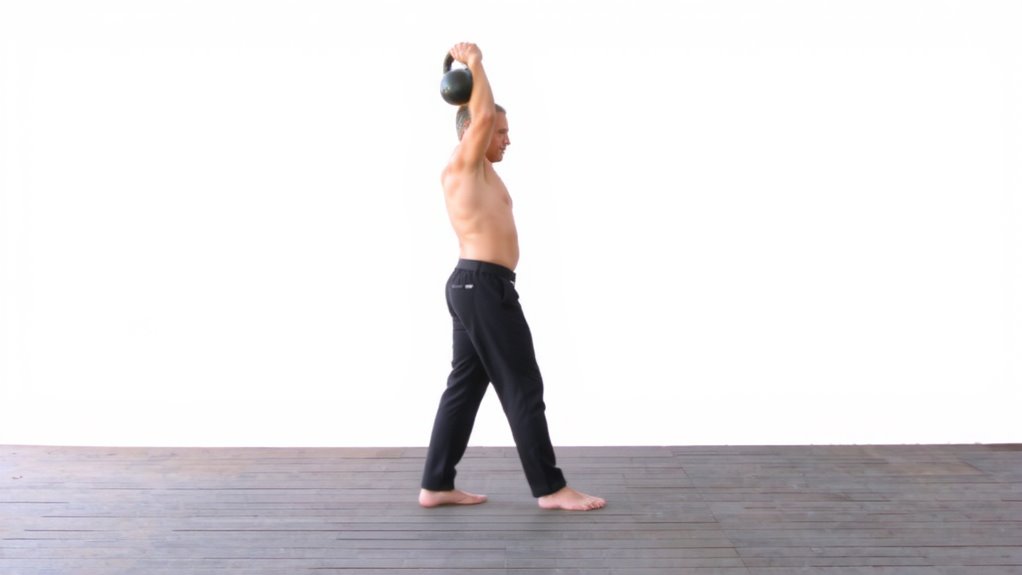
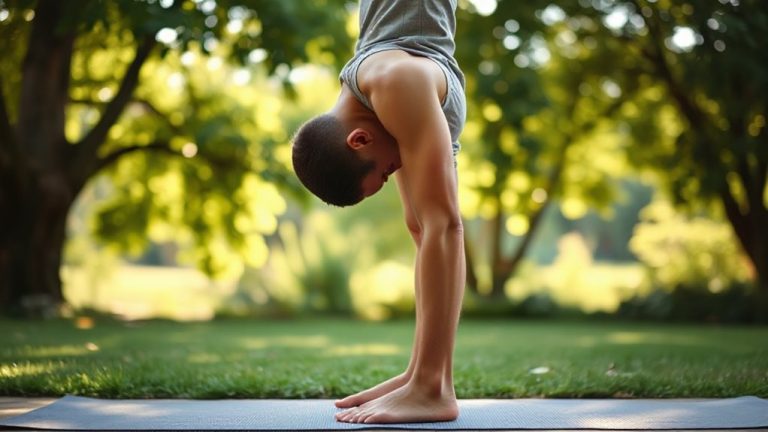
You’ve built a solid base with two-handed swings, and now it’s time to focus on the movement that powers every effective kettlebell swing-the hip hinge. This isn’t just bending over; it’s a controlled hinge at the hips, not the spine. Proper form drives hip engagement, allowing your glutes and hamstrings to generate force. That force translates into efficient power transfer from your lower body through your core and into the bell. Without mastering this, you lose momentum and risk strain. Think of it as snapping your hips forward explosively while keeping your back neutral. The hip hinge isn’t just foundational-it’s what makes the swing athletic, not just repetitive. You’ll notice better control, higher swings, and reduced fatigue when mechanics align. Strong hip engagement also protects your spine by taking pressure off your lower back. This movement pattern isn’t just about lifting-it carries over to jumping, sprinting, and daily mobility. Master it, and every swing becomes powerful, safe, and purposeful.
Fix These Common Swing Mistakes
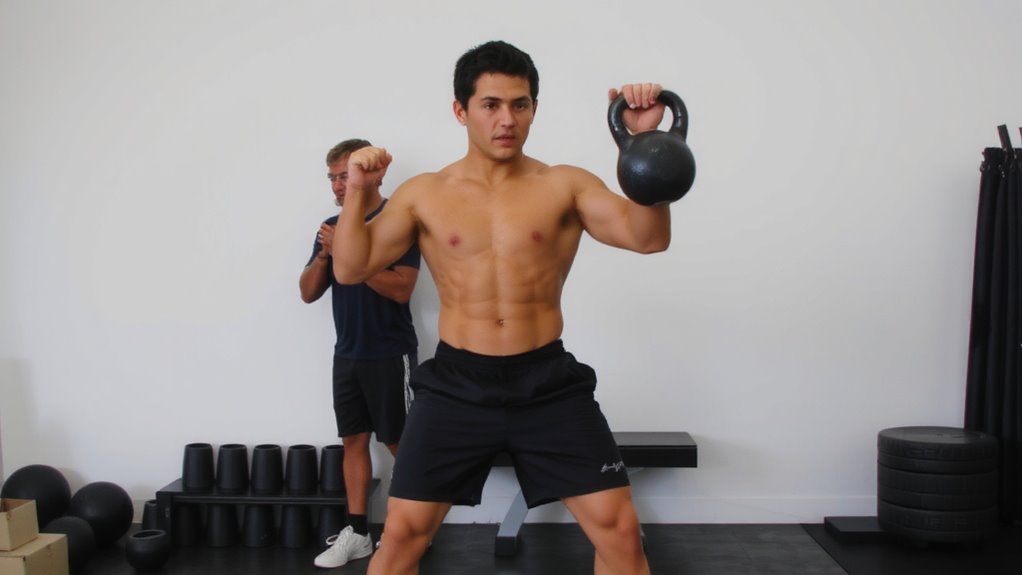
Because the kettlebell swing relies so heavily on precise mechanics, even small errors can undermine performance and increase injury risk over time. You often see improper posture-rounded back, overextended spine-leading to strain, especially when fatigue sets in. Avoid hunching your shoulders or jerking the bell upward with your arms; that shifts work from the hips and glutes, where it belongs. Momentum reliance is another frequent flaw: swinging too fast or high without controlled hip drive compromises form and reduces power output. You’re not cheating gravity-you’re training your posterior chain efficiently. Keep your core braced, chest up, and initiate each rep with a sharp hip snap. Watch the bell’s arc: it should float briefly at the top, not catapult. Correcting these issues guarantees safer, more effective swings and prepares you for advanced variations. Consistency with clean form trumps volume every time.
Build Core Stability With One-Arm Kettlebell Swings
Fixing swing errors sets the foundation, but now it’s time to challenge your stability in a more dynamic way. One-arm kettlebell swings introduce unilateral loading, forcing your core to resist unwanted motion. You’ll develop serious rotational control as your abs, obliques, and glutes work together to keep your torso stiff and aligned. This isn’t just about strength-it’s about coordination under asymmetrical demand. Below is what to focus on during each rep:
| Focus Area | Purpose | Performance Tip |
|---|---|---|
| Hinge Mechanics | Maintain power from hips | Drive through heels, not your back |
| Core Bracing | Resist rotation | Squeeze glutes and abs simultaneously |
| Shoulder Packing | guarantee joint safety | Keep shoulder blades down and back |
| Gaze & Posture | Support spinal alignment | Eyes forward, neck neutral |
Unilateral loading exposes weaknesses, making one-arm swings a functional cornerstone. Rotational control becomes non-negotiable-master it, and your swings, lifts, and daily movements improve.
When to Progress to One-Arm Swings
Readiness isn’t just about strength-it’s about control under load, and when you can consistently execute two-handed swings with crisp hip mechanics, a braced core, and no torso drift, you’re likely prepared to advance. You don’t need maximal arm strength, but your shoulder must handle the kettlebell’s momentum without fatigue compromising form. If your supporting arm jerks or your torso twists at the top, you lack sufficient balance control. One-arm swings demand unilateral stability, so if you’re lunging sideways or hiking the bell unevenly, stay with two hands a while longer. Mastery means repetition without compensation-your movement should look as clean on rep 20 as on rep one. When your nervous system confidently coordinates timing, power transfer, and joint alignment, then-and only then-should you shift to single-arm work. This progression isn’t about ego; it’s about precision, sustainability, and injury prevention over long-term training.
Safe Progression: Programming and Technique Tips
While maintaining proper form should always come first, programming your progression into one-arm kettlebell swings calls for a thoughtful blend of volume, intensity, and recovery. Start with 2–3 sets of 10–12 reps per arm, using a lighter bell than your two-handed version to prioritize technique refinement. Gradually increase volume over 3–4 weeks, ensuring each swing drives from the hips, not the arms. Focus on controlled deceleration and consistent glute engagement to limit spinal shear forces. Progression safety hinges on mobility, joint stability, and fatigue management-don’t rush the load increase. Pair sessions with at least 48 hours of recovery, especially if incorporating other posterior chain work. Use kettlebells with balanced handles and smooth spin to support consistent hand placement. Record your form monthly to spot asymmetries or breakdown. Mastery isn’t speed-it’s sustainable execution under fatigue, built through deliberate practice and intelligent programming. For home gyms, choosing the right equipment matters-investing in durable, evenly balanced cast-iron kettlebells ensures long-term progress and safety.
On a final note
You’ve built hinge mechanics and core control, so shifting to one-arm swings makes sense for asymmetry training and grip development. This progression challenges stability without sacrificing hip power, provided technique stays crisp. A well-balanced kettlebell with a smooth handle shift aids consistency and reduces wrist strain. Always prioritize form over load, and let movement quality-not ego-guide advancement. Recovery matters just as much: rotate training volume, inspect gear for wear, and allow soft tissues time to adapt.