Optimizing Sleep Positioning to Reduce Edema in Lower Limb Injuries
To reduce leg swelling overnight, elevate your legs above heart level using firm, medical-grade pillows under the calves-not knees-to maintain circulation. Sleep on your back with legs slightly elevated or try side-sleeping with support to enhance fluid drainage. Avoid flat positions or soft cushions that collapse, as they worsen edema. Proper alignment and consistent elevation minimize hydrostatic pressure, aiding recovery-especially after lower limb injuries. You’ll find even more strategies to improve nighttime comfort and healing just ahead.
Notable Insights
- Elevate legs above heart level using firm pillows to enhance venous return and reduce overnight swelling.
- Sleep in a supine position with legs supported to minimize gravitational fluid accumulation in injured limbs.
- Avoid sharp knee bends during elevation to prevent compression of blood vessels and maintain circulation.
- Use medical-grade foam or contoured leg wedges for stable, sustained elevation throughout the night.
- Seek medical care promptly if swelling is sudden, one-sided, or accompanied by redness, warmth, or pain.
How Your Sleep Position Affects Leg Swelling
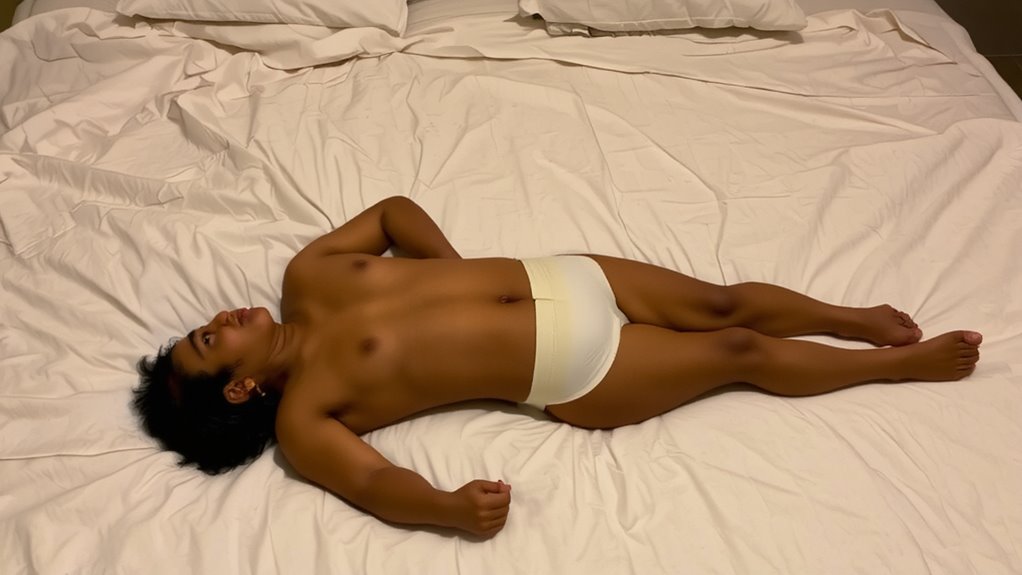
Why do your legs feel heavier or look puffier when you wake up? Your sleep position plays a key role in how fluids and pressure distribute through your lower limbs overnight. Lying flat for hours can slow blood circulation, letting fluid pool in your legs and feet. This buildup, called dependent edema, often worsens if you sleep on your back with legs extended, especially on soft mattresses that don’t support spinal alignment. Poor posture may also cause mild nerve compression, affecting sensation and recovery. Side sleeping or using supportive pillows under the knees can reduce strain and improve venous return. Though fitness recovery gear like compression sleeves helps during the day, nighttime positioning is just as critical. Proper alignment doesn’t just prevent discomfort-it enhances healing. You’re not just resting; you’re actively influencing how well your body recovers. An effective solution involves using an under-knee pillow designed for back pain relief to maintain optimal leg elevation and spinal alignment.
Elevate Your Leg Above Heart Level
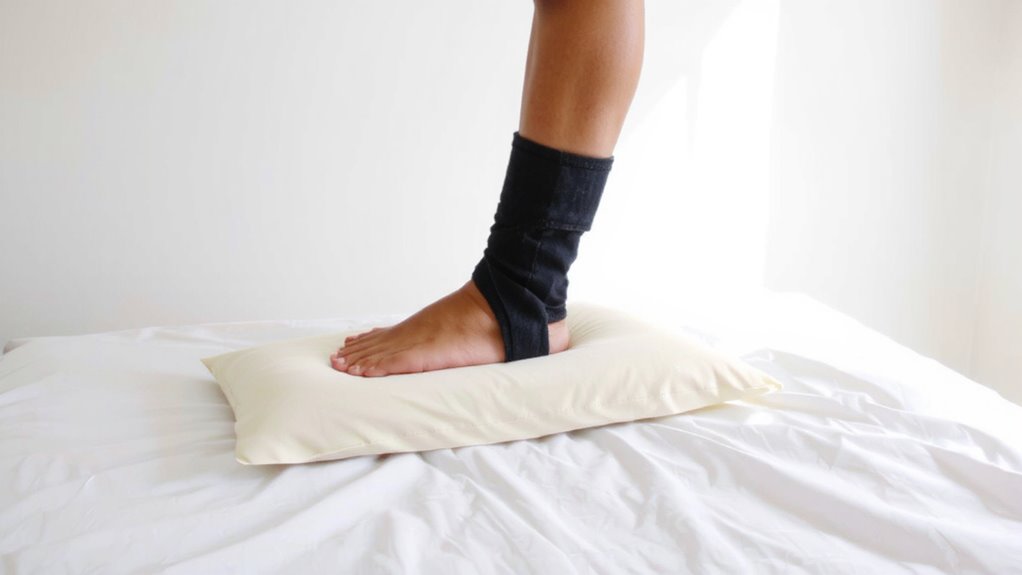
You’ve probably noticed less swelling after a night with your legs propped up-and for good reason: elevating your legs above heart level taps into your body’s circulatory mechanics to combat fluid buildup. This simple adjustment delivers a natural circulation boost, helping venous blood and lymphatic fluid return to the heart more efficiently. For ideal leg alignment, use firm pillows or a dedicated leg wedge to maintain a smooth, stable incline-ideally 6 to 12 inches above the heart. Avoid bending the knee too sharply, as improper alignment may restrict flow rather than aid it. Consistent elevation during sleep reduces hydrostatic pressure in the lower limbs, directly decreasing edema. Clinical observations support this passive strategy as both effective and low-risk. Though recovery gear like contoured elevation cushions can enhance comfort and precision, even basic household supports work well when positioned correctly. The key is consistency and proper angle-not expensive equipment. A well-designed dedicated leg wedge can also help prevent pressure sores by evenly distributing weight during prolonged bed rest.
Best Sleeping Positions to Reduce Swelling
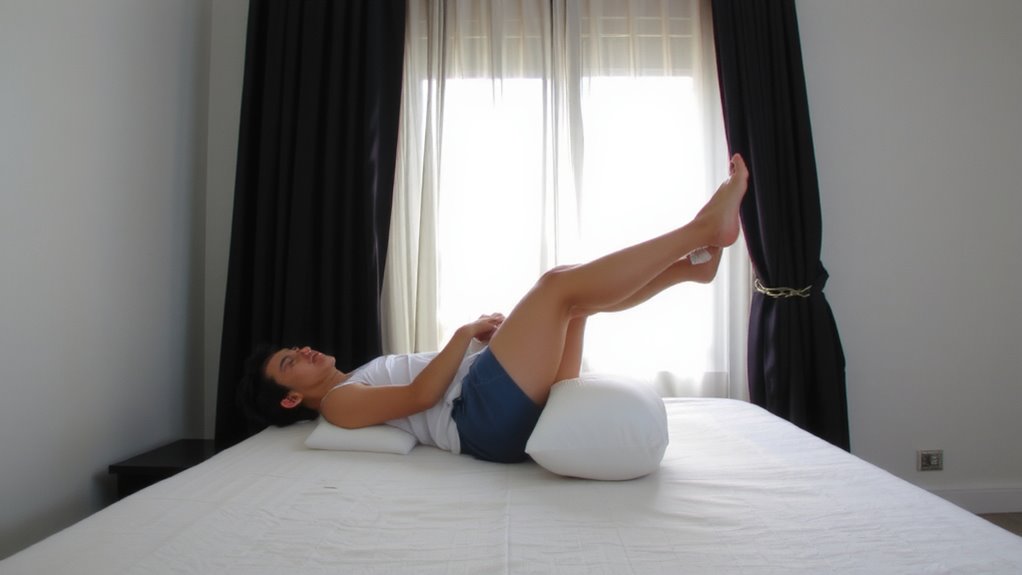
How you position your body during sleep can greatly influence fluid distribution, especially when managing swelling in the lower extremities. Your sleep posture directly affects gravity impact, which in turn regulates how fluid accumulates in injured limbs. To minimize edema, certain positions are more effective than others.
| Position | Gravity Impact on Swelling |
|---|---|
| Supine (legs elevated) | Minimal – ideal drainage |
| Side-lying (legs supported) | Moderate – slight fluid shift |
| Prone (with cushion) | Low – partial improvement |
| Semi-Fowler’s | Minimal – good circulation |
| Flat on back (no elevation) | High – promotes pooling |
Supine with elevation works best, leveraging gravity to encourage venous return and reduce pooling. Side-lying can help if properly supported, but prone offers limited benefits unless carefully adjusted. Avoid lying flat without support, as it increases gravity impact and undermines recovery. A well-chosen sleep posture makes a measurable difference.
Use the Right Pillows to Support Elevation
Proper elevation starts with the right support, and not all pillows deliver the same results. When reducing lower limb edema, pillow placement is critical-you need to position your leg above heart level, which often requires a sturdy, contoured design rather than a soft decorative cushion. Standard bed pillows compress too quickly, failing to maintain consistent elevation throughout the night. Instead, look for medical-grade foam or adjustable inflatable options that offer reliable support quality. These specialized pillows maintain their shape, ensuring your limb stays properly aligned. Poor support quality leads to micro-shifts in position, reducing drainage efficiency. For best outcomes, place a long leg-length pillow or stacked supportive bolsters under the calf-not the knee-to avoid joint pressure. Proper pillow placement promotes venous return and minimizes fluid pooling. With consistent use, high-quality elevation aids enhance recovery, making them a smart addition to your nightly routine. Consider using an under-knee pillow designed for back pain to provide targeted elevation and alignment support.
Mistakes That Make Nighttime Swelling Worse
Elevating your legs correctly at night can make a real difference in managing edema, but even the best pillow setup won’t help if common errors undermine your efforts. You might be worsening swelling without realizing it-like sleeping with your legs bent too sharply, which restricts venous return and leads to poor circulation. Another frequent mistake is remaining in prolonged sitting earlier in the day, especially with legs dangling, which allows fluid to pool in your lower limbs. You likely carry over that excess fluid into bedtime, counteracting elevation benefits. Also, using flat or unsupportive pillows fails to maintain proper angle and pressure distribution. The right gear matters, but so does your daily routine. Without addressing habits like prolonged sitting and improper limb alignment, even high-quality supports won’t deliver their full recovery potential. Consistency in both positioning and movement patterns is key to reducing nighttime swelling effectively.
When to See a Doctor for Leg Swelling
When should you stop managing leg swelling at home and seek medical advice? If your swelling worsens despite elevation and compression, it’s time to consult a professional. You shouldn’t ignore sudden, one-sided swelling-especially if it’s accompanied by warmth, redness, or pain-because these could signal deep vein thrombosis, a potentially dangerous clot. Likewise, if you notice spreading redness, fever, or skin that feels hot to the touch, those may be cellulitis symptoms, indicating a bacterial infection needing prompt antibiotics. Delaying care in these cases risks serious complications. While proper sleep positioning and recovery gear like adjustable leg wedges can help manage mild edema, they’re not substitutes for medical evaluation when red flags appear. Knowing when to seek help guarantees recovery stays on track, preventing setbacks. Trust your judgment-if something feels off, get it checked.
On a final note
You’re better positioned to manage swelling by elevating your leg above heart level using firm, supportive pillows-this isn’t just comfort, it’s recovery. Proper sleep alignment enhances venous return and reduces fluid pooling. Avoid flat or dependent positions; they worsen edema. Consistency matters, but so does knowing when swelling signals something deeper. Combine smart positioning with medical guidance for ideal healing. Your recovery gear should support, not substitute, sound clinical care.