Metronome-Guided Stride Lengthening Techniques to Break Awkward Post-Surgery Gaits
You can break post-surgery shuffling by syncing your steps to a metronome at 80–100 BPM, which retrains your nervous system for balanced, rhythmic gait. Use a digital metronome with headphones to maintain focus and gradually lengthen your stride as strength improves. Pair this with proper posture, core engagement, and supportive footwear to safely enhance stride length. Rhythm-based training boosts motor memory and coordination-key for smooth, confident walking beyond the clinic. There’s more to optimizing your recovery with the right tools and timing.
Notable Insights
- Use a metronome at 80–100 BPM to establish a steady rhythm for retraining natural step timing post-surgery.
- Synchronize foot strikes with the metronome beat to reduce shuffling and improve gait symmetry.
- Gradually increase stride length while maintaining rhythm, guided by recovery progress and comfort.
- Engage glutes and core with each step to support joint stability and enhance stride efficiency.
- Practice on even, non-slip surfaces with supportive footwear to reinforce control and build walking confidence.
Fix Your Post-Surgery Shuffle With Rhythm
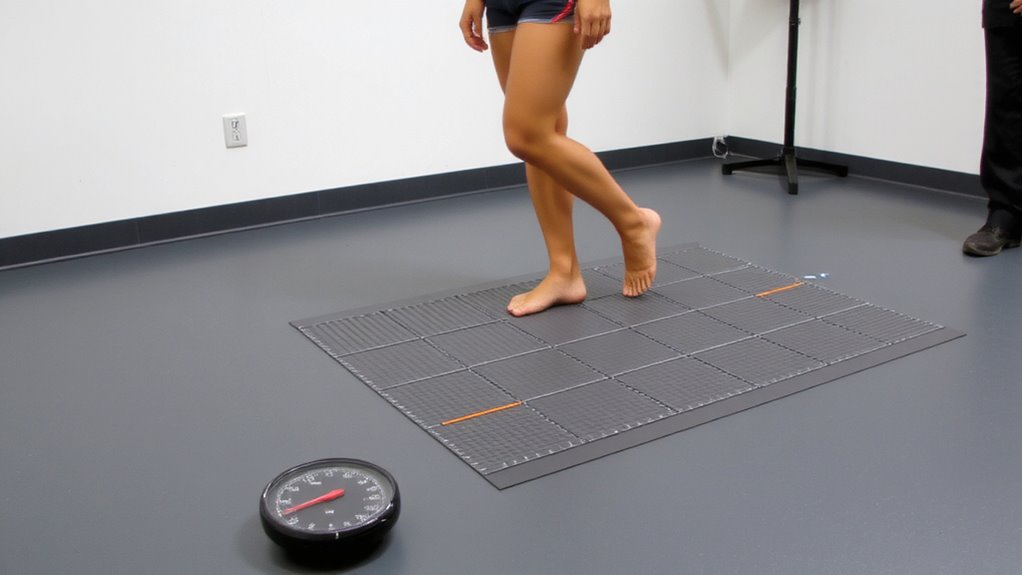
Why do so many post-surgery patients fall into a shuffling gait, and can rhythm actually help correct it? You often adopt this limp-like walk to protect healing tissues, but it compromises joint mobility and weakens balance training over time. Rhythm, surprisingly, plays a vital role in retraining your nervous system to restore natural stride patterns. When you synchronize steps to a steady beat, your brain recalibrates motor output, encouraging smoother, more coordinated movement. This isn’t just about timing-it directly supports improved joint mobility by promoting full range of motion with each step. Likewise, consistent rhythmic cues enhance balance training by reducing reliance on compensatory movements. Clinical observations show patients using rhythmic cues regain confidence in walking faster than those relying solely on traditional rehab. While fitness gear like smart canes or gait trainers help, they’re most effective when paired with temporal cues. Rhythm isn’t a shortcut-it’s a neurological scaffold that rebuilds efficient gait from the ground up.
Use a Metronome to Set Your Step Tempo
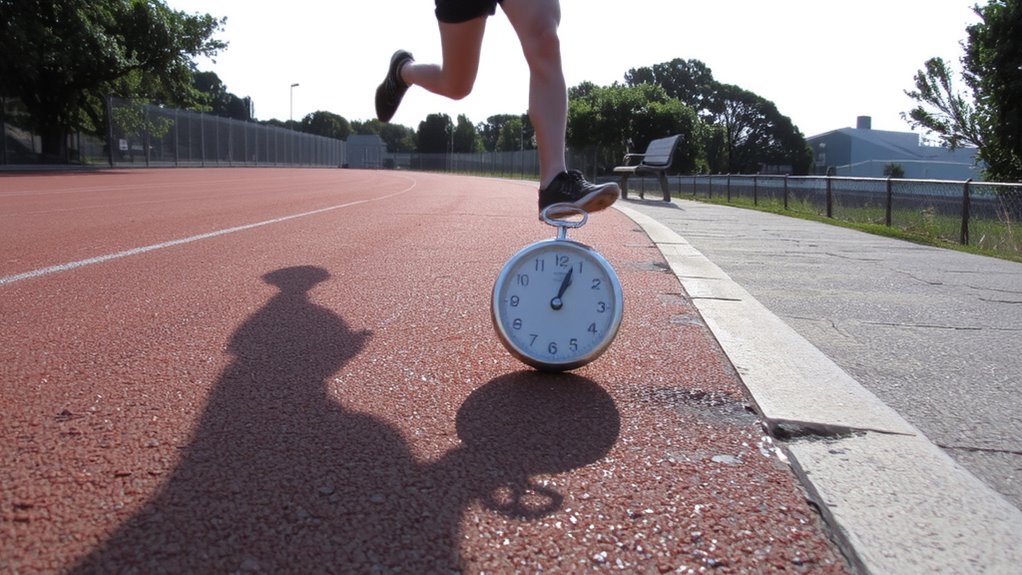
While you’re retraining your gait after surgery, setting a consistent step tempo with a metronome can make a real difference in restoring natural walking rhythm. You’ll gain better step timing by syncing each footfall to the beat, which reduces asymmetry and encourages smoother shifts. Most metronomes let you adjust beats per minute (BPM), allowing precise cadence control tailored to your recovery stage. Start at a comfortable pace-often 80–100 BPM-and gradually increase as strength improves. Digital models with headphone jacks are ideal, offering discreet use during therapy walks. Unlike music, a metronome provides predictable, unchanging pulses, eliminating distractions that hinder focus. For effective rehab, consistency matters: use it daily during short walking sessions. Over time, your nervous system adapts, internalizing the rhythm. This isn’t just about speed-it’s retraining neuromuscular patterns with reliable auditory feedback, a proven method in clinical gait rehabilitation.
Sync Your Stride to a Rhythm
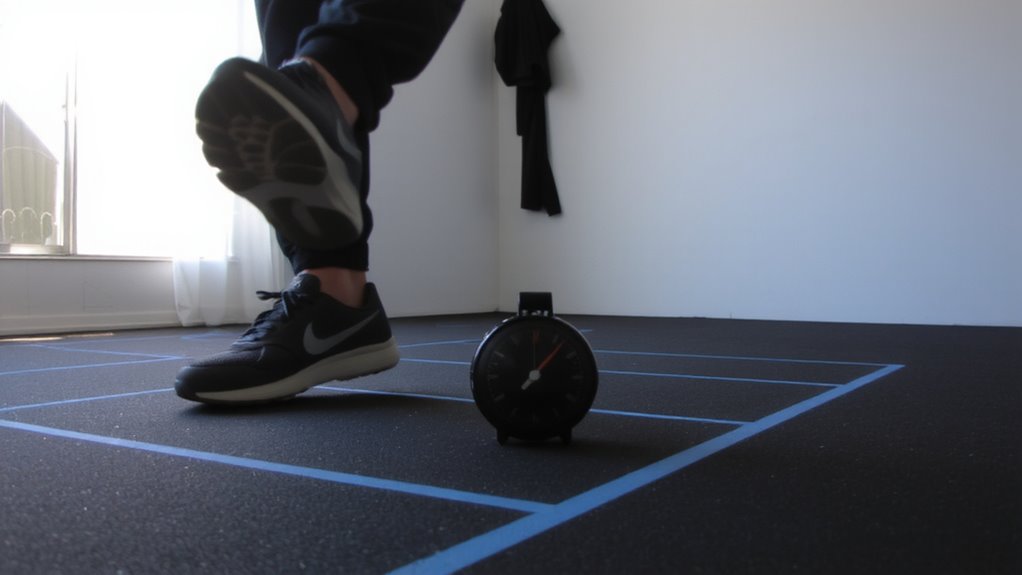
How do you turn a steady beat into real stride improvement? You start by syncing each step to the metronome’s pulse, training your body for better rhythmic coordination. When your feet strike the ground in time with the beat, you create consistent tempo alignment, which stabilizes your gait pattern. This isn’t just about moving-you’re reteaching your neuromuscular system post-surgery precision. Devices like adjustable metronome apps or wearable rhythm cues make this practical, offering precise BPM control. You’ll notice smoother shifts and less hesitation. Over time, this rhythm-based feedback strengthens motor memory, reducing awkward shuffling. Unlike generic walking aids, tools that enforce rhythmic coordination target gait quality directly. The metronome isn’t a crutch-it’s a guide for rebuilding confidence and control. With consistent use, tempo alignment becomes automatic, laying the foundation for longer, more fluid steps-without rushing the recovery process.
Grow Your Stride Safely
What does it take to extend your stride without pushing too hard? It starts with proper alignment-keeping your pelvis neutral, spine tall, and shoulders relaxed guarantees each step supports recovery, not strain. You’ll need intentional muscle engagement, activating glutes and core with every movement to stabilize joints and promote balance. Rushing leads to compensation, where weak muscles force others to overwork, increasing injury risk. Instead, use the metronome to guide gradual increases in stride length, syncing each extension to a beat that matches your body’s readiness. Supportive footwear with responsive cushioning enhances proprioception, helping maintain form. Don’t overlook surface choice-start on even, non-slip terrain to reinforce control. Track progress weekly: even small gains in stride length with consistent form signal real improvement. Patience, guided by rhythm and biomechanics, builds safer, sustainable movement patterns during recovery.
Walk With Confidence Outside Therapy
Once you’ve built foundational stability and rhythm in therapy, stepping into real-world environments becomes the next test of both confidence and technique. Outdoor adaptation requires more than repetition-it demands responsiveness to uneven terrain, distractions, and variable pacing. Your metronome-guided stride training translates well outside controlled settings, especially when paired with ongoing balance training. You’ll notice small changes: better weight shifts, quicker corrections, smoother heel-to-toe shifts. These aren’t just habits-they’re measurable improvements in gait efficiency. Recovery-focused fitness gear, like sensor-embedded insoles or rhythmic auditory devices, supports consistency by providing real-time feedback. They’re not gimmicks; they’re tools calibrated for neuro-motor re-education. Used correctly, they bridge therapy and daily life. Walking confidently outdoors isn’t about speed-it’s about control, timing, and trust in your body’s revised patterns. Stick with the protocol, and you’ll find natural movement returning, one precise step at a time.
On a final note
You’ve seen how metronome-guided training reshapes post-surgery gait, correcting asymmetry and building rhythm. This method isn’t flashy, but it’s effective-using auditory cues to retrain neural-motor pathways. Combined with proper footwear and gradual load progression, it delivers measurable improvements in stride length and balance. While not a standalone fix, it’s a precise, low-cost tool that enhances rehab when used consistently alongside clinical guidance.