Shoulder Mobility Drills With Overhead Triceps Stretches for Lat and Triceps Release
You should perform overhead triceps stretches with your elbow pointing up and ribs down to protect your spine, pairing them with daily shoulder mobility drills like band pull-aparts and controlled rotations. Tight lats restrict overhead movement, so use foam rollers or resistance bands to release tension safely. Avoid common errors like arching your back or rushing the stretch-consistency and form matter more than depth. You’ll discover smarter ways to enhance recovery and gear use next.
Notable Insights
- Perform arm circles and band pull-aparts to warm up shoulders before overhead triceps stretches.
- Keep elbows pointing upward and spine neutral during overhead triceps stretches for optimal alignment.
- Use a resistance band to deepen lat stretches, improving overhead mobility and muscle symmetry.
- Exhale while gently guiding the elbow down to enhance triceps and lat release safely.
- Avoid slouching or arching; maintain packed shoulders and ribs down to protect joints.
How to Do Overhead Triceps Stretches Right
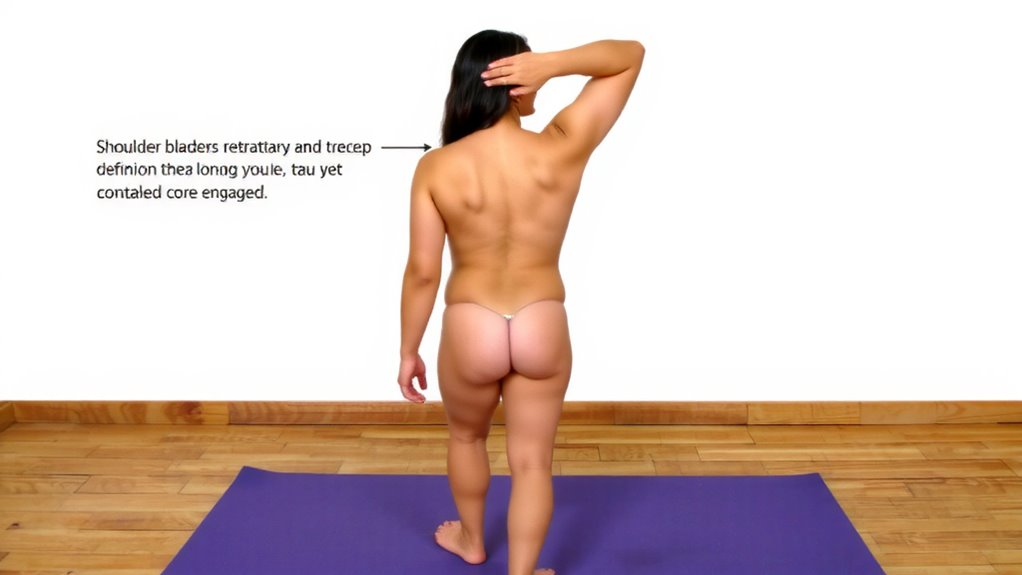
Why do so many people struggle with overhead triceps stretches when the movement seems straightforward? You’re likely missing two key elements: proper alignment and breath control. When you raise your arm overhead, your elbow should point toward the ceiling, not flare outward-this guarantees the triceps and lat engage fully. Keep your spine neutral and avoid arching your back, which compromises form. Gently guide your bent elbow down with the opposite hand, but don’t over-pull; let the stretch develop gradually. Sync your movements with steady breaths-inhale to prepare, exhale to deepen the stretch. Breath control not only enhances muscle relaxation but also improves neuromuscular feedback. Done right, this stretch supports shoulder mobility and aids recovery, especially when integrated after strength work. Using recovery gear like foam rollers afterward can amplify results, but precision in form always comes first.
Try These Daily Shoulder Mobility Drills
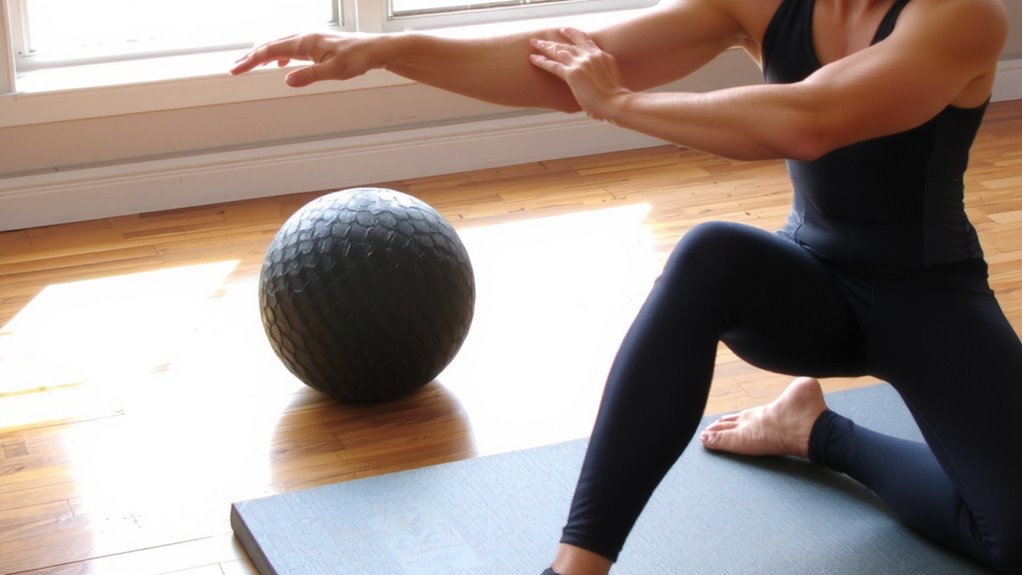
You’ve already built a foundation for triceps flexibility, and now it’s time to expand that control into full shoulder mobility. Start each session with dynamic shoulder warm ups-arm circles and band pull-aparts-to increase blood flow and prepare the joint capsule. Incorporate controlled joint rotation exercises like internal/external rotation with a resistance band, which improve rotator cuff stability and range of motion. These drills, when done daily, enhance scapular movement and reduce impingement risks. High-quality resistance bands and padded floor mats make a noticeable difference in consistency and comfort, supporting long-term recovery. Unlike passive stretching, active mobility work builds functional strength alongside flexibility. You’ll notice better posture and overhead reach, especially after strength training. Done consistently, these drills support joint health more effectively than static stretches alone. Prioritize form and gradual progression-you don’t need speed or force to see real gains in shoulder function. For optimal results, consider incorporating tools recommended in a Top Recovery Tools buying guide.
Use Mobility and Stretching to Release Tight Lats

How often do tight lats go unnoticed until they’re pulling your posture out of alignment or limiting overhead motion? You might not realize how much they affect shoulder mobility until you incorporate targeted stretches. Releasing tight lats improves muscle symmetry, reducing strain on opposing muscle groups. Without balanced lat activation, especially during pulling movements, you risk compensatory patterns that hinder performance. Using a foam roller or resistance band can enhance lat release, promoting better range of motion. Stretching daily-especially after upper-body workouts-supports long-term joint health and scapular function. You don’t need advanced fitness gear; a simple towel overhead stretch works if done consistently. What matters is correct form and sustained tension release. Over time, improved lat flexibility contributes to more efficient movement and injury prevention. When lats are supple, shoulder drills become more effective, allowing real gains in mobility and coordination.
Avoid These Common Stretching Mistakes
While stretching can enhance recovery and maintain functional range of motion, skipping key techniques often undermines its benefits-especially when targeting the shoulders and triceps. You’re likely doing more harm than good if you’re slouching into stretches with incorrect posture; this misaligns joints and reduces muscle engagement, especially in overhead triceps stretches where spinal positioning matters. Don’t just go through the motions-stay aware. Rushed breathing is another frequent error: shallow breaths spike tension instead of easing it, counteracting the relaxation needed for effective release. Instead, maintain steady, deep inhales and exhales to promote blood flow and encourage muscle elongation. Holding a stretch for 30 seconds with control beats five quick reps any day. Proper form beats speed every time, so ditch momentum and bouncing. Your lats and triceps respond best to mindful, consistent pressure, not force.
Fix These Triceps and Shoulder Errors for Better Results
Poor shoulder mobility and tight triceps often stem from more than just neglect-they’re usually tied to repeated mechanical errors that go unchecked during daily movement and recovery routines. You’re likely compromising shoulder alignment when reaching overhead, letting the scapulae wing or the humeral head slide forward, which increases joint stress and reduces triceps activation efficiency. Many people also brace through the neck and upper traps instead of engaging the posterior chain, limiting stretch depth and muscular response. Correcting these flaws means syncing movement with breath and intent: keep your ribs down, shoulders packed, and spine long during overhead triceps stretches. This alignment boosts lat engagement and improves triceps activation symmetry. Using recovery tools like foam rollers or massage balls can help release chronic tension, but only if applied with proper form. Consistency with precise technique delivers better mobility gains than aggressive stretching with poor mechanics. For targeted myofascial release, choose a firm foam roller that supports sustained pressure without collapsing under body weight.
On a final note
You’ve likely felt tightness in your lats or triceps after tough workouts, and these mobility drills help release that tension effectively. The overhead triceps stretch, when done correctly, improves shoulder range of motion while aiding lat flexibility. Daily consistency enhances recovery and prevents dysfunction. Paired with smart gear like supportive foam rollers or mobility bands, these moves boost performance. Avoid bouncing or overreaching-precision matters. Done right, they’re practical tools for long-term joint health and movement efficiency.