Thoracic Mobility Drills With Standing Arm Circles for Joint Lubrication
You’ll get better joint lubrication and mid-back activation by performing standing arm circles with controlled, progressive movements. Keep your spine neutral and feet grounded to maximize thoracic mobility. Forward circles prime the scapulothoracic joint, while backward motions release tight shoulders and improve synovial flow. These drills enhance posture and movement efficiency. When done consistently, they reduce compensatory strain. More effective than static stretches, they prepare your body for dynamic demands-and you’re just scratching the surface of what they can do.
Notable Insights
- Standing arm circles promote thoracic mobility by encouraging natural mid-back rotation and extension.
- Maintain neutral spine and relaxed shoulders to maximize joint lubrication and movement efficiency.
- Forward arm circles activate mid-back muscles and lubricate scapulothoracic and glenohumeral joints.
- Backward arm circles release tight shoulders and improve synovial fluid circulation for joint health.
- Gradually increasing circle size and adding resistance enhances thoracic mobility and connective tissue readiness.
Why a Mobile Mid-Back Improves Daily Life
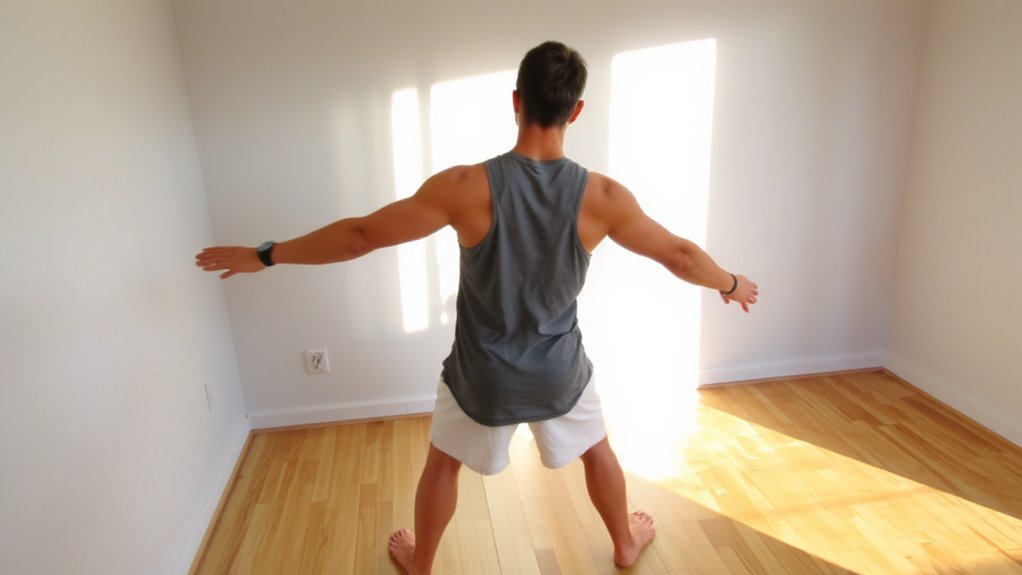
A stiff thoracic spine can silently undermine your posture, movement efficiency, and even breathing-problems that snowball into everyday discomfort. When your mid-back lacks mobility, you compensate by overextending in your neck or lower back, distorting spinal alignment and weakening posture support. Over time, this strain contributes to chronic tension, reduced joint lubrication, and inefficient movement patterns. A mobile thoracic spine, however, allows for natural rotation and extension, promoting fluid motion during daily tasks and exercise. Fitness recovery tools like foam rollers and mobility bands help restore motion, but consistency matters more than gear. You’ll notice improved shoulder reach, easier breathing, and less fatigue when standing or lifting. While recovery aids assist, the real change comes from repeated, mindful movement-not expensive equipment. Prioritizing thoracic mobility isn’t just for athletes; it’s foundational for long-term musculoskeletal health and functional independence.
How to Stand for Better Arm Circle Form
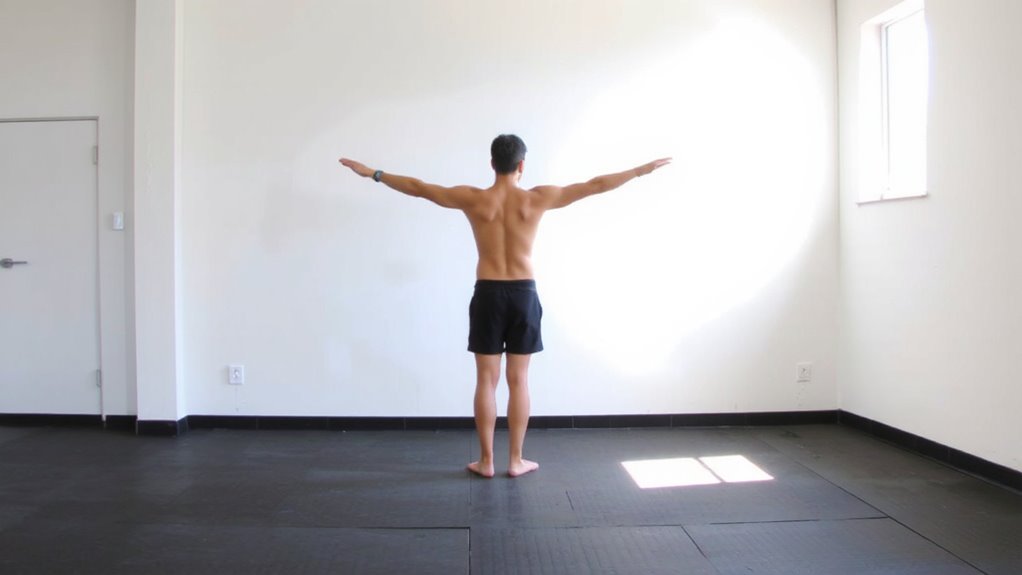
Proper footing sets the foundation for effective arm circles, and standing correctly guarantees you’re engaging the right muscles without unnecessary strain. Proper alignment secures peak thoracic movement, allowing smooth shoulder engagement with each rotation. Keep your feet hip-width apart, knees slightly bent, and weight balanced over the midfoot.
| Posture Cue | Purpose | Benefit |
|---|---|---|
| Feet grounded | Stabilizes the base | Enhances joint lubrication |
| Spine neutral | Maintains proper alignment | Reduces lower back stress |
| Shoulders relaxed | Promotes natural movement | Improves shoulder engagement |
This stance supports functional motion, encourages muscular efficiency, and prevents compensation patterns. Avoid locking joints or hiking shoulders-stay loose but controlled. For best results, pair this posture with mindful breathing and consistent rhythm. Proper setup maximizes mobility gains while minimizing fatigue, especially when integrated into recovery-focused routines.
Warm up Your Mid-Back With Forward Arm Circles
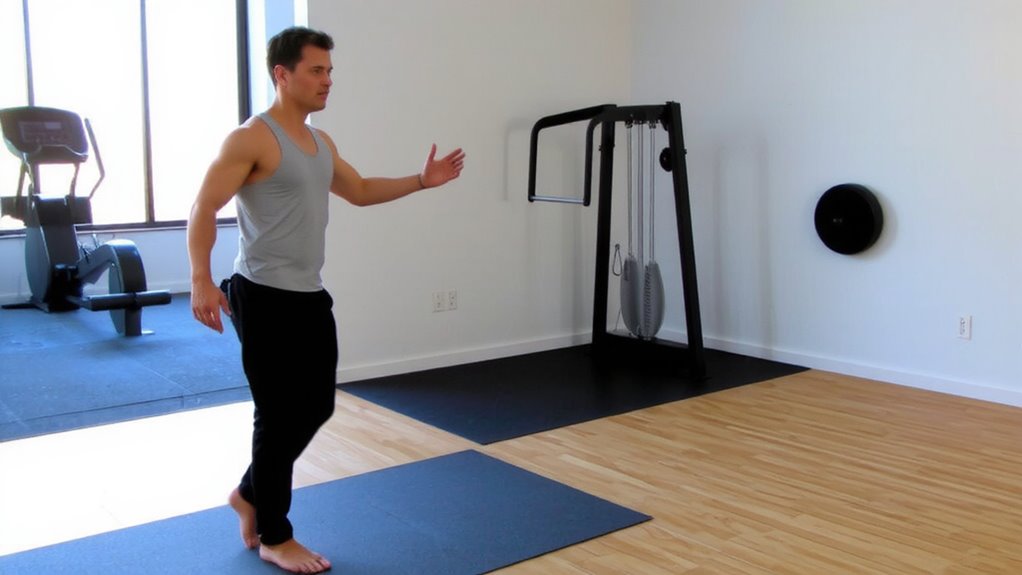
Think of your mid-back as the gateway to fluid shoulder motion-tightness here stifles rotation, dulls activation, and shifts strain to the neck and lower back. Forward arm circles prime the thoracic spine for movement by promoting spinal alignment and boosting joint activation across the scapulothoracic and glenohumeral joints. Stand tall, arms extended, and initiate small, controlled forward circles. Focus on maintaining a neutral spine-no arching or hunching-so each rotation reinforces proper posture. As momentum builds, gradually expand the circle size, engaging the entire mid-back musculature. This motion lubricates joints, enhances proprioception, and preps connective tissues for more dynamic work. Unlike passive recovery tools, this active drill delivers measurable improvements in mobility and neuromuscular readiness. It’s efficient, requires no fitness gear, and integrates seamlessly into warm-ups. Over time, consistent use leads to better movement economy and reduced stiffness, making it essential for long-term joint health.
Release Tight Shoulders With Backward Arm Circles
You’ll find backward arm circles especially effective for loosening tight shoulder capsules and resetting scapular positioning, particularly after prolonged sitting or heavy upper-body work. This motion promotes natural joint lubrication by encouraging synovial fluid circulation, which keeps your shoulder joints moving smoothly. As you perform slow, controlled backward circles, you create space within the joint, helping ease compression and irritation. It’s a simple yet powerful shoulder release technique that doesn’t rely on fancy gear-just mindful movement. Unlike aggressive stretches or recovery tools, this drill works passively to restore range without strain. You’ll notice improved mobility and reduced stiffness, especially when done consistently. The drill integrates well into warm-ups or recovery routines, offering both preventive and rehabilitative benefits. For long-term joint health, nothing beats consistent, low-load movement like this. It’s practical, scalable, and effective-no supplements or devices needed.
Add a Twist to Free Your Mid-Back
Now that you’ve addressed shoulder tightness with backward arm circles, it’s time to shift attention down the kinetic chain to the thoracic spine. Adding a twist engages spinal rotation, which targets stiffness between your shoulder blades and improves mid-back mobility. Stand with feet hip-width apart, arms extended straight out to the sides. As you rotate your torso left and right, keep your hips stable-this isolates movement to the thoracic region. Coordinate each turn with breath: inhale to prepare, exhale as you twist deeper. This breath coordination enhances neuromuscular control and eases tension. Unlike passive stretching, active drills like this stimulate joint lubrication and promote segmental movement. Over time, consistent spinal rotation with proper mechanics supports better posture and reduces strain during upper-body lifts. While fitness gear like foam rollers may offer temporary relief, nothing replaces functional motion. Use this drill to maintain spinal health-it’s efficient, equipment-free, and grounded in biomechanical precision.
Make It a Habit: When to Do Arm Circles
Regularly incorporating arm circles into your routine can markedly enhance shoulder and thoracic mobility, especially when timed effectively. You’ll notice consistency benefits when you make them part of your daily warm-up or cooldown. Doing arm circles first thing in the morning kickstarts circulation, while post-workout sessions aid in recovery by promoting joint lubrication. For best results, aim for daily integration-just 60 seconds twice a day can lead to measurable improvements in range of motion. Pairing them with deep diaphragmatic breathing enhances neuromuscular coordination and signals your body to move efficiently. Unlike passive recovery tools, this active drill requires no fitness gear, making it practical and accessible. Over time, this habit supports better posture and reduces stiffness, especially if you sit for long periods. The simplicity of arm circles masks their effectiveness; when performed consistently, they become a cornerstone of sustainable mobility work, blending seamlessly into even the busiest schedules.
Build Bigger Mobility Gains With Arm Circle Variations
Why settle for basic arm circles when slight tweaks can dramatically expand your thoracic mobility? By introducing variations, you amplify dynamic tension and boost rotational flow, activating deeper joint lubrication and muscle activation. Small changes in plane, speed, or resistance transform a simple warm-up into a mobility multiplier. Try forward, backward, diagonal, and cross-body circles-each shifts the movement pattern to target different thoracic segments. Add light resistance bands to increase engagement without compromising form.
| Variation | Focus Area |
|---|---|
| Forward Large | Scapular protraction |
| Backward Controlled | Thoracic extension |
| Diagonal Sweeps | Rotational flow |
| Cross-Body Hugs | Dynamic tension |
| Band-Resisted | Joint compression release |
These drills aren’t just prep-they’re precision tools. Consistent use builds lasting mobility, especially when paired with recovery-focused gear like foam rollers. You’ll notice smoother overhead reach and reduced stiffness.
On a final note
You’ll notice improved posture and reduced stiffness when you make standing arm circles part of your routine. This simple drill boosts thoracic mobility and lubricates joints, enhancing recovery between workouts. Paired with quality recovery gear-like foam rollers or massage balls-the benefits stack. It’s not just movement; it’s maintenance. Consistent practice yields real gains in shoulder and mid-back function, making daily motions easier and workouts safer.