Why Gardening Can Serve as a Therapeutic Outlet for Recovering Athletes
You’re used to pushing limits, but now gardening lets you heal with purpose. It turns discipline into growth, not strain-each planted seed a small win. Tasks like weeding calm your mind, building focus without effort. Gentle movement keeps your body flowing, not fractured. Watching things grow on nature’s terms teaches patience recovery rarely feels. It’s control you can tend, not force. And there’s more to how this quiet work rebuilds resilience where it counts.
Notable Insights
- Gardening channels athletic discipline into nurturing plants, providing structure and purpose during physical recovery.
- Repetitive tasks like weeding promote mindfulness, reducing anxiety and supporting cognitive healing.
- Gentle movements involved in planting and harvesting improve joint mobility and circulation without strain.
- Watching plants grow teaches patience and resilience, mirroring the gradual nature of athletic recovery.
- Healing garden designs with raised beds and aromatic plants reduce physical stress and enhance sensory well-being.
Why Gardening Helps Injured Athletes Heal Mentally
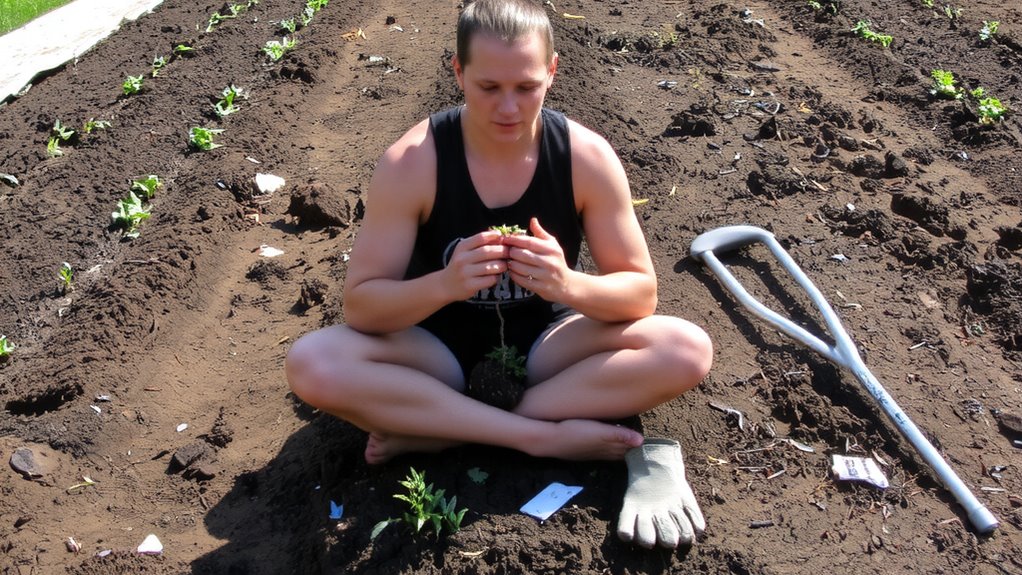
Recovery isn’t just about healing muscles or mending ligaments-it’s about reclaiming control, and that’s where gardening steps in. You’ve spent years fine-tuning your body with high-performance fitness gear, but now, stillness feels foreign. Gardening redirects that discipline into soil and seedlings, offering structure without strain. The act of planning, planting, and nurturing builds emotional resilience-each small victory, like spotting a first sprout, counters helplessness. You aren’t passively waiting; you’re growing something tangible. Tasks like turning compost or weeding demand focus, gently clearing mental fog and sharpening mental clarity. Unlike intense training, this movement is measured, rhythmic, restorative. You’re not chasing PRs, but progress still happens-just slower, quieter. Research shows nature-based activity lowers cortisol, which supports psychological recovery. For athletes used to metrics, this shift may feel imprecise, yet the benefits in mood regulation and cognitive reset are measurable over time. Gardening doesn’t replace rehab, but it complements it-root by root, breath by breath.
Calm the Mind Through Simple Garden Tasks
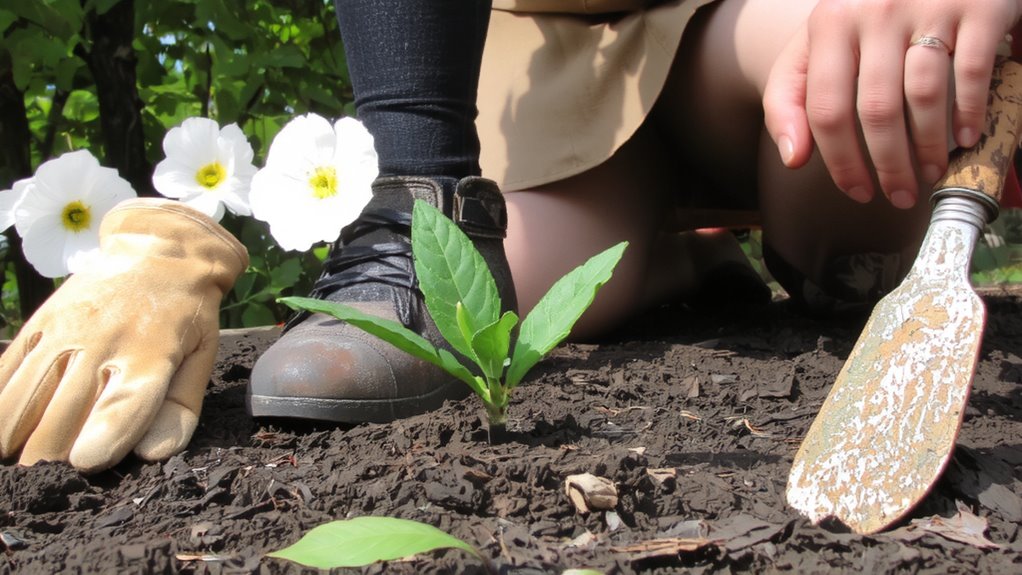
What if the quiet work of pulling weeds or deadheading flowers could do more than tend a garden-what if it also steadied your mind? With each handful of soil turned and every careful act of mindful planting, you’re not just nurturing plants-you’re engaging in soil therapy. These repetitive, low-intensity actions ground your thoughts, reducing mental noise and helping you stay present. You don’t need high-tech fitness gear or structured rehab routines for this kind of recovery; the garden offers a natural environment where focus replaces frustration. Simple tasks like watering seedlings or trimming leaves encourage a rhythm that mimics mindfulness practices, proven to lower stress hormones. Unlike intense workouts, this calm engagement supports cognitive recovery without physical strain. Soil therapy isn’t just symbolic-it’s sensory. The feel of earth, the smell of damp roots, the quiet focus-they all combine to restore mental balance during injury, making mindful planting a practical, therapeutic tool.
Move Without Pain: Boost Mobility and Circulation
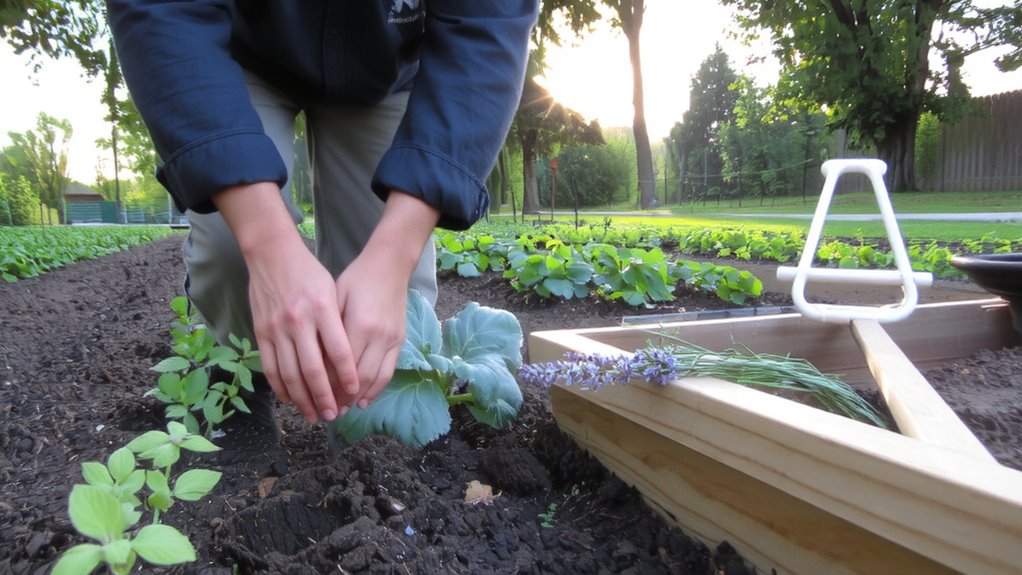
While you might not think of weeding or harvesting as exercise, these gentle movements actually promote joint mobility and support healthy circulation without straining injured tissues. You’ll find that bending, crouching, and reaching during garden tasks help improve flexibility over time, especially when done consistently. Unlike high-impact workouts, these low-intensity actions reduce stiffness in muscles and joints, making them ideal during recovery. The rhythmic nature of digging or planting encourages blood flow, which aids in nutrient delivery and waste removal at the cellular level-key for tissue repair. You’re not pushing limits, but you’re still active, maintaining range of motion without re-injury risk. Fitness recovery isn’t always about resistance bands or foam rollers; sometimes, functional movement in a natural setting works better. Gardening offers that-practical, therapeutic motion that keeps your body fluid, responsive, and progressing.
Grow Something You Can Control
You’re already moving without pain, reaping the circulatory and mobility benefits of bending, reaching, and tending to your garden beds. Now, focus on what you can control-your effort, your care, your consistency. Unlike recovery timelines that feel unpredictable, gardening offers tangible progress you shape directly. Soil therapy grounds you, literally and mentally, connecting your hands to a process you guide. Each seed planted becomes a lesson in plant resilience; they adapt, survive setbacks, and grow-even when conditions aren’t perfect. Just like rehab, success comes from persistence, not perfection. You regulate water, sunlight, and spacing, mastering small variables that yield visible results. This sense of agency rebuilds confidence eroded by injury. The garden doesn’t rush you, but it does respond-proving effort still matters. In this controlled environment, you reclaim influence over growth, one rooted step at a time.
Build Patience With Nature’s Timeline
Since growth rarely follows a straight line, trusting nature’s rhythm teaches a quiet but essential lesson in patience-one that mirrors the nonlinear path of fitness recovery. You can’t rush a seed to sprout or force a stem skyward, just as you can’t speed recovery through sheer will. This slow, steady unfolding is where soil therapy begins to take root, offering a tactile, grounding practice that aligns your mind with measured progress. As you observe plant resilience-how a seedling bends but doesn’t break in wind or rebounds after drought-you start redefining strength not as intensity, but as endurance and adaptability. These are the quiet victories recovering athletes need. Unlike high-tech fitness gear that promises quick fixes, gardening doesn’t dazzle-it reveals. It teaches you to honor each phase, understanding that real healing, like growth, requires time, consistency, and trust in unseen processes beneath the surface.
Create a Healing Garden Space
A healing garden space isn’t just about what you plant, but how you shape the environment to support your recovery. Design it with intention-prioritize comfort, accessibility, and sensory healing. Raised beds reduce strain, letting you engage in soil therapy without overexertion. Incorporate fragrant herbs, rustling grasses, and textured foliage to stimulate the senses gently. Use smooth pathways for easy movement, especially if you’re managing mobility limits during fitness recovery. The right layout promotes routine without pressure.
| Feature | Benefit | Recovery Support |
|---|---|---|
| Raised planters | Less bending, joint-friendly | Enhances soil therapy |
| Aromatic plants | Lavender, mint, rosemary | Promotes sensory healing |
| Soft mulch paths | Reduces impact on knees and back | Supports mobility |
| Shaded seating | Restful spot for mindfulness | Encourages reflection |
Thoughtful design turns gardening into therapy, not labor.
Turn Gardening Into Recovery Habits
How do small, consistent actions deepen the connection between physical recovery and daily routine? By turning gardening into structured recovery habits, you integrate soil therapy and green mindfulness into your healing. Daily tasks like weeding, planting, or watering become low-impact movement that supports joint mobility and muscle rehabilitation without straining recovering tissues. These actions, though subtle, reinforce discipline and patience-qualities essential in fitness recovery. Unlike intense workout gear that demands performance, gardening tools encourage gentle engagement, focusing on process over output. Over time, soil therapy grounds you, reducing cortisol levels, while green mindfulness sharpens focus through nature-based sensory awareness. You’re not just healing physically; you’re recalibrating mentally. Regular contact with soil and plants has measurable psychological benefits, aiding emotional regulation. This routine doesn’t replace training-it complements it, offering a sustainable rhythm that supports long-term athlete well-being.
On a final note
You’re rebuilding more than strength when you garden during recovery-you’re restoring balance. Simple tasks reduce stress while encouraging gentle movement, aiding circulation without strain. In nurturing plants, you regain a sense of control and purpose. Patience grows alongside herbs and vegetables, mirroring your own healing timeline. A well-designed garden becomes a therapeutic space, turning mindful habits into measurable progress. It’s not just therapy-it’s functional fitness redefined.