Yoga Mat-Free Floor Sequences Accessible for Limited Space Home Recovery
You can build an effective recovery routine on any flat, stable surface using just your bodyweight and minimal space. Perform gentle joint mobilizations, core-strengthening bridges, and wall planks to boost stability, then follow with seated folds and supine twists to enhance mobility. These mat-free floor sequences reduce stiffness quickly, support spinal alignment, and fit easily into daily life-especially when you know how to tailor them to your body’s needs.
Notable Insights
- Use a folded towel or carpet on flat, stable surfaces to cushion joints and maintain spinal alignment during floor sequences.
- Perform joint mobility drills like ankle circles and wrist rotations to prepare the body for movement without equipment.
- Practice bodyweight exercises such as slow bridges and wall forearm planks to build strength and stability in small spaces.
- Improve flexibility with seated forward folds and supine figure-four stretches that require no props and suit tight environments.
- End with a 5–10 minute cooldown of spinal rocks and knee-to-chest rolls to reduce stiffness and support daily recovery.
Set Up Your Recovery Space Safely
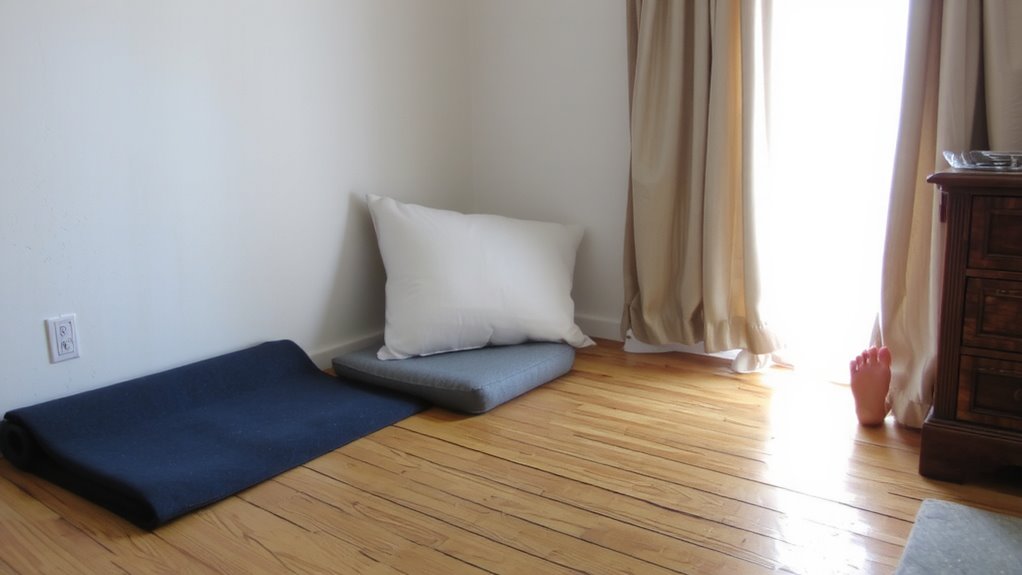
With just a few square feet, you can create a recovery zone that supports safe, effective yoga practice at home. Choose a flat, stable surface free of clutter to guarantee proper alignment and movement control. Even without a mat, ergonomic positioning remains essential-use a folded towel or carpet to cushion joints during seated or supine poses. Hard floors may compromise spinal alignment, while overly soft surfaces reduce stability, increasing injury prevention risks. Guarantee your setup allows full joint extension without obstruction, especially when stretching limbs overhead or into lateral reaches. Natural light and minimal distractions improve focus, enhancing recovery quality. Avoid proximity to furniture edges that limit motion or pose impact hazards. Thoughtful space planning supports consistent practice, and consistency amplifies recovery benefits. Your environment isn’t just background-it actively influences performance, safety, and long-term physical resilience through smart ergonomic positioning and daily injury prevention habits.
Warm up With Gentle Floor Movements
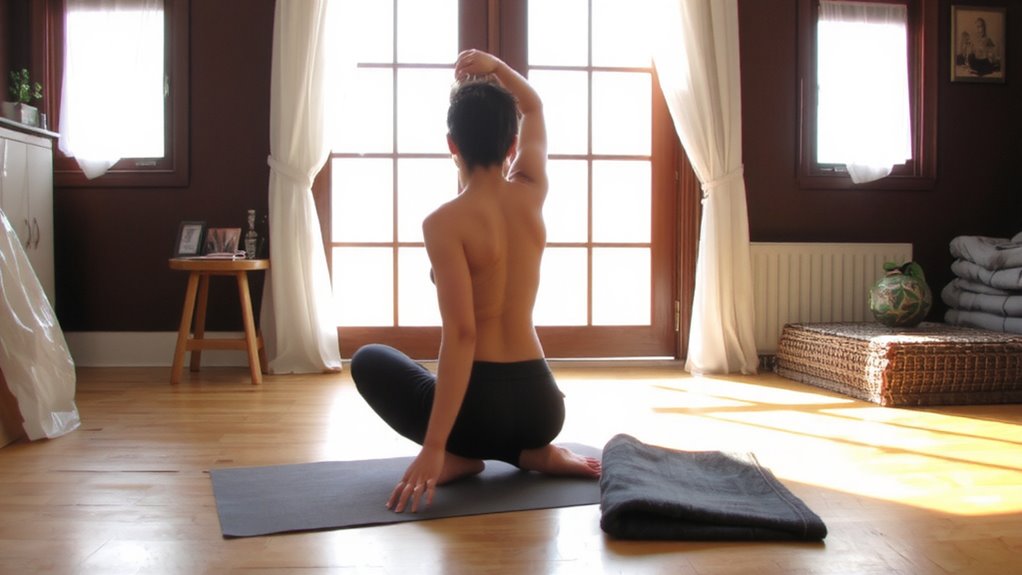
Two to three minutes of gentle floor movements can make a real difference in how well your body responds to recovery sessions. Starting with simple joint mobility drills-like ankle circles, wrist rotations, and gentle neck tilts-you prepare connective tissues and reduce stiffness without strain. These movements enhance circulation and signal your nervous system to shift into recovery mode. Pair each motion with steady breath awareness, inhaling deeply through the nose and exhaling fully, to promote relaxation and body-mind coordination. Unlike bulky fitness gear that demands space and maintenance, these techniques require nothing but your attention and a clear floor area. They’re efficient, scalable, and highly effective for daily use. Over time, consistent breath awareness deepens parasympathetic engagement, aiding muscle repair. You’ll find that even without props, this quiet preparation sets a strong foundation-making recovery both accessible and sustainable in limited home environments. For those who later wish to incorporate cushioning, choosing the right best workout mats can enhance comfort during extended floor sessions.
Build Strength Using Mat-Free Floor Exercises
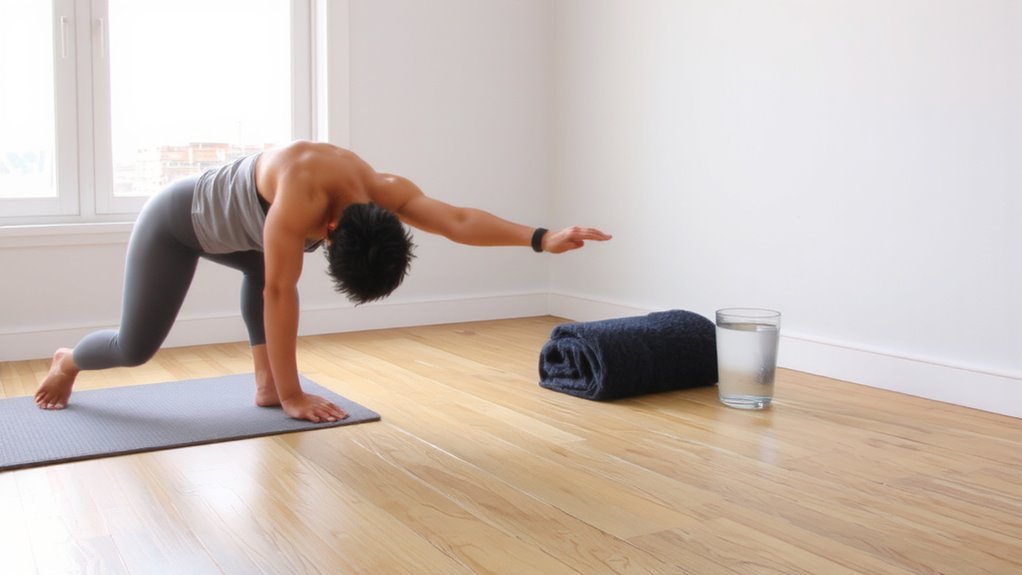
You’ve loosened up the joints and awakened your breath, so now it’s time to engage your muscles with targeted strength work-all without a mat or extra gear. Focus on movements that promote core activation and joint stabilization, essential for injury prevention and functional mobility during recovery. Try slow, controlled bridges to engage the glutes and lower back, or forearm planks against the wall to build endurance safely. Seated leg lifts and isometric holds strengthen without straining, making them ideal for confined spaces. These exercises require no equipment, yet effectively stimulate muscle fiber recruitment. Unlike bulky fitness gear, bodyweight routines offer consistent resistance while minimizing joint impact. Over time, this approach improves postural control and muscular balance. You’ll notice better endurance and stability in daily movements-proof that effective strength training doesn’t demand equipment, just precision and consistency in form.
Increase Flexibility With Bodyweight Stretches
Beyond the reach of fitness gear and elaborate setups, your body’s own mechanics become the most reliable tool for improving flexibility during recovery. Using just your weight, you can effectively target key areas without needing props or space. Controlled bodyweight stretches enhance hip mobility by encouraging a full range of motion in the joints, reducing stiffness over time. Moves like seated forward folds and supine figure-four holds gently open the hips while supporting natural spine alignment. Maintaining a neutral spine during these stretches guarantees safety and maximizes effectiveness, especially when recovering from inactivity or injury. Unlike machines or resistance bands, bodyweight flexibility work adapts seamlessly to your limits, offering consistent progress with minimal risk. You’re not dependent on external tools-just awareness and repetition. Over time, these simple practices build greater suppleness, supporting daily movement and posture. When done regularly, bodyweight stretches provide a practical, accessible path to lasting flexibility. For those looking to deepen their stretches with support, incorporating a stretching strap can enhance range of motion without compromising form.
Cool Down to Reduce Stiffness and Pain
Why do you still feel stiff after a workout, even when you’ve stretched? You might be skipping the critical cool-down phase that enhances joint mobility and promotes muscle relaxation. After movement, your muscles tighten as part of recovery, but a proper cooldown helps regulate that response. Gentle floor-based movements-like seated forward folds or supine twists-reduce tension without straining limited space. These sequences don’t require gear, relying instead on body weight and controlled breath to deepen relaxation. Unlike aggressive stretching, cooling down gradually improves circulation and reduces post-exercise soreness. You’ll notice better flexibility retention and less morning stiffness when cooldowns become consistent. Performance-wise, minimal-equipment routines outperform sporadic, intense efforts because they support sustainable recovery. You don’t need foam rollers or yoga props-just effective, mindful shifts that improve joint mobility and signal your nervous system to shift into rest mode. The result? Reduced pain, better movement quality, and long-term resilience-all from simple, accessible floor practices.
Create a Daily Floor Routine That Fits You
A consistent cooldown sets the stage for lasting mobility, but building a personalized daily floor routine takes that recovery further by aligning movement with your body’s unique rhythms and space constraints. You don’t need fitness gear-just usable floor space and attention to breath awareness. Start with five minutes: gentle spinal rocks, seated forward folds, and knee-to-chest rolls, adjusting for comfort. Prioritize mindful pacing over repetition; slow shifts let you notice tension and respond. If you’re tight in the hips, add figure-four stretches; stiff shoulders? Try thread-the-needle movements. Duration matters less than consistency and alignment with your daily energy. A 10-minute sequence done regularly supports sustainable recovery better than sporadic, intense sessions. Listen closely, adapt often, and let breath awareness anchor each shift. This approach isn’t rigid-it’s responsive, practical, and built to evolve with your needs, enhancing both function and resilience over time.
Why Floor Sequences Work for Home Recovery
When you’re working with limited space at home, floor sequences offer a surprisingly effective solution for recovery-no bulky fitness gear required. These movements rely on body weight and controlled shifts, making them ideal for small apartments or cluttered rooms. By engaging breath awareness, you regulate your nervous system, easing stress and supporting muscle relaxation. Paired with mental focus, floor sequences become more than physical exercise-they cultivate mindfulness, improving both recovery quality and cognitive presence. Unlike machines or resistance bands, they demand no storage or setup, reducing friction to consistent practice. Observations show participants report reduced stiffness and improved mobility within days. Their adaptability allows modifications for injuries or fatigue, enhancing long-term usability. While lacking external resistance, their strength lies in integration-movement, breath, and attention work together. That synergy makes floor sequences a practical, evidence-aligned choice for sustainable home recovery.
On a final note
You’ve seen how simple floor sequences support recovery without gear. These routines work-they boost circulation, restore mobility, and build stability using only body weight and floor contact. Without a mat, you cut clutter and still gain functional strength and flexibility. When space is tight, efficiency matters most. This method fits real homes and real limits. It’s not flashy, but it’s effective, sustainable, and grounded in movement science. Stick with it, and you’ll feel the progress.