The Role of Hydration in Preventing Nocturnal Muscle Cramps in Basketball Players
You’re more likely to get night cramps if you overlook hydration’s role in muscle recovery. Sweating depletes electrolytes like sodium and potassium, disrupting nerve signals and causing cramps. Dry mouth and fatigue are early red flags. Drink 16–20 ounces of fluid hours before play and replenish losses post-game. Chocolate milk or whey-based drinks beat plain water by aiding both hydration and repair. Proper habits and compression gear support long-term prevention. There’s a smarter way to recover-keep going to refine your approach.
Notable Insights
- Dehydration from intense activity reduces plasma volume and impairs muscle relaxation, increasing nocturnal cramp risk.
- Early signs like dry mouth and fatigue indicate fluid loss and heightened cramp susceptibility during sleep.
- Proper pre-hydration with 16–20 ounces of water 2–3 hours before practice supports fluid balance.
- Post-game fluid replacement of 20–24 ounces per pound lost restores hydration and prevents overnight cramping.
- Electrolyte-containing drinks replenish sodium and potassium lost in sweat, maintaining nerve-muscle function during recovery.
Why You Get Night Cramps After Basketball Practice?
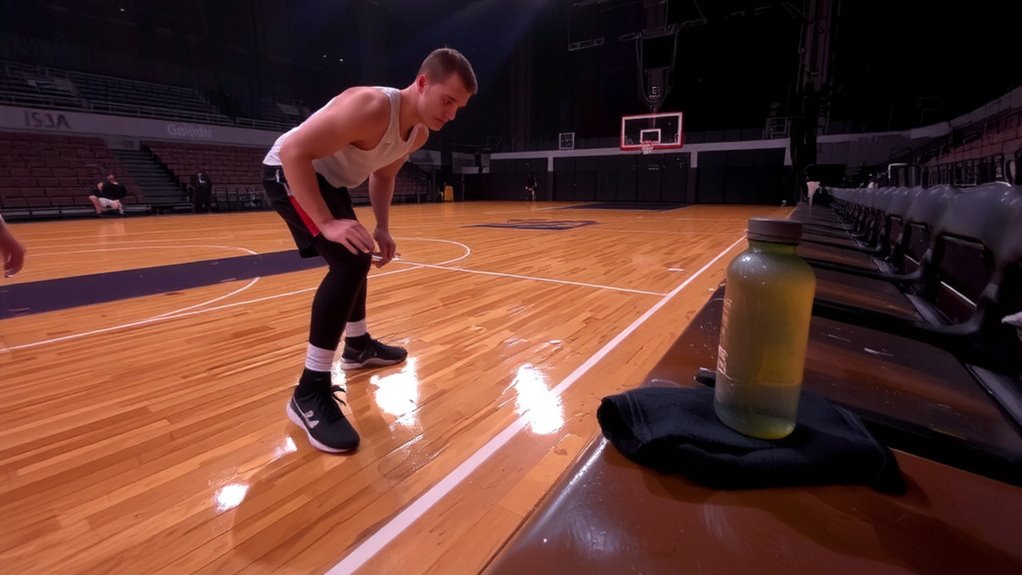
Why do those sudden, sharp cramps hit your calves or hamstrings just as you’re drifting off after practice? It’s likely due to muscle fatigue and overuse strain from intense drills, sudden cuts, and repeated jumps that push your muscles beyond their recovery threshold. When you train hard without adequate rest, microtears accumulate, impairing normal contraction control. Your nervous system becomes hyperexcitable, triggering involuntary spasms-especially during the quiet shift to sleep. Recovery isn’t just about rest; it’s about how well you support muscle repair. Compression gear can help stabilize fatigued muscles, improving circulation and reducing strain perception. Still, relying solely on gear won’t fix poor recovery habits. You need structured cool-downs, proper timing of protein intake, and consistent sleep. Ignoring these factors means overuse strain will keep triggering night cramps-even with advanced fitness recovery tools.
Electrolyte Loss and Muscle Cramping Explained
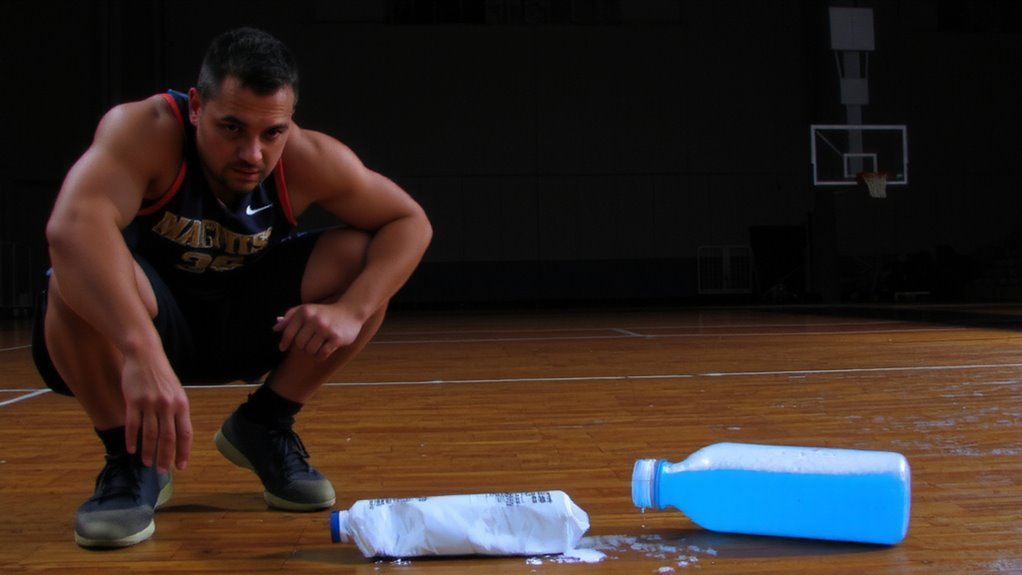
How much do you really lose when you sweat through a grueling practice? A lot more than just water-your body sheds essential electrolytes like sodium, potassium, and magnesium, all crucial for nerve signaling and muscle function. When these levels drop too low, your muscles can’t relax properly after contracting, which raises the risk of cramping-especially at night. You’re likely already dealing with muscle fatigue from intense play, and without proper electrolyte balance, fatigue worsens and recovery slows. Think of your nerves like electrical wires: electrolytes help carry signals that tell muscles when to fire or rest. Sweat disrupts that system. Replenishing isn’t just about chugging water-it’s about restoring what was lost so your body keeps functioning efficiently. Skipping this step undermines your recovery, no matter how advanced your fitness gear or cool-down routine.
Early Signs You’re Dehydrated and at Risk
A warning light flashes not on your gear but in your body-subtle shifts that signal you’re edging toward dehydration and muscle trouble. You might first notice a dry mouth, a consistent early marker that your fluid levels are dropping. It’s not just discomfort-it’s your body struggling to maintain saliva production as plasma volume decreases. Alongside this, fatigue onset comes quicker than usual, even during moderate drills or practice. Your muscles feel heavier, your focus thinner. These aren’t just signs of a tough day; they’re physiological red flags. In basketball, where explosive movements demand peak neuromuscular coordination, even mild dehydration compromises recovery and heightens cramp risk. Ignoring these symptoms skews your body’s ability to regulate temperature and maintain electrolyte balance. Smart athletes treat dry mouth and early fatigue as actionable data, not minor inconveniences. Responding promptly protects performance and slashes the odds of nocturnal cramps sabotaging rest and recovery.
How Much to Drink Before and After Games
You’ve already learned to spot the quiet warnings-dry mouth, unexplained fatigue, the creeping risk of nocturnal cramps-all signs your hydration is slipping when you can least afford it. To stay ahead, focus on fluid timing: drink 16–20 ounces of water 2–3 hours before tip-off, then another 8–10 ounces 20–30 minutes prior. This primes your system without causing discomfort. Post-game, replenish with 20–24 ounces for every pound lost during play. Hydration tracking helps-weigh yourself before and after to gauge fluid loss. Don’t rely on thirst alone; it lags behind actual need. Using a marked water bottle or hydration app improves consistency. Proper fluid timing supports electrolyte balance, reducing cramp risk during sleep. Hydration tracking isn’t just for elites-it’s a practical tool for any player serious about recovery. Get it right, and you’ll sleep deeper, wake fresher, and play sharper.
Best Recovery Drinks for Basketball Players
The ideal recovery drink for basketball players balances rapid rehydration with efficient muscle repair, and not all options deliver equally. After intense play, your body needs proper protein intake to speed recovery and reduce cramp risk. Whey protein shakes mixed with electrolytes lead the pack-fast-absorbing and proven. Chocolate milk? It sounds basic, but research backs its ideal carb-to-protein ratio. Coconut water lacks enough protein, so it’s not enough alone. Sports drinks hydrate but often skip muscle repair needs.
| Drink Type | Emotional Benefit |
|---|---|
| Chocolate Milk | Feels familiar, comforting |
| Whey Protein | Empowers with fast recovery |
| Coconut Water | Calms with natural appeal |
| Sports Drinks | Reassures with quick fuel |
| Water + BCAA | Gives control, precision |
Skip sugar-heavy picks-opt for real protein intake and smart hydration to support overnight muscle repair.
Build a Daily Habit to Stop Night Cramps
Consistency beats intensity when it comes to stopping night cramps-small, deliberate habits each day do more than any single recovery trick. You’ll benefit most by integrating hydration, stretching routines, and mindful sleep posture into your nightly wind-down. Start with 10–15 minutes of dynamic and static stretches targeting calves, hamstrings, and quads; this boosts circulation and reduces muscle tightness. Follow it with proper hydration-electrolyte-enhanced fluids post-game and before bed help maintain neuromuscular balance. Your sleep posture matters: avoid tucking sheets too tightly and sleep with legs slightly elevated to reduce strain. Recovery isn’t just about gear like compression sleeves or foam rollers-though they help-it’s daily discipline that prevents cramping. Over time, this routine enhances muscle resilience, especially during heavy training loads, making night cramps far less likely.
On a final note
You’re more likely to avoid nocturnal cramps if you maintain consistent hydration and replace lost electrolytes after intense play. Recovery isn’t just rest-it’s strategic replenishment. Sports drinks with sodium and potassium outperform water alone when sweating heavily. Wearables that track hydration metrics can help, but they’re only useful if you act on the data. Ultimately, smart recovery combines proven physiology with practical gear, making nightly cramps a preventable disruption, not an inevitable one.