Self-Myofascial Release Rollers Stored Beside Stationary Units for Immediate Access
You recover faster when foam rollers are kept beside stationary units, because immediate access boosts consistency. Placing them nearby reduces friction in your routine and supports post-workout compliance. This setup works with your physiology-regular self-myofascial release eases fascial tension, improves blood flow, and cuts soreness. Smarter placement means better habits, and better habits mean real recovery gains. Position matters as much as technique, and convenience might be the most underrated recovery tool. There’s more to optimizing your setup than you think.
Notable Insights
- Store foam rollers beside stationary exercise units for immediate post-workout access.
- Proximity to workout equipment increases usage frequency and adherence to recovery routines.
- Easy access reduces friction, encouraging consistent self-myofascial release practice.
- Placing rollers within arm’s reach acts as a visual cue to promote recovery habits.
- Strategic placement supports seamless integration of rolling into pre- and post-exercise routines.
Why Foam Rollers Speed Up Workout Recovery
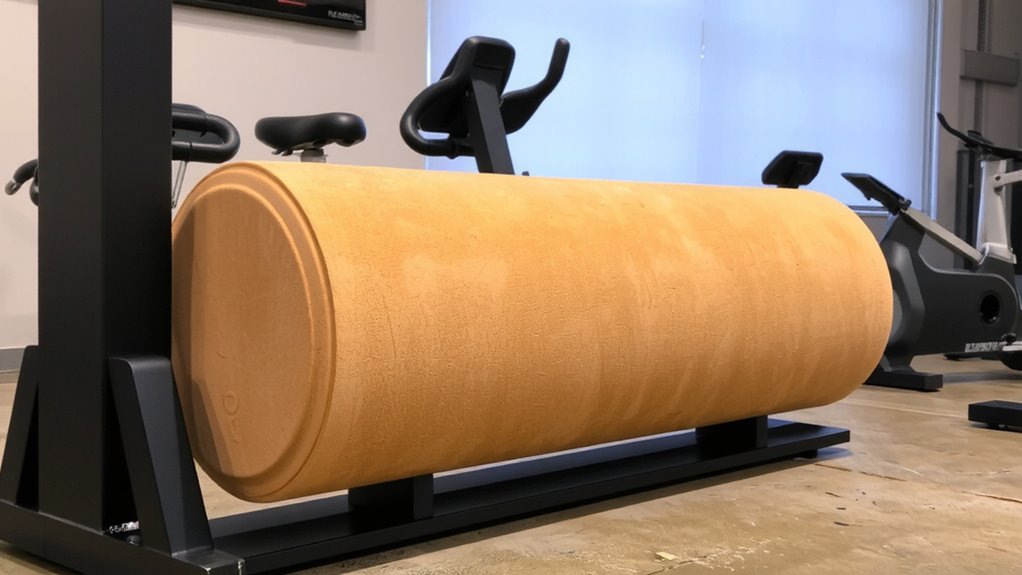
While you’re focused on building strength and endurance, your muscles accumulate tension and micro-tears that slow recovery-this is where foam rollers make a real difference. Using one post-workout supports muscle relaxation by breaking up adhesions and easing fascial tightness. The pressure from rolling stimulates mechanoreceptors, signaling your nervous system to reduce muscle tone. At the same time, you’re getting a circulation boost-blood flow increases to worked areas, delivering oxygen and clearing metabolic waste like lactate more efficiently. This combination speeds up tissue repair and reduces soreness. Foam rollers are simple, but their effectiveness is backed by both athlete feedback and biomechanical studies. When used consistently, they’re proven to shorten recovery time. They’re affordable, portable, and require no setup. For anyone serious about performance, incorporating a roller isn’t optional-it’s a practical step toward better, faster recovery. Choosing the right best foam rollers can enhance these benefits based on density, texture, and size tailored to your needs.
Why Nearby Rollers Increase Usage
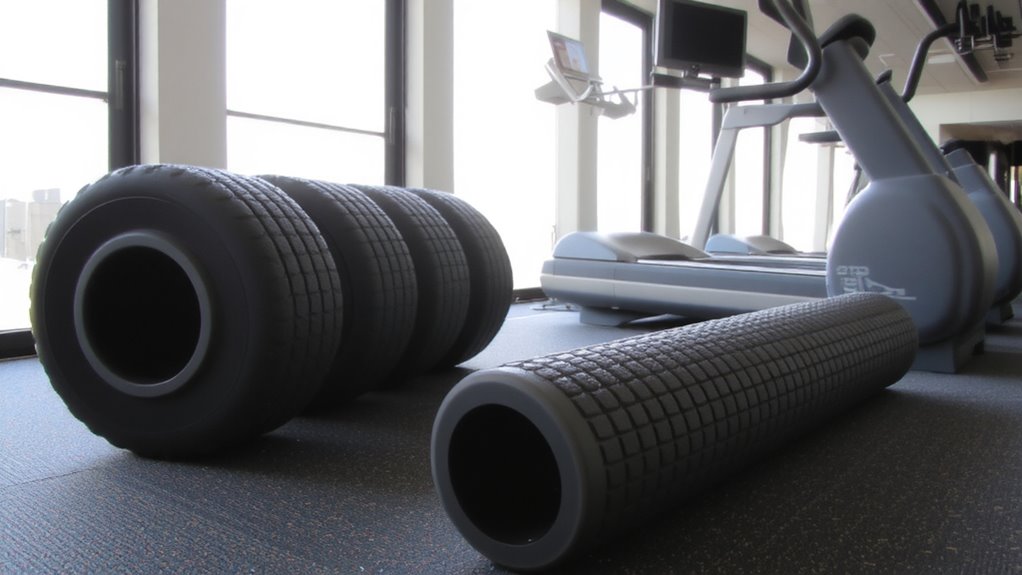
A foam roller within arm’s reach is one you’re actually going to use. The convenience factor plays a major role in whether recovery tools get used consistently. When rollers are stored beside stationary units like treadmills or bikes, you’re more likely to grab one post-workout without breaking stride. That small reduction in effort makes a big difference in follow-through. Over time, this ease of access supports habit formation, turning sporadic use into a routine part of your fitness regimen. Equipment placement isn’t just about organization-it’s behavioral nudging. Users tend to skip steps that require extra movement or decision-making. But when the roller is visible and nearby, it serves as a subtle prompt, increasing compliance. Facilities that prioritize accessibility see higher engagement with self-myofascial release tools. It’s not about motivation; it’s about designing your environment to support consistent recovery practices.
The Science of Self-Myofascial Release
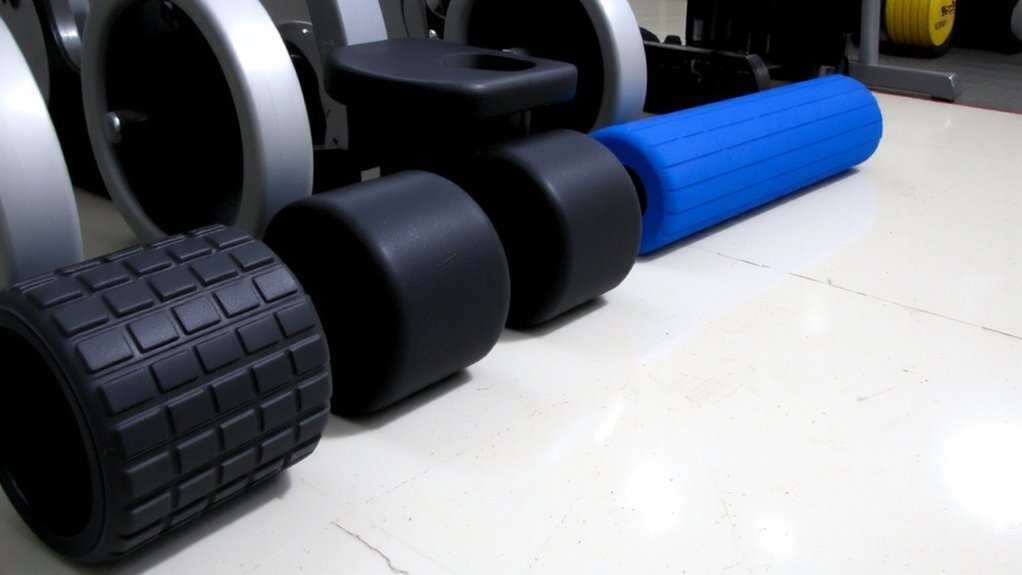
You’re more likely to use a foam roller if it’s right there after your workout, but understanding why it works matters just as much as getting into the habit. Self-myofascial release targets the connective tissue surrounding muscles, improving fascial hydration by encouraging fluid exchange within the fascia. This helps maintain tissue elasticity and reduces stiffness. The pressure from rolling also prompts neural adaptation, dulling overactive muscle receptors and easing tension. Research suggests these changes enhance range of motion and support recovery without compromising muscle performance. While results vary, consistent use shows measurable benefits in movement quality and recovery speed. Foam rollers aren’t a cure-all, but their role in a recovery routine is backed by physiological mechanisms, not just anecdote. When paired with hydration and mobility work, they become a practical tool. Their effectiveness hinges on proper use, timing, and understanding their science-not just availability. For those seeking enhanced recovery, models with vibrating foam rollers offer targeted vibration therapy that may amplify the benefits of traditional self-myofascial release.
Quick Pre- and Post-Workout Rolling Routines
Since timing and technique influence results, fitting self-myofascial release into your workout routine the right way makes a difference in both performance and recovery. Use quick rolling before exercise to prime muscles and after to aid circulation and reduce stiffness. Pair pre-workout rolling with dynamic stretching to enhance joint mobility and movement efficiency. Post-workout, focus on slow, targeted pressure to support tissue relaxation. A high-quality massage gun can enhance post-workout recovery by delivering deep percussive therapy that complements self-myofascial release techniques.
| Timing | Focus Area |
|---|---|
| Pre-Workout | Glutes, quads, calves |
| Pre-Workout | Thoracic spine mobility |
| Post-Workout | Hamstrings, lats |
| Post-Workout | IT bands, hip flexors |
| Both | Maintain steady breathing |
Roll each zone for 30–60 seconds. You’ll notice better readiness when rolling precedes dynamic stretching, while post-session work complements cooldowns. Consistency enhances long-term joint mobility and muscle resilience, making these brief routines a smart, evidence-backed addition to fitness recovery.
Pick the Best Foam Roller for Your Level
What makes one foam roller better than another-density, texture, or size? It depends on your needs and tolerance. Roller density affects how deeply the tool penetrates tight muscle layers. If you’re new to self-myofascial release, a softer roller reduces discomfort and eases you into the routine-ideal for building positive user experience. Intermediate users often prefer medium-density rollers, balancing support and pressure. Advanced athletes typically choose high-density or textured rollers for intense release. Size matters too: longer rollers offer full-body use, while compact ones are portable. Textured surfaces add targeted stimulation but may overwhelm beginners. Your level determines what feels challenging yet beneficial. A mismatched roller can discourage consistency. Prioritize user experience by aligning roller density with your pain threshold and mobility goals. Test options if possible-what works for others might not suit your recovery style.
How Gym Design Influences Recovery Habits
Why do some people gravitate toward recovery gear while others overlook it entirely? It often comes down to gym design. When you place foam rollers beside stationary units, you’re improving space utilization and making recovery part of the workout flow. Facilities that integrate self-myofascial release tools into high-traffic zones see higher member engagement-people are more likely to use what’s visible and accessible. Cluttered or isolated recovery zones, on the other hand, discourage use, no matter the equipment quality. Strategic placement reduces friction, turning intention into habit. You don’t need a dedicated recovery room; you need smart layout choices. Good design doesn’t just organize space-it shapes behavior. By anchoring rollers where sessions end, you cue cooldown routines naturally. Effective space utilization directly supports recovery habits, fostering consistency. Ultimately, how you arrange your gym influences whether recovery feels like an afterthought or a priority.
Common Foam Rolling Mistakes to Avoid
You’ve likely seen foam rollers collecting dust in forgotten corners or being used quickly and incorrectly between sets. Many exercisers apply incorrect pressure, either pressing too hard and triggering muscle guarding or using too little force to affect fascial release. This undermines recovery and can increase soreness. Improper form is another issue-rolling too fast or targeting joints instead of muscle bellies reduces effectiveness. For best results, move slowly, focusing on dense tissue areas like quads, hamstrings, and glutes. Maintain controlled, deliberate motion, allowing the roller to work without bouncing. Your body needs time to adapt, so avoid aggressive sessions that cause bruising or sharp pain. Proper technique enhances circulation and flexibility, but only if performed correctly. Position the roller beneath major muscle groups, brace with your hands and feet, and keep your core engaged. Consistency matters more than intensity.
On a final note
You’ll recover faster and train more consistently when foam rollers are within reach. Placing them beside stationary equipment boosts usage because convenience shapes habits. Self-myofascial release reduces muscle tension and improves circulation, supporting mobility. Choose a roller that matches your experience-smooth for beginners, textured for deep release. Proper form matters more than pressure. Overrolling or rushing worsens soreness. Smart gym design doesn’t just house gear-it guides better recovery behavior.