Joint Mobility Drills for the Spine: Prone Extensions to Improve Extension Range
You can use prone extensions daily to counteract spinal stiffness from sitting and restore natural extension range. Lying face down, lift your chest using your glutes and spinal erectors while keeping your neck aligned-no crunching. This low-risk move activates deep stabilizers and improves segmental motion. Do 2–3 sets each morning or after long sits for best results. Perfect form beats height or speed. There’s more to gain with advanced variations and timing strategies.
Notable Insights
- Prone extensions counteract spinal stiffness from prolonged sitting by promoting controlled lumbar extension.
- Perform the exercise face down, lifting the chest using glutes while keeping arms passive.
- Focus on segmental movement, lifting vertebra by vertebra to restore natural spinal alignment.
- Do 2–3 sets of 10–15 seconds daily, especially after sitting or upon waking, for best results.
- Avoid hyperextending the lower back or cranking the neck; maintain neutral spine and steady breathing.
What Are Prone Extensions and How Do They Help Your Spine
Think of your spine as a finely tuned stack of blocks, each needing space and alignment to function properly-prone extensions help maintain that balance. You’re likely spending hours seated, compressing your spine and weakening key stabilizers. Prone extensions counteract that by promoting spinal alignment through gentle, controlled back extensions. This movement triggers essential muscle activation in your erector spinae and deep core stabilizers, teaching your body to support itself efficiently. Unlike aggressive exercises, these drills emphasize precision and consistency, making them ideal for fitness recovery. They’re low-risk, require no gear, and integrate seamlessly into routines, whether you’re using a high-end mat or training barefoot. Over time, regular practice improves extension range and reduces stiffness. It’s not about intensity-it’s about smart, sustainable progress. These drills aren’t flashy, but their functional benefits for posture and spinal health are well-supported by biomechanical principles and clinical observation.
How to Do Prone Extensions With Perfect Form
Start by lying face down on a firm surface-your hips pressed flat to the floor, legs extended straight, and arms positioned alongside your body with palms down. Engage your glutes and gently lift your head and chest off the ground, pressing through your hands only enough to assist-don’t rely on arm strength. Maintain neutral spinal alignment by avoiding overextension at the lower back. Focus on segmental muscle activation, lifting vertebra by vertebra to promote controlled motion. Keep your neck in line with your spine, eyes slightly forward, not up. Hold the top position for 2–3 seconds, then lower slowly with control. Perform 8–12 reps, emphasizing quality over height. Perfect form guarantees maximum benefit and minimizes strain. This drill’s simplicity makes it practical for daily use, especially when recovery is prioritized with proper gear like supportive mats that cushion joints without compromising stability. A high-quality workout mat for home gyms provides the ideal balance of cushioning and firm support to enhance comfort during prone extensions.
Why Prone Extensions Improve Everyday Mobility
A consistent practice of prone extensions can substantially enhance your daily movement patterns by restoring natural lumbar extension and reducing stiffness from prolonged sitting. You’ll notice improved spinal flexibility, which translates to smoother bending, lifting, and twisting in everyday tasks. These drills reinforce proper segmental motion, counteracting the flattened spine posture many develop at desks. Over time, this isn’t just about comfort-it builds functional strength in your posterior chain, supporting better load management and reducing strain during physical work or exercise. The movement pattern mimics real-life actions, like rising from a chair or reaching upward, making it highly applicable. Unlike passive stretches, prone extensions actively engage stabilizing muscles, promoting lasting mobility gains. When paired with mindful recovery practices and supportive fitness gear-like firm mats that maintain spinal alignment-the benefits compound. You’re not just moving better now; you’re investing in long-term resilience and postural health through disciplined, practical work. For optimal support during these drills, consider using one of the best workout mats designed for spinal alignment and durability.
When to Do Prone Extensions for Best Results
When should you perform prone extensions to maximize their impact on spinal health and mobility? The timing benefits are greatest when you integrate them into your morning routine or after prolonged sitting. Doing so resets spinal alignment and counters flexion-heavy postures. Your ideal frequency is 5–7 days per week, with 2–3 sets of 10–15 seconds each. Consistency enhances mobility gains and supports long-term disc health.
| Feeling | After Prone Extensions |
|---|---|
| Stiffness | Turns into ease |
| Fatigue | Shifts to energy |
| Discomfort | Melts into relief |
| Slump | Transforms to posture |
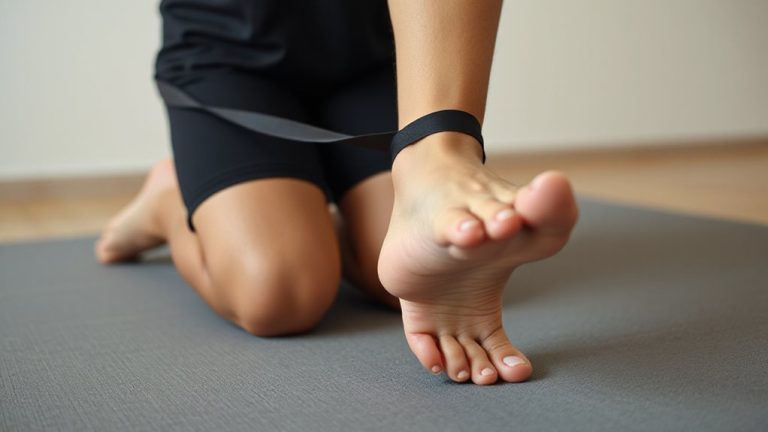
Perform them barefoot on a firm surface-carpeted floor or mat-for best control and feedback. Avoid overdoing duration; focus on quality over quantity. This practical drill requires no fitness recovery tools or specialized gear, making it sustainable daily. You’ll notice improved extension range and reduced mid-back tension with steady practice. Timing and frequency are keys you already hold.
Common Mistakes to Avoid in Prone Extensions
You’re likely already aware that doing prone extensions regularly can make a real difference in how your spine feels, especially if you spend long hours seated or notice stiffness creeping in by midday. But if you’re pushing too hard at the top of the movement, you risk spinal hyperextension, which shifts stress to the facet joints and may lead to irritation over time. Instead of maximizing height, focus on controlled, segmental extension through the mid-back. Another common error is improper breathing-holding your breath or inhaling too shallowly-which reduces core stability and limits movement efficiency. Breathe out as you lift, letting your ribs expand naturally downward. Keep your neck aligned with your thoracic spine; no cranking the head back. These drills work best when performed with patience and awareness, not force. Proper form safeguards long-term joint health, especially when supported with mindful recovery practices and functional gear that promotes posture awareness. Consider using back stretching equipment to complement your mobility routine and enhance posture correction between sessions.
Advanced Prone Extensions for Greater Mobility
What if your current prone extension routine could do more than just relieve stiffness-could it actually build lasting spinal resilience? It can, if you progress to advanced prone extensions with precision. These variations, like the elevated Cobra or dynamic prone lifts, increase extension range while integrating dynamic breathing to enhance tissue oxygenation and motor control. As you lift higher, coordinated breaths help reduce guarding, letting the spine move more freely. Neural gliding is also essential here-subtle limb movements during extension ease nerve tension, improving neuromechanical efficiency. You’ll notice better fluidity in daily movements and athletic performance. Done consistently, these drills don’t just mobilize; they retrain your spine to handle load with less strain. Use a firm mat for consistent surface feedback, and avoid over-arching by engaging your glutes. This isn’t just stretching-it’s active resilience training, backed by functional biomechanics and recovery science.
On a final note
You’ve seen how prone extensions boost spinal health and daily function. When done consistently, they enhance extension mobility, support posture, and reduce lower back stiffness. Paired with quality recovery gear-like supportive mats and alignment cushions-your routine becomes more effective and sustainable. These tools improve form and comfort, promoting safer, long-term progress. While simple, this drill delivers measurable benefits, especially when integrated mindfully into your recovery or warm-up protocol.