Foam Rolling the Lateral Quad: Targeting Vastus Lateralis for Knee Health
You’re likely feeling knee discomfort because a tight vastus lateralis pulls your kneecap sideways, disrupting alignment and increasing joint stress. Foam rolling this muscle improves symmetry, reduces compression, and supports smoother tracking. Use a high-density or vibrating roller with slow, controlled passes from hip to knee. Focus on tender spots for 20–30 seconds while keeping your core engaged and hips stacked. Pairing this with proper stretches enhances mobility-there’s a smarter way to maintain long-term knee health just ahead.
Notable Insights
- Tightness in the vastus lateralis can pull the patella laterally, disrupting knee tracking and contributing to pain.
- Foam rolling the lateral quad helps release tension in the vastus lateralis, restoring muscular balance around the knee.
- Position the foam roller under the outer thigh and roll slowly from hip to knee with controlled movements.
- Focus on tender spots for 20–30 seconds, using steady pressure to improve tissue quality and reduce tightness.
- Combine foam rolling with stretching and strengthen vastus medialis to enhance knee alignment and joint health.
What Causes Knee Pain From a Tight Lateral Quad?
Why does your knee ache after a long run or heavy leg day? A tight lateral quad, particularly the vastus lateralis, often plays a key role. When this muscle shortens or overpowers its counterparts, it creates a muscle imbalance that pulls the patella outward, disrupting proper tracking. This misalignment increases joint compression during movement, irritating surrounding tissues and amplifying wear on the cartilage. Over time, that repeated stress leads to pain, especially during bending or sustained activity. Foam rolling helps counteract this by releasing tension and restoring muscular symmetry. While recovery tools vary in density and texture, consistent use of a firm roller delivers measurable improvement in flexibility and joint function. It’s not a quick fix, but integrated into routine recovery, it reduces compression forces and supports long-term knee health. Proper technique and frequency matter most-superficial rolling won’t suffice. Focus, pressure, and slow movement yield real results. For best outcomes, choose a roller with appropriate firmness based on your tolerance and therapy goals, such as a high-density foam roller.
Why the Vastus Lateralis Matters for Knee Health
Think of your knee as a high-performance hinge-one that relies on balance, alignment, and evenly distributed tension to function smoothly. The vastus lateralis, as the outermost quad muscle, plays a key role in maintaining proper joint alignment. When it’s tight or overactive, it can pull the kneecap sideways, leading to uneven tracking and discomfort. That’s where muscle imbalance comes in-overpowering the vastus medialis creates asymmetrical forces across the knee. Over time, this imbalance may contribute to patellofemoral pain and reduced mobility. Keeping the vastus lateralis supple isn’t just about recovery; it’s about preserving biomechanical efficiency. Foam rolling helps restore balance, promoting even muscle engagement and healthier movement patterns. A well-maintained lateral quad supports smoother knee function, especially during dynamic activities like running or squats. Prioritizing this muscle means investing in long-term joint health and performance resilience.
How to Foam Roll the Vastus Lateralis Correctly
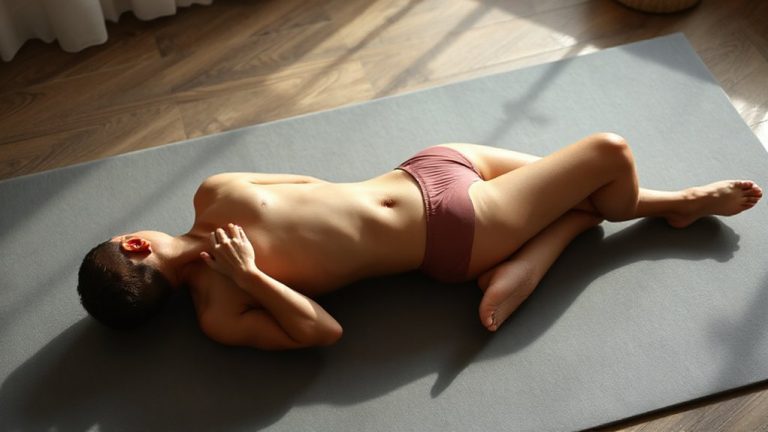
You’ve likely felt it-the tightness along the outside of your thigh that lingers after a heavy leg session or long run-and while you now know the vastus lateralis plays a major role in knee alignment, simply recognizing the problem won’t ease the tension. To release it, position yourself on a firm foam roller with your torso lifted and your bottom leg crossed over the top one, targeting the outer quad. Slowly roll from your hip down toward the knee, pausing on tender spots for 20–30 seconds. Apply steady pressure-don’t bounce-to enhance tissue hydration and encourage blood flow. The right gear matters: high-density rollers provide consistent support without collapsing, improving muscle alignment during recovery. Stay precise with small, controlled movements. Inconsistent pressure or low-density foam can reduce effectiveness. Targeting the vastus lateralis correctly supports long-term joint function and muscular balance, especially after intense lower-body work. For deeper myofascial release, consider using vibrating foam rollers which can enhance circulation and accelerate recovery.
When to Foam Roll for Best Results
Ideally, foam rolling the lateral quad delivers the most benefit when incorporated during both pre- and post-workout phases, each serving a distinct recovery or performance-enhancing purpose. Pre-workout, it helps prime the vastus lateralis by increasing blood flow and muscle elasticity, supporting dynamic movement and reducing stiffness. This is part of the best timing for activation-rolling for 30 to 60 seconds per leg primes the neuromuscular system without compromising force output. Post-workout, foam rolling boosts recovery benefits by clearing metabolic waste and alleviating muscle tension, accelerating return to baseline function. Research suggests consistent use at these times enhances long-term tissue resilience. While results aren’t instantaneous, regular integration improves mobility and joint comfort, especially for runners or lifters. You don’t need advanced gear-basic foam rollers perform well when used correctly. The key is consistency and timing, not complexity.
Avoid These Foam Rolling Errors on the Vastus Lateralis
Why do so many people still walk away from foam rolling with lingering discomfort instead of relief? You’re likely making errors that increase your risk of overuse injury and hinder recovery. Pressing too hard or rolling too frequently inflames the vastus lateralis instead of releasing it, turning a recovery tool into a source of strain. More often, improper alignment-like letting your hips rotate or knees collapse-shifts pressure to sensitive tissues, reducing effectiveness. You should keep your body stacked and core engaged to target the muscle precisely. Using a high-density foam roller helps, but only if your form supports it. Rushing through sessions ignores feedback from your body, missing warning signs like sharp pain or numbness. Remember, consistent, controlled pressure beats aggressive grinding. Avoiding these mistakes guarantees foam rolling supports knee health and doesn’t contribute to the problem you’re trying to fix.
Combine Foam Rolling With These Stretches for Better Results
While foam rolling the lateral quad helps release tension in the vastus lateralis, pairing it with targeted stretches enhances flexibility and improves recovery outcomes. After rolling, incorporate dynamic stretching like leg swings or walking lunges to activate muscles and increase range of motion. These movements prepare the quads for functional use and support long-term mobility training goals. Static stretches, such as the standing quad pull or seated forward bend, work well post-workout when muscles are warm, aiding in lengthening tight fibers. Quality foam rollers with textured surfaces offer better myofascial feedback, but pairing them with consistent stretching routines delivers superior results. Mobility training shouldn’t be an afterthought-it’s essential for knee health. Combining foam rolling with deliberate stretching not only reduces soreness but also promotes balanced muscle development. For lasting benefits, integrate both into your recovery protocol regularly. Consider using one of the top recovery tools recommended by experts to maximize your self-myofascial release and overall mobility gains.
On a final note
You’ll find foam rolling the vastus lateralis effective for easing lateral quad tightness that contributes to knee discomfort. When done correctly, it enhances muscle recovery and joint mobility. Pair it with targeted stretches for lasting results. Avoid common mistakes like rolling too fast or using poor form. The right technique and a durable, medium-density roller yield better outcomes. Consistent use supports knee health, especially post-workout, making it a practical addition to your recovery routine.