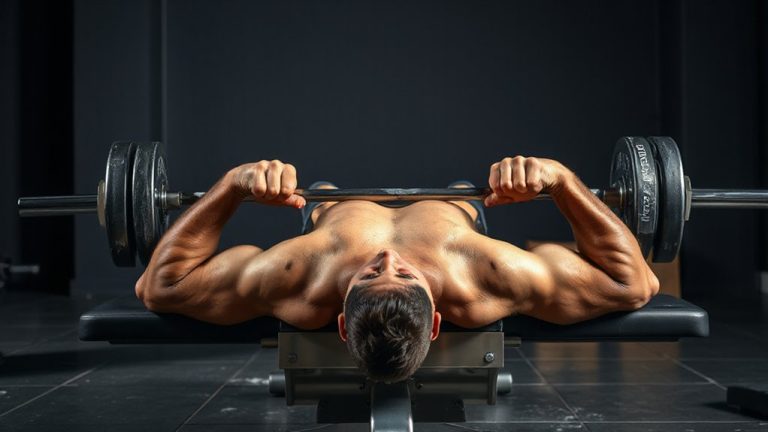
Load Monitoring in Olympic Weightlifters Using RPE and Velocity Tracking
You’re using RPE and velocity tracking to monitor fatigue, readiness, and performance in Olympic weightlifting. These tools combine subjective effort with objective data, letting you adjust load before form breaks down. High RPE with slow bar speed signals fatigue, while low RPE and high velocity mean you’re fresh. Together, they prevent overtraining and boost adaptation. Consistent use sharpens decision-making-especially when the two metrics don’t match-so your training stays precise. There’s more to optimizing recovery and gear use than just tracking numbers.
Notable Insights
- RPE helps gauge subjective effort and fatigue, guiding appropriate training intensity in Olympic weightlifters.
- Bar velocity tracking provides objective data on neuromuscular readiness and movement efficiency during lifts.
- Combining RPE and velocity identifies discrepancies between perceived and actual performance, improving load management.
- A sudden drop in velocity or spike in RPE may indicate fatigue, signaling need for deloading or recovery.
- Consistent monitoring with both metrics enables precise, individualized adjustments to optimize performance and reduce injury risk.
Why Load Monitoring Matters for Olympic Weightlifters
Why cut your gains short or risk burnout when you could track what your body can handle? As an Olympic weightlifter, your training demands precision-both in movement and recovery. Without load monitoring, you’re guessing how much strain your body can tolerate, increasing the risk of overtraining and setbacks. By tracking workload, you support injury prevention and fine-tune performance optimization. It’s not just about lifting heavier; it’s about lifting smarter. Monitoring helps align training intensity with recovery capacity, ensuring you adapt positively. Tools like fitness trackers and recovery gear offer data on fatigue, heart rate variability, and muscle response, but their true value lies in how you interpret them. Used wisely, they shift you from reactive to proactive training. You don’t just log workouts-you manage athleticism sustainably, maintaining peak output without compromising long-term health. This is how elite lifters stay consistent, resilient, and competition-ready.
How RPE Improves Daily Load Monitoring
While objective metrics like bar speed and heart rate variability offer valuable insights, they don’t always capture how you truly feel during a training session-and that’s where Rating of Perceived Exertion (RPE) makes a meaningful difference in daily load monitoring. RPE taps into your subjective effort, giving coaches real-time feedback on fatigue and readiness that numbers alone can’t provide. Perceived exertion bridges the gap between physical output and mental strain, helping adjust training on the fly.
| Metric | Purpose |
|---|---|
| RPE 1–5 | Light to moderate effort, recovery focus |
| RPE 6–7 | Moderate intensity, skill development |
| RPE 8–9 | Heavy load, near-maximal effort |
| RPE 10 | Absolute maximal lift, rare in training |
Tracking perceived exertion daily improves programming accuracy and reduces injury risk by honoring how you feel alongside performance data.
How Bar Speed Reveals Fatigue and Readiness
You’ve likely used RPE to tune into how hard a workout feels, but your body also sends signals through the speed at which you move the bar-something that doesn’t rely on guesswork or mood. When fatigue builds, bar speed drops, even if the weight stays the same. This change reflects neural and muscular fatigue before it becomes obvious in form. Slower velocity often correlates with altered bar trajectory, revealing breakdowns in technique under load. You might not notice subtle shifts in grip width or timing, but they affect efficiency and success. Tracking velocity helps you catch these early-when velocity falls below your established threshold, it’s a sign you’re not fully ready to train hard. Equipment like linear position transducers or accelerometer-based systems provide real-time feedback, making it practical to adjust loads on the fly. These tools beat subjective judgment because they measure actual movement output, giving you objective insight into daily readiness.
Combining RPE and Velocity for Smarter Training
How do you cut through the noise when your body sends mixed signals about readiness? You combine RPE and velocity to sharpen training specificity and improve performance prediction. RPE captures your perceived effort, while velocity tells you how fast you’re moving the bar-objectively. Together, they bridge the gap between feeling and data. When velocity drops but RPE stays low, you might be fresh but technically off. When RPE climbs and velocity lags, fatigue is likely setting in. This dual approach lets you adjust load or volume in real time, tailoring sessions to daily readiness. It’s not just about harder training-it’s smarter training. Coaches use this combo to fine-tune peaking phases, ensuring athletes arrive strong and fresh. For Olympic weightlifters, where timing and precision matter, merging subjective and objective metrics isn’t optional-it’s essential for long-term progress and injury prevention.
When RPE and Velocity Don’t Agree
What happens when your body and your numbers tell two different stories? You feel wrecked, but your bar speed looks great-or vice versa. That mismatch? It’s not noise; it’s data. RPE might spike due to neural fatigue, even if velocity stays high. Or maybe velocity drops without perceived strain, hinting at muscle asymmetry creeping into movement. These disagreements reveal hidden imbalances. Check this:
| RPE High / Velocity High | RPE High / Velocity Low | RPE Low / Velocity High |
|---|---|---|
| Good effort, possibly neural fatigue | Fatigue present, likely systemic | Fresh neuromuscular system |
| RPE Low / Velocity Low | Mixed signals | |
| Technical breakdown or muscle asymmetry | Recovery needed | Trust the load? Reassess form |
Listen closely-your body and data together tell the full story.
Adjusting Load in Real Time
While velocity-based feedback and RPE offer valuable insights, relying solely on pre-programmed loads can undermine long-term progress when fatigue or performance fluctuations aren’t accounted for in real time. You need real time feedback to make informed, on-the-spot decisions that align with your body’s current state. If your bar velocity drops below threshold or your RPE spikes unexpectedly, sticking to the original plan may increase injury risk or hinder adaptation. Instead, dynamic adjustments allow you to modulate intensity-scaling back load when fatigued or adding weight when performing above baseline. This responsiveness enhances both safety and effectiveness, ensuring each session matches your readiness. Tools like velocity trackers and RPE logs aren’t just for analysis-they’re guides for immediate action. When used this way, they transform programming from rigid structure into a flexible, adaptive system that supports smarter training outcomes day to day.
Building a Consistent Load Monitoring Routine
Isn’t it frustrating when your progress stalls despite sticking to the same weights and reps week after week? That’s where training consistency and routine adherence make all the difference. A structured load monitoring routine-using RPE and velocity tracking-creates reliable feedback you can act on. Without consistency, data becomes noise. Build your routine with clear daily inputs and stick to them.
| Day | Avg. Velocity (m/s) | RPE | Action |
|---|---|---|---|
| Monday | 0.85 | 7 | Maintain load |
| Wednesday | 0.72 | 9 | Deload + recover |
| Friday | 0.80 | 8 | Monitor fatigue closely |
| Sunday | N/A | 6 | Active recovery advised |
Velocity drops paired with rising RPE signal fatigue. Training consistency turns these clues into long-term gains. Routine adherence guarantees your gear and metrics work *for* you-not the other way around.
On a final note
You’re using RPE and velocity tracking to sharpen training precision, and it works-when applied consistently. These tools help detect fatigue, guide load adjustments, and reduce injury risk. While neither metric is flawless alone, together they offer a balanced view of readiness. Reliable gear, like calibrated velocity sensors and structured RPE logs, enhances accuracy. Over time, this approach builds smarter, more responsive programming tailored to your recovery needs and performance goals.