Hip Mobility Drills With Adductor Rockbacks for Dynamic Stretching
You’re not maximizing hip mobility if you’re skipping adductor rockbacks. This dynamic stretch fires up your inner thighs and hip flexors while reinforcing proper alignment and joint stability. Performed on all fours with controlled side-to-side shifts, it boosts neuromuscular coordination and range of motion better than passive rolling. Avoid common errors like spinal rounding or knee cave-in by engaging your core and moving deliberately. Ideal before workouts or on rest days, it prepares tissue and enhances recovery-especially when timed post-foam rolling. There’s more to optimizing this drill than meets the eye.
Notable Insights
- Adductor rockbacks dynamically engage the inner thighs and hip flexors to improve active hip mobility.
- Perform the drill on all fours by sliding one leg out while maintaining a neutral spine and core engagement.
- Use controlled movements and proper breathing to enhance neuromuscular coordination and joint readiness.
- Modify intensity by elevating hands for beginners or adding pauses at end range for advanced users.
- Integrate adductor rockbacks into warm-ups or recovery routines 3–5 times weekly for optimal results.
Why Adductor Rockbacks Improve Hip Mobility

While it might seem like just another dynamic stretch, adductor rockbacks actually target a key area often overlooked in hip mobility: the inner thigh and anterior hip complex. You engage in active muscle activation with each rocking motion, priming the adductors and hip flexors for better performance. This isn’t just about flexibility-it’s about training your body to maintain proper anatomical alignment under movement. The controlled instability strengthens connective tissues and improves neuromuscular coordination, which supports joint health and reduces injury risk. Unlike passive stretches, this drill enhances dynamic range of motion, making it ideal for athletes or anyone needing functional hip strength. When paired with quality fitness gear like supportive training shoes or knee sleeves, you maximize stability and feedback, increasing exercise efficacy. Recovery benefits arise from improved blood flow and reduced muscular tension. Adductor rockbacks aren’t flashy, but their impact on mobility and movement efficiency is well-supported by biomechanical principles and practical use in training programs.
How to Do Adductor Rockbacks (Step by Step)
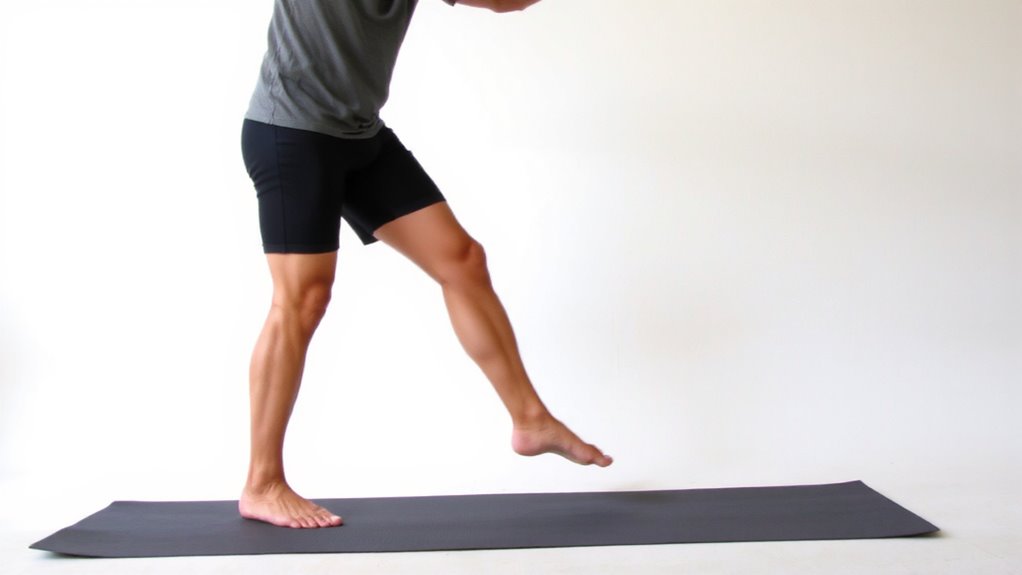
Start on all fours with your hands directly under your shoulders and knees aligned beneath your hips, then shift your weight to one side while sliding the opposite leg out to the side in a smooth, controlled motion-this is the foundation of the adductor rockback. As you move, focus on proper form: keep your back flat, core engaged, and avoid collapsing into the hips. You should feel clear muscle activation along the inner thigh of the sliding leg. Rock back gently, allowing a dynamic stretch without overextending. Return to center and repeat on the other side. Perform each rep with control, not speed. This drill enhances hip mobility through active stretching, promoting coordination and tissue resilience. Using a non-slip mat improves stability and supports consistent execution, making it a reliable addition to warm-ups or recovery sessions. Proper spinal alignment during movement patterns supports overall posture, much like how the right best pillows for back sleepers can aid neck and spinal health during rest.
Fix These Common Adductor Rockback Mistakes
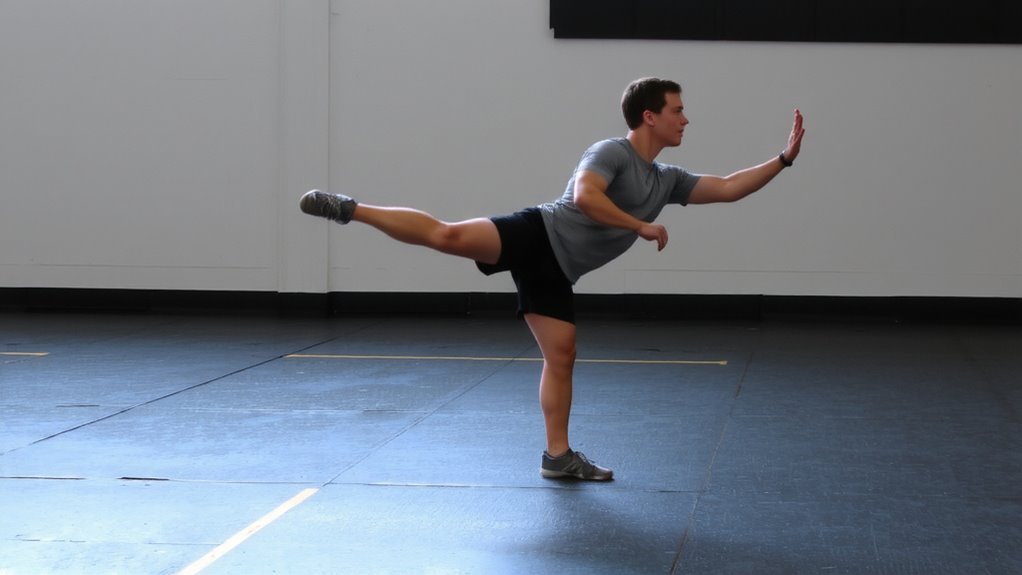
Why do so many people struggle to feel the real benefit of adductor rockbacks despite performing them regularly? The answer often lies in form errors and poor breathing patterns. You might lean too far forward, letting your lower back round instead of maintaining a neutral spine, which shifts focus from the adductors to other muscles. Keep your chest up and core engaged to stay aligned. Another common mistake? Rushing through reps without rhythm, which disrupts your breathing patterns and limits tension release. Inhale deeply as you shift side to side, allowing your hips to open fully. Avoid bouncing-smooth, controlled motion delivers better results. If your knees cave inward, reset your stance; this form error reduces effectiveness and strains joints. Mastering technique guarantees you get the mobility gains you’re after.
Adductor Rockback Modifications for Any Level
If you’ve found the standard adductor rockback too intense or not effective enough, tweaking the exercise can make all the difference-especially when you match the modification to your current mobility level. If you’re just starting out, try elevating your hands on a block or bench to reduce strain while improving joint stabilization. This slight change lets you focus on controlled movement and proper breathing techniques, helping you stay relaxed and deepen the stretch safely. More advanced? Add a pause at the end range or slide your foot further out to increase demand. You might also experiment with pelvic tilt cues to engage the right muscles without overcompensating. Using a yoga mat with adequate grip supports consistent form, while breathable gear helps you stay comfortable. Ultimately, a well-modified rockback fits your body’s needs-boosting hip mobility without compromise.
When to Do Adductor Rockbacks: Timing Tips
How often should you really be doing adductor rockbacks to get the most out of your mobility work? The best time to perform them is before workouts as part of a dynamic warm-up, priming your hips for movement. You can also include them in recovery sessions on rest days to maintain flexibility and reduce stiffness. For most people, doing adductor rockbacks 3–5 times per week fits well into an ideal routine. If you’re sedentary or recovering from lower-body fatigue, daily light practice helps restore range of motion. They’re especially effective post-foam rolling, when tissues are more receptive. Avoid doing them fatigued or with poor form, as that diminishes returns. As a low-load, high-yield drill, they integrate easily with mobility belts or knee sleeves for added joint support. Consistency matters more than intensity-stick with it, and you’ll notice improved hip control and squat depth over time.
On a final note
You’ve seen how adductor rockbacks boost hip mobility through dynamic, controlled motion. When done right, they enhance flexibility and prepare muscles for movement. Pairing them with quality recovery gear-like foam rollers or compression sleeves-supports long-term joint health. These tools aren’t gimmicks; they complement smart training. For lasting results, consistency matters more than intensity. Use proper form, listen to your body, and integrate recovery as a non-negotiable part of your routine.