Load Management for Adolescent Dancers to Prevent Stress Fractures
You’re more prone to stress fractures during growth spurts, when bones lengthen faster than they strengthen. Managing your training load-balancing dance hours, rest days, and cross-training-helps prevent overuse injuries. Watch for warning signs like lingering soreness or nagging pain. Use foam pads and wobble boards to build neuromuscular control without added impact. Prioritize sleep, calcium, and protein to support bone repair. Adjusting your schedule with your teacher’s input leads to smarter, safer progress.
Notable Insights
- Gradually increase training intensity and volume to allow adolescent bones to adapt safely.
- Schedule regular rest days and deload weeks to prevent overuse and support bone recovery.
- Incorporate cross-training like swimming or cycling to maintain fitness with reduced impact.
- Monitor for warning signs such as persistent pain, stiffness, or performance decline.
- Ensure adequate nutrition, sleep, and recovery to support bone remodeling and injury prevention.
Why Young Dancers Get Stress Fractures
While you might think stress fractures only happen to elite athletes pushing their limits, young dancers are especially prone due to the repetitive impact and high training volume inherent in their training. You’re likely surprised how often bone density plays a role-during growth spurts, bones lengthen rapidly but haven’t yet gained full strength, making them vulnerable. That mismatch between muscle growth and skeletal development increases strain on still-maturing bones. Combine that with daily jumps, turns, and hours on pointe, and the risk multiplies. These repetitive loads, especially when recovery gear like compression sleeves or supportive footwear isn’t consistently used, leave little time for microdamage repair. You can’t assume youth alone guarantees resilience-without attention to physiological windows and structural limits, even moderate routines become hazardous. That’s why understanding dancer-specific vulnerabilities isn’t just insightful; it’s preventive. Growth-related changes demand proactive care, not just reactive treatment.
Prevent Stress Fractures With Load Management
How do you balance pushing your limits without breaking them? You can’t ignore your body’s signals-especially when building bone density is still a work in progress during adolescence. If you’ve had an injury history, particularly stress-related, returning too quickly or increasing intensity too fast raises your fracture risk. Load management means planning your training smartly: varying dance hours, scheduling rest days, and incorporating cross-training to reduce repetitive impact. It’s not about dancing less-it’s about optimizing movement so bones adapt safely. Monitoring your workload helps detect imbalances before they lead to injury. Smart recovery isn’t optional; it’s part of training. With proper load distribution, you support bone remodeling and reduce strain on vulnerable areas. You’re not just rehearsing-you’re building resilience, one controlled step at a time.
Watch for These Overtraining Warning Signs
What happens when your body keeps showing up for rehearsal but your performance starts to fade? You might be pushing too hard without realizing it. Overtraining sneaks up on dancers, especially adolescents juggling school, growth, and intense schedules. Overuse symptoms-like persistent muscle soreness, declining jump height, or irritability-aren’t just tiredness; they’re red flags. You may notice stiffness that doesn’t ease overnight or nagging pain that lingers beyond warm-ups. These signs demand attention, not dismissal. Early detection is key to preventing more serious injuries like stress fractures. Recognizing subtle shifts in your energy, coordination, or mood can help you adjust loads before damage solidifies. Monitoring how you feel daily isn’t weakness-it’s smart training. Ignoring these cues risks longer downtime, reduced progress, and physical setbacks that could’ve been avoided with timely intervention. Listen closely; your body’s telling you something. Incorporating the right recovery tools can significantly enhance your body’s ability to repair and adapt to training stress.
Balance Training and Recovery
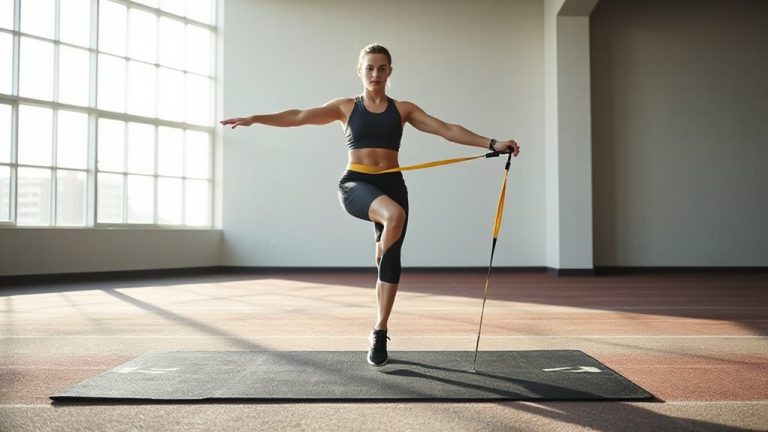
Since your body adapts and grows stronger during rest, not rehearsal, pairing intense training with structured recovery isn’t optional-it’s essential for sustainable progress. Balance training enhances neuromuscular control, helping you stabilize during quick directional changes. Proprioception drills-like single-leg stands on unstable surfaces or wobble board exercises-train your body to respond efficiently to movement demands, reducing injury risk. These drills sharpen joint awareness, especially in the ankles and knees, where missteps can cascade into stress fractures. Incorporating balance work into recovery days keeps your nervous system engaged without adding load. Practical gear like foam pads or balance discs offer affordable, portable options, though consistency matters more than equipment quality. Done right, proprioception drills improve coordination and joint resilience. Over time, this boosts confidence in complex choreography. While fitness gear can support training, it’s the daily integration of neuromuscular control exercises that delivers real protection, ensuring you rebound stronger after every session.
Eat and Rest for Stronger Bones
Strong bones aren’t built in rehearsal-they’re forged in rest and fueled by smart nutrition. You need both quality sleep and consistent nutrient intake to support bone density during rapid growth. When you’re dancing heavily, your skeleton adapts-but only if you give it the raw materials it needs. Calcium, vitamin D, and protein aren’t optional; they’re essential for repair. Nutritional timing makes a difference: eating a balanced meal or snack with protein and carbs within 30–60 minutes after training boosts recovery and strengthens bone tissue. Skipping meals or delaying intake weakens adaptation. Sleep isn’t downtime-it’s when growth hormone peaks, aiding bone remodeling. Aim for 8–10 hours nightly. Without adequate rest and precise nutritional timing, even the smartest training can backfire. You can’t out-train poor recovery. Your bones respond best when you treat fueling and sleep as non-negotiable parts of training.
Partner With Teachers to Adjust Workloads
While your dedication pushes you to excel, it’s smart to recognize that training smarter sometimes means doing less-not out of weakness, but to support long-term resilience. Open communication with your instructors enables effective teacher collaboration, a critical step in identifying when you’re at risk of overuse injuries. By discussing how you feel physically and mentally, you help teachers make informed decisions about your participation in intense rehearsals or technical drills. Workload adjustment isn’t about reducing expectations-it’s about aligning training volume with your body’s current capacity. This proactive approach allows for gradual progression while minimizing fracture risks. Teachers can modify your routines, substitute high-impact movements, or assign observational roles when necessary. These small shifts, backed by consistent teacher collaboration, guarantee you stay engaged without compromising recovery. Smart workload adjustment supports sustainable improvement, letting you build strength safely and maintain performance longevity throughout demanding training periods.
Plan Safer Dance Schedules Long-Term
If you’re aiming to sustain peak performance over months or even years, structuring your dance schedule with recovery in mind isn’t just wise-it’s essential. Long term planning helps you balance intense training with adequate rest, reducing the risk of overuse injuries like stress fractures. Instead of pushing through chronic fatigue, focus on sustainable pacing-spreading demanding rehearsals across the week and incorporating cross-training or active recovery. Think of your body like high-performance gear: it needs regular maintenance, not constant strain. Smart scheduling includes built-in deload weeks, especially after performances, and adjusts for growth spurts or prior injuries. Teachers and physical therapists can guide smarter periodization, aligning dance demands with physiological limits. When recovery becomes a priority-not an afterthought-you’re not just training harder; you’re training smarter. The result? Greater longevity, fewer setbacks, and a more resilient dance career grounded in science and self-awareness.
On a final note
You can prevent stress fractures by managing dance loads wisely. Balancing training intensity with recovery helps bones adapt and strengthens resilience. Proper nutrition and sleep support bone health, while communication with teachers guarantees realistic workloads. Over time, structured schedules reduce injury risk. Recovery isn’t weakness-it’s essential. Smart planning, rest, and supportive gear like cushioned footwear or compression wear enhance performance and durability, making long-term dance training safer and more sustainable.