How to Progress Single-Leg Romanian Deadlifts Safely in Post-Rehab Track Athletes
Start with supported single-leg RDLs using a countertop or stable chair, allowing light hand contact to maintain balance while preserving proprioception. Focus on neutral hips, core engagement, and proper hinging at the standing hip. Once form is consistent, add light dumbbells, progressing by just 2.5–5 pounds only when control is flawless. Integrate tempo drills and soft landings from small hops to build dynamic stability. These steps rebuild hinge mechanics safely, preparing you for more advanced sprint-specific adaptations just ahead.
Notable Insights
- Begin with supported single-leg RDLs using a countertop or wall for balance during early post-rehab phases.
- Emphasize neutral hips, core engagement, and proper hip hinge mechanics before adding load.
- Progress loading gradually by 2.5–5 lbs only after achieving consistent form and control for 3–5 reps.
- Integrate tempo drills and light plyometrics to develop dynamic stability and neuromuscular coordination.
- Use barefoot or minimalist footwear training to enhance proprioception and mimic sprint-specific demands.
Use Support to Regress the Single-Leg RDL
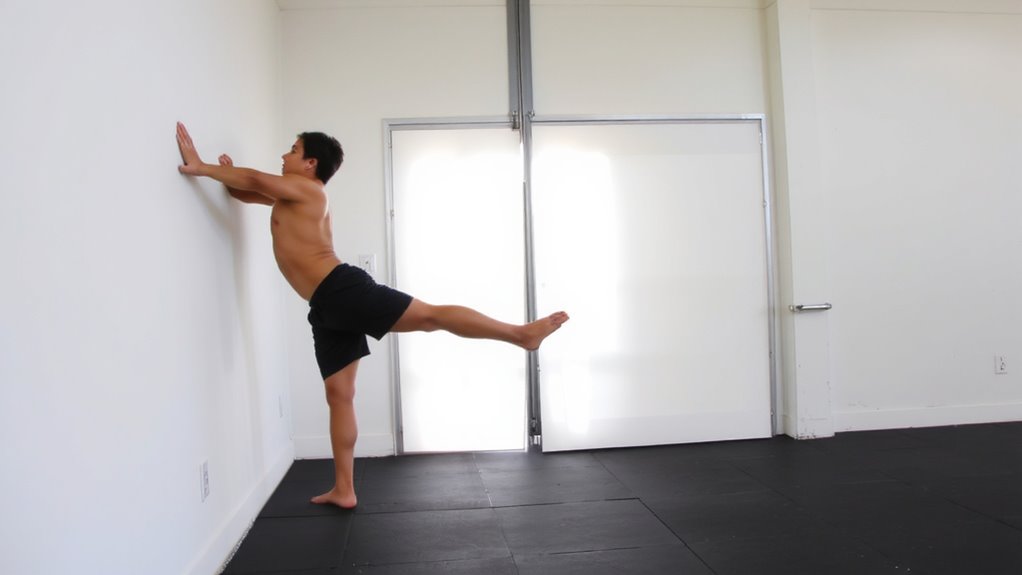
Why risk losing balance when you’re still rebuilding strength and control? Using support surfaces during the single-leg RDL makes smart sense in early recovery. Whether it’s a countertop, stable chair, or padded wall, light hand contact offers just enough stability to maintain form without fully relying on it. This minimal support preserves proprioceptive feedback, letting you feel subtle shifts in weight and alignment while reducing fall risk. Think of it as training wheels-temporary, not cheating. You’re still engaging the glutes, hamstrings, and core, but with reduced nervous system load. Over time, as coordination improves, you’ll naturally rely less on contact. Quality foam pads or non-slip mats enhance grip and comfort, making support surfaces both practical and effective. The right gear supports progression, not dependency. Use them strategically, then phase them out as control returns. It’s not about weakness-it’s about intelligent rehab.
Bodyweight Single-Leg RDL: Balance and Hinge Cues
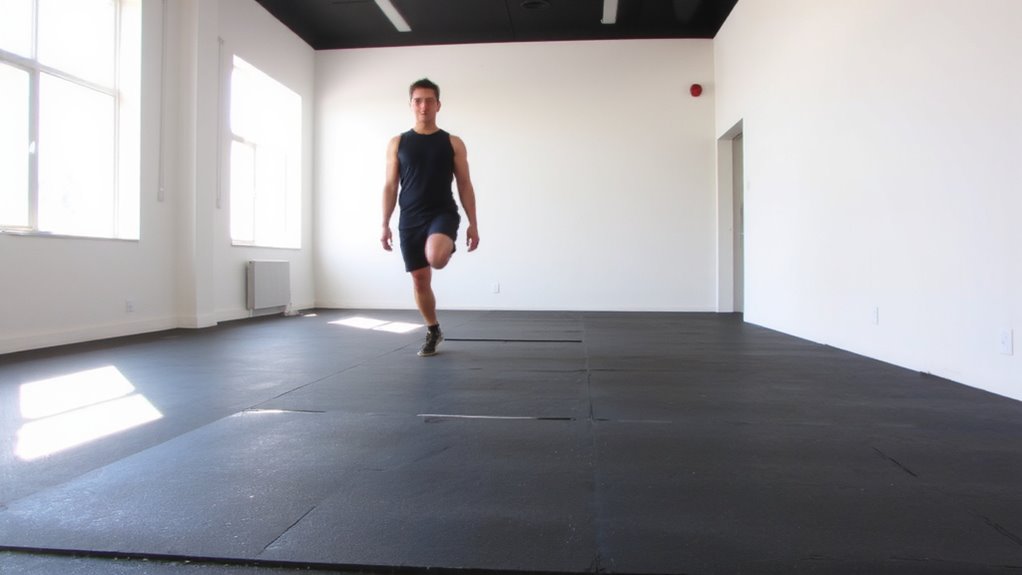
Stability starts with awareness, and the bodyweight single-leg Romanian deadlift (RDL) is your first real litmus test after shedding external support. You’re now responsible for controlling both balance and movement quality from the ground up. Focus on maintaining neutral hip alignment-your standing hip should stay level, not dip or hike-as this prevents excessive strain on the SI joint and improves glute medius activation. Simultaneously, initiate core engagement early and maintain it throughout the movement to stabilize your spine and prevent overarching. Hinge at the standing hip, not the lower back, letting your free leg extend straight behind you. Keep your gaze slightly down and arms relaxed to avoid tension creep. This version builds proprioception and neuromuscular control critical for post-rehab athletes. Proper cues-“chest up,” “push your hip back,” “core tight”-make the difference between effective retraining and compensatory patterns. Master this before progressing.
How to Add Weight Without Losing Form
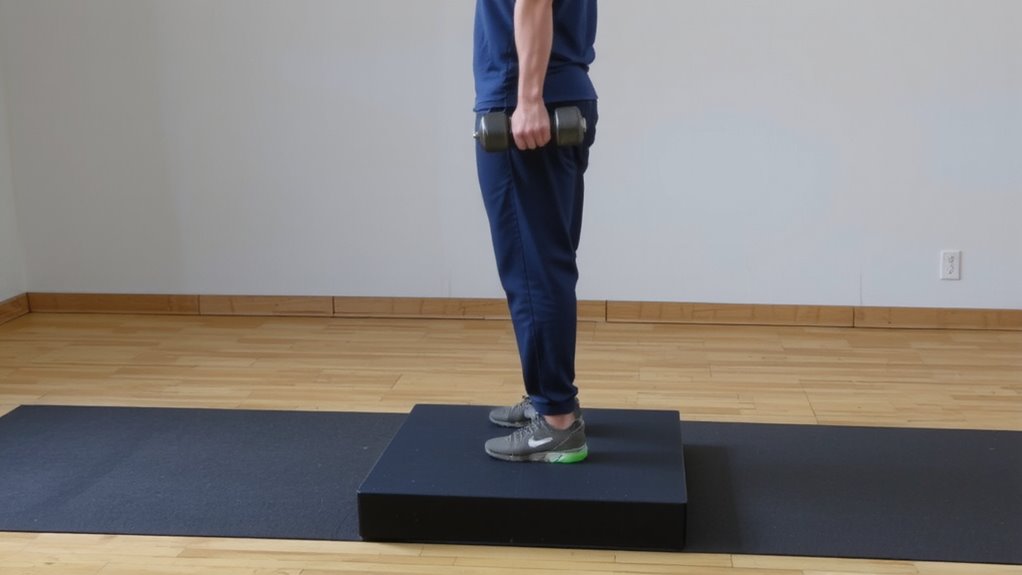
Progression is the quiet promise of recovery, and adding weight to your single-leg RDL should feel like an extension of control, not a compromise. Start with conservative weight selection-dumbbells or kettlebells that challenge you without triggering form breakdown. You’ll know the load’s too high if your hips shift, spine rounds, or balance falters. Stick to 3–5 reps per leg with strict form, focusing on tension in the glute and hamstring. Increment weight in small steps-2.5 to 5 pounds-only when control is consistent. External cues, like filming your sets, help spot subtle flaws before they become patterns. Remember, your nervous system is still recalibrating post-rehab, so heavier isn’t smarter if stability suffers. The goal isn’t max load; it’s resilient movement. Smart progression rebuilds strength without re-injury, keeping performance within safe thresholds.
Progress to Single-Leg Stability Under Speed
Once you’ve built control through slow, weighted single-leg RDLs, shifting to speed makes sense-but only if your joints can handle the spike in demand. Now, dynamic control becomes critical. You’ll need to shift from controlled lowering to rapid stabilization, mimicking the short ground contact times in running. Start with tempo drills: quick descent, pause, repeat. This builds neuromuscular coordination without excess strain. Then, introduce light plyometric integration-think small hop-to-stance reps, landing softly into the single-leg RDL position. These aren’t full jumps; they’re precision drills to reinforce joint stiffness and hip deceleration. Move fast, but never sacrifice form. Poor landings undo stability gains and risk re-injury. Focus on crisp movement patterns, not height or distance. Your post-rehab progress depends on quality under speed. Master this phase, and you’ll prep the tendon response and timing needed for more intense drills-without overloading healing tissues.
Use Single-Leg RDLs for Sprint Readiness
You’ve already trained your body to absorb force and stabilize under speed, so now it’s time to sharpen that control for the specific demands of sprinting. Single-leg RDLs directly support sprint mechanics by reinforcing proper hip hinge patterns and eccentric hamstring control-both critical during late swing phase. You’re not just building strength; you’re enhancing neuromuscular control, allowing quicker, more precise muscle recruitment when fatigued. The unilateral loading mirrors the flight phase of sprinting, teaching your nervous system to maintain alignment without over-rotating. Use a slow tempo at first-3 seconds down, 1 up-then progress to plyo variations or resisted bands to increase demand. Perform them barefoot or in minimalist spikes to maximize proprioception. Consistent practice improves pelvic control and reduces ground contact asymmetries, which matters most when moving from rehab to full-out sprinting. Done right, this movement bridges the gap between recovery and readiness.
On a final note
You’ve built control through supported progressions and mastered the bodyweight single-leg RDL with proper hinge mechanics. Adding load gradually preserves form, while integrating speed trains stability under dynamic conditions. This exercise bridges rehab to performance, sharpening neuromuscular coordination essential for sprinting. When executed with consistency, it reduces re-injury risk and boosts athletic resilience-making it a valuable tool in any recovery-focused strength regimen.