The Role of Sleep Cycles in Restoring Neuromuscular Function Post-Competition
You need 7 to 9 hours of quality sleep to repair neuromuscular function after competition, as deep sleep releases growth hormone for muscle rebuilding and REM refines motor pathways for coordination. Poor or mistimed sleep disrupts recovery, weakening strength and reaction time. Even the best recovery gear can’t replace natural sleep cycles. Consistent, uninterrupted rest in a cool, dark environment maximizes repair-what happens in your sleep directly shapes your comeback.
Notable Insights
- Deep sleep triggers growth hormone release essential for muscle repair and neuromuscular recovery after competition.
- REM sleep consolidates motor learning, refining neural pathways used during athletic performance.
- Sufficient sleep duration (7–9 hours) ensures complete sleep cycles necessary for optimal neuromuscular restoration.
- High-quality, uninterrupted sleep maintains balance between slow-wave and REM stages critical for recovery.
- Aligning sleep with circadian rhythms enhances sleep architecture, accelerating return to peak neuromuscular function.
How Sleep Restores Neuromuscular Function After Competition
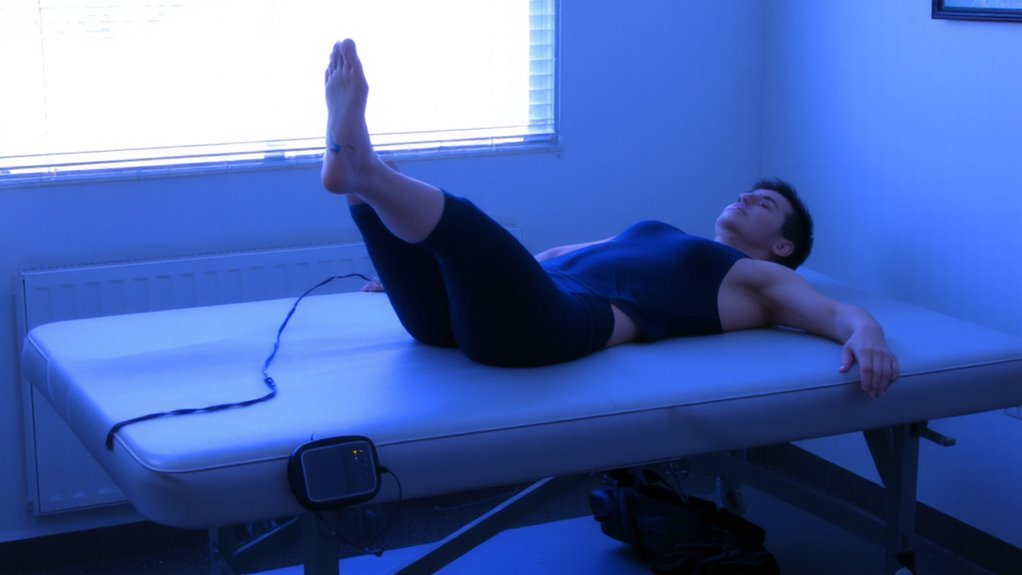
While your body repairs itself during sleep, the recovery of neuromuscular function after intense competition hinges largely on the depth and quality of rest you achieve. Your sleep duration directly impacts how efficiently your nervous system recalibrates, allowing for essential neural adaptation to occur. Without sufficient rest-typically 7 to 9 hours-motor coordination and reaction time suffer, slowing recovery. During deep, uninterrupted cycles, your brain consolidates movement patterns from training, reinforcing muscle memory and refining neuromuscular pathways. This process isn’t automatic; it relies on consistent, high-quality sleep to optimize performance gains. Athletes who neglect sleep duration often report sluggish reflexes and decreased strength output, signs of stalled neural adaptation. Recovery wearables and smart sleep trackers can help monitor rest quality, but their effectiveness depends on user consistency and accurate data interpretation. Real progress comes not just from gear, but from prioritizing rest as rigorously as training.
What Deep Sleep and REM Do for Muscle and Nerve Repair

Because your body’s repair systems rely on specific sleep stages, deep sleep and REM play distinct yet complementary roles in muscle and nerve recovery. During deep sleep, growth hormone surges, triggering tissue repair and helping your muscles rebuild stronger. This phase is critical for physical restoration, especially after intense training. Meanwhile, REM sleep supports nerve repair through dream synthesis and memory consolidation, helping your brain reorganize neuromuscular pathways. You’re not just resting-you’re reinforcing motor skills and optimizing neural efficiency. While fitness gear like recovery boots or compression wear may aid circulation, they can’t replace what sleep uniquely provides. Neither gadget nor supplement replicates the precision of these natural cycles. Deep sleep repairs the body; REM refines the nervous system. Together, they form a recovery duo no equipment can fully mimic. Prioritize both, and you’ll recover smarter, not just harder.
How Sleep Quality Affects Coordination and Strength Recovery

When you’re not getting quality sleep, even the most meticulously planned training routine can fall short, especially when it comes to rebuilding strength and maintaining coordination. Poor sleep architecture disrupts the balance of deep sleep and REM cycles, both critical for neuromuscular repair. Without sufficient slow-wave sleep, your muscles don’t regenerate effectively, weakening strength gains. Meanwhile, fragmented REM phases impair motor learning and fine-tuned movements, increasing error risk during complex tasks. You’re also more prone to neural fatigue, which dulls signal precision between brain and muscle, slowing reaction time and reducing movement efficiency. High-quality sleep stabilizes these systems, allowing for sharper coordination and sustained power output. Fitness trackers that monitor sleep stages can help you assess rest effectiveness, but don’t replace consistent habits. Ultimately, optimizing sleep quality isn’t just supportive-it’s foundational for complete neuromuscular recovery.
Why Timing Sleep Cycles Boosts Post-Event Recovery
You’ve seen how sleep quality directly influences coordination and strength recovery, but timing your sleep cycles right can amplify those benefits-especially after intense physical events. When you align sleep with your natural circadian rhythm, you enhance circadian alignment, allowing deeper, more restorative rest. This means your body hits critical windows for muscle repair and neural recalibration. Properly timed sleep supports ideal sleep architecture-increasing slow-wave and REM stages when tissue regeneration peaks. You’re not just logging hours; you’re syncing biology to boost recovery efficiency. Without this timing, even long sleep may lack restorative power. For athletes, whose neuromuscular systems endure extreme stress, mistimed rest undermines gains. The right schedule means faster return to peak function. It’s not luxury-it’s strategic recovery. Prioritizing cycle timing is as essential as training load or nutrition when restoring performance capacity.
Practical Ways Athletes Can Improve Sleep for Faster Healing
While recovery starts in the gym, it’s perfected in the quiet hours when your body repairs itself, and how you structure sleep can make the difference between mere rest and active healing. You can boost this process by optimizing your sleep environment-keep the room cool, dark, and quiet, and consider blackout curtains or a quality white noise machine. Consistent sleep and wake times strengthen circadian rhythms, enhancing deep sleep when growth hormone peaks. Don’t overlook recovery nutrition: a snack with protein and carbs before bed supports muscle repair. Avoid caffeine and heavy meals late, as they disrupt sleep quality. Wearable sleep trackers can provide insights, but comfort matters more than data overload-choose gear that doesn’t restrict movement. Ultimately, intentional sleep hygiene and smart recovery nutrition turn rest into a strategic tool, not just downtime.
On a final note
You need quality sleep to fully restore neuromuscular function after competition, not just time. Deep sleep drives muscle repair through growth hormone release and neural recovery, while REM supports motor coordination and brain processing. Poor sleep quality or mistimed cycles slows strength recovery and delays reaction times. Athletes using recovery-focused gear-like compression wear or cooling mattresses-see better results when syncing use with ideal sleep phases. These tools aid, but only consistent, well-timed sleep truly maximizes healing.