A 12-Minute Mobility Flow for Tight Hips and Stiff Lower Back
Tight hips from sitting pull your pelvis out of alignment, stressing your lower back-this 12-minute flow counters that by loosening stiff joints and restoring balance. You’ll start with dynamic warm-ups to wake up your glutes and spine, then move into deep hip releases that target the root of tension. Sustained stretches boost flexibility while retraining your nervous system for better movement. It’s efficient, science-backed, and works even if you’ve been sedentary all day-your body will notice the difference by the end.
Notable Insights
- Tight hips from prolonged sitting can lead to lower back pain by causing anterior pelvic tilt and increased spinal pressure.
- A 12-minute mobility flow combining dynamic warm-ups and sustained stretches improves hip and spine mobility efficiently.
- Leg swings, arm-raked deadbugs, and hip circles activate key muscles and enhance neuromuscular coordination before deeper stretching.
- Essential stretches like 90/90, seated pigeon, and supine figure-four target hip rotators, flexors, and glutes for lasting release.
- Gentle spinal drills such as pelvic tilts and cat-cow lubricate joints, reduce stiffness, and restore natural movement patterns.
Why Tight Hips Cause Lower Back Pain
While your hips may seem like just another joint, their tightness can quietly set off a chain reaction that lands squarely in your lower back. When hip flexors shorten from prolonged sitting, they pull your pelvis forward, creating an anterior pelvic tilt. This misalignment forces your spine into excessive curvature, increasing pressure on lumbar discs. You’re not just risking discomfort-this altered posture often leads to chronic strain. A muscle imbalance develops: tight hip flexors overpower weak glutes and lower abdominals, disrupting core stability. Over time, your lower back compensates for lost hip mobility, bearing loads it isn’t designed to handle. Fitness recovery tools like foam rollers or hip flexor stretches help, but without addressing the root imbalance, relief is temporary. Corrective movement patterns and consistent mobility work are essential. Ignoring the link between tight hips and pelvic tilt undermines even the most advanced gear or recovery tech-structure must precede support.
How This Flow Loosens Stiff Joints
Because stiff joints thrive on repetitive, targeted movement, this mobility flow attacks tension at its source by combining dynamic stretches with sustained holds that increase blood flow and gradually improve range of motion. You stimulate joint lubrication with each controlled repetition, letting synovial fluid nourish cartilage and reduce friction during movement. The longer holds also encourage fascial release, helping sticky connective tissue slide smoothly around muscles and joints. Over time, this dual approach enhances both mobility and comfort, especially in high-tension zones like hips and lower back. Unlike passive stretching, this flow builds neuromuscular awareness, so your body learns to access positions more efficiently. It’s not just about flexibility-function matters. When done consistently, the routine supports recovery by maintaining tissue quality, making it a smart addition to any fitness recovery toolkit. Equipment isn’t needed, but quality mats improve comfort during floor-based holds. For those looking to enhance their routine, incorporating a stretching strap can help deepen stretches and improve flexibility over time.
Warm Up: 3 Dynamic Moves for Mobility
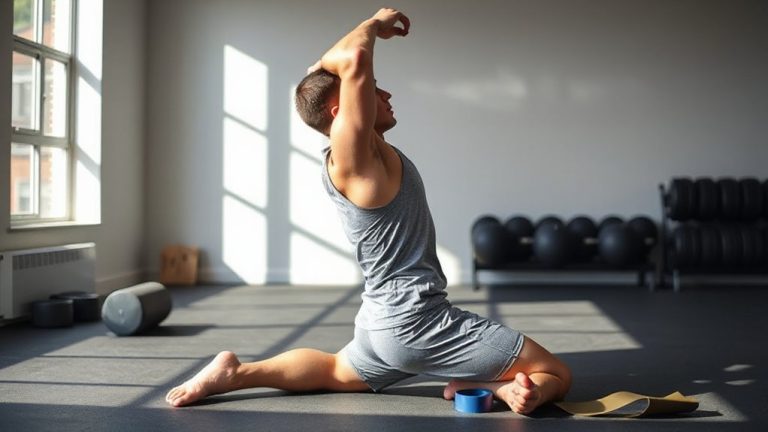
You’ve seen how consistent, targeted movement improves joint function and tissue quality, setting the stage for better mobility in stiff hips and a tight lower back. Now it’s time to prime your body with three dynamic moves that boost joint articulation and trigger essential muscle activation. Start with leg swings-controlled and smooth-to lubricate the hip joint and engage glutes and hamstrings. Then, drop into arm-raked deadbugs, which enhance core engagement while promoting spine and hip coordination. Finish with dynamic hip circles to increase range of motion and awaken deep stabilizers. These aren’t random motions; they’re precision-driven exercises designed to prep your nervous system and musculature. Unlike passive stretching, this sequence delivers active readiness, improving neuromuscular communication. You’ll feel looser, sharper, and more in control-ideal before deeper mobility work. Proper form guarantees maximum benefit, so move deliberately. This warm-up isn’t just ritual; it’s a functional foundation builders can’t skip.
Unlock Tight Hips: 4 Essential Stretches
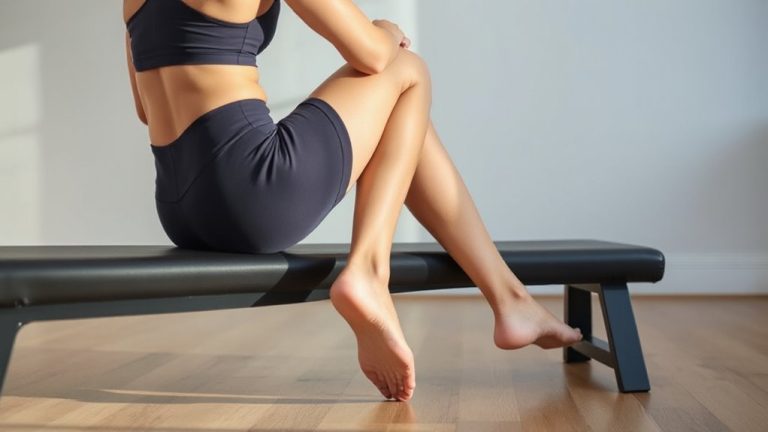
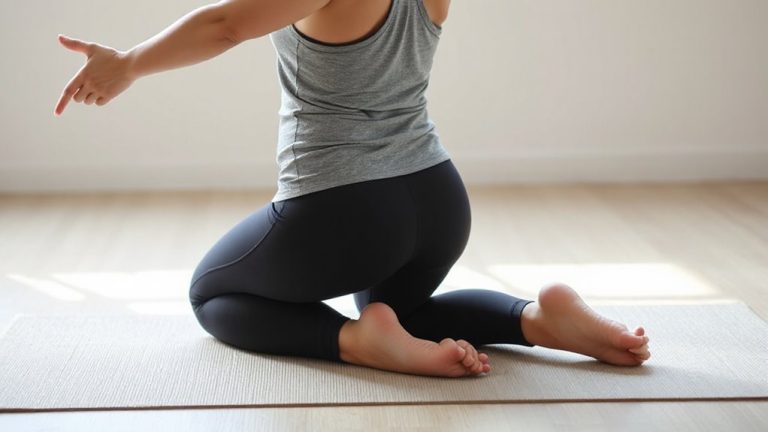
What if your hips could move freely without that nagging stiffness? You’d likely walk, squat, and lift with more ease-and these four stretches make that possible. Start with the 90/90 stretch to improve hip alignment by releasing tight internal and external rotators. Then move into seated pigeon, where a slight forward lean increases the stretch across the glutes and hip capsule. The low lunge with a posterior tilt targets hip flexors while promoting joint stability through engaged core control. Finish with a supine figure-four stretch, using breath to deepen the release. Together, they enhance range of motion and reduce compensatory movement patterns. Consistency matters more than intensity-hold each stretch 2–3 minutes for best results. Over time, you’ll notice improved posture and fewer strain-related aches. These aren’t quick fixes, but strategic recovery tools that support long-term mobility and resilient movement.
Ease Lower Back Tension: Gentle Mobility Drills
Tight hips often contribute to lower back tension, since restricted mobility in the pelvis forces the lumbar spine to absorb more movement than it should. That’s where gentle mobility drills come in-they promote spinal alignment and encourage muscle relaxation without aggressive stretching. You’ll find moves like pelvic tilts and cat-cow pulses especially effective; they lubricate the spinal joints and ease stiffness in the erector spinae. Controlled, deliberate motion matters more than range here. Focus on smooth breathing and precision to activate neurological feedback that supports deeper muscle relaxation. Tools like foam rollers or mobility balls can help, but aren’t essential-your body weight and gravity work fine. These drills reset neuromuscular patterns, improving daily movement efficiency. Over time, consistent practice enhances spinal alignment during sitting, lifting, and walking. Unlike intense recovery tools that risk overstimulation, these low-effort drills offer sustainable benefits. They’re practical, require no fitness gear, and integrate easily into any routine focused on long-term recovery and functional mobility.
Complete Flow: 12-Minute Routine for Hips and Back
A 12-minute daily routine can deliver measurable improvements in hip mobility and lower back comfort when designed with progressive movement patterns and joint-friendly shifts. You’ll begin with dynamic stretches to warm up connective tissues, then move into controlled joint rotation drills that enhance synovial fluid circulation and reduce stiffness. Emphasizing proper hip alignment throughout guarantees balanced load distribution, minimizing strain on the lumbar spine. Include movements like figure-four leans, seated spinal twists, and cat-cow pulses to integrate flexibility with stability. This flow builds functional range of motion, especially when practiced consistently with breath-coordinated shifts. High-performance recovery gear, like targeted foam rollers or mobility bands, can support long-term joint health by releasing deep tissue tension. Though the routine is brief, its effectiveness hinges on precision-not intensity-making it sustainable for daily use. Over time, you’ll notice improved movement efficiency and decreased discomfort. For deeper myofascial release, consider using one of the best foam rollers based on density and texture for your specific needs.
On a final note
You’ve just completed a targeted 12-minute flow that effectively addresses tight hips and stiff lower back-common culprits in daily discomfort. This routine enhances joint mobility, reduces muscular tension, and supports recovery. Paired with quality recovery gear like foam rollers or compression tools, results improve further. Consistency matters more than intensity, and incorporating this flow into your weekly routine helps maintain functional movement, preventing long-term strain while promoting physical resilience through practical, sustainable practice.