Prehabilitation Exercises Targeting the VMO to Prevent Knee Valgus Collapse
You can prevent knee valgus collapse by targeting the VMO with precise prehab exercises like terminal knee extensions and step-downs. These drills enhance neuromuscular control, correcting poor firing patterns that lead to inward knee collapse. A weak or delayed VMO allows lateral structures to dominate, destabilizing the patella-especially under load. Consistent, mindful practice retrains reflexive activation better than supportive gear ever could, setting the stage for stronger, safer movement patterns just ahead.
Notable Insights
- Terminal knee extensions with a resistance band improve VMO activation during the final 20 degrees of extension.
- Step-downs on a 4–6 inch step enhance VMO control while maintaining proper knee and pelvis alignment.
- Slow, controlled single-leg squats promote neuromuscular coordination and reduce valgus collapse risk.
- Isometric quad contractions with biofeedback retrain timely VMO firing and improve patellar tracking.
- Daily low-load, high-repetition VMO exercises boost neural adaptation and joint stability over time.
What Causes Knee Valgus (And Why Your VMO Is Key)
Why do your knees cave inward when you squat or run? It often comes down to poor knee biomechanics caused by muscle imbalances, especially around the quadriceps. Your VMO-the teardrop-shaped muscle on the inner thigh-plays a critical role in stabilizing the patella and preventing valgus collapse. When it’s weak or underactive, the lateral muscles dominate, pulling the knee inward. This misalignment isn’t just inefficient; it increases injury risk during high-impact activities. Muscle imbalances like this commonly stem from sedentary lifestyles, improper training, or repetitive movement patterns. While fitness gear like knee sleeves may offer support, they don’t correct the root issue. True prehabilitation demands targeted exercises that retrain activation and strength. Fixing knee valgus isn’t about equipment-it’s about fixing function through intentional movement and understanding how your body’s mechanics respond under load.
5 Signs Your VMO Isn’t Firing Properly
How often do you notice your knees wobbling slightly at the bottom of a squat, or feel a dull ache just beneath your kneecap after a run? These could be signs your VMO isn’t firing properly. Weak quads often mask as overall leg fatigue, but the real issue lies in uneven muscle activation-your VMO should stabilize your kneecap, yet it frequently underperforms. You might also experience poor balance during single-leg movements, like lunges or step-ups, where knee control matters most. Without proper VMO engagement, your patella tracks incorrectly, increasing stress on the joint. This dysfunction isn’t always obvious in daily life but shows up under load or fatigue. Athletes and active individuals may overlook it until discomfort becomes persistent. Recognizing these early signs-wobbling, ache, instability-lets you address the root cause before compensatory patterns set in, reducing injury risk and improving movement efficiency. Incorporating supportive gear like a best volleyball knee support can help stabilize the joint during dynamic movements while you strengthen the VMO.
Do Terminal Knee Extensions Right
Ever wonder why some rehab routines seem to deliver stronger, more stable knees while others barely make a dent? It often comes down to how well you perform terminal knee extensions (TKEs). Proper quad activation during the last 20 degrees of knee extension is essential for VMO engagement. Without correct muscle timing, you’re just going through the motions. TKEs aren’t just about strength-they’re about neuromuscular precision. Anchor the band just above your knee, keep your foot pointed up, and slowly extend. Feel the burn right below the kneecap? That’s the VMO firing.
| Effort | Sensation | Outcome |
|---|---|---|
| Poor | Slack quads | Weak support |
| Fair | Mild burn | Slight improvement |
| Good | Sharp VMO pinch | Real progress |
| Great | Full quad activation | Stable knee, better timing |
Master Step-Downs to Stop Knee Collapse
You’ve locked in proper quad engagement with terminal knee extensions, but strength without control won’t stop your knee from buckling under load. Step-downs fix that. This exercise challenges your VMO under functional conditions, demanding precise step alignment and muscle timing to prevent valgus collapse. Stand on a 4–6 inch step, slowly lower one heel toward the floor, keeping your pelvis level and knee tracking over the second toe. Poor alignment-like a drifting knee or hip drop-means you’re not reaping full benefits. Control matters more than depth. Quality reps build neuromuscular coordination, teaching your body to fire the right muscles at the right time. Unlike passive gear like knee sleeves or braces, step-downs actively retrain movement. They don’t just support recovery-they prevent future injury. Consistent practice improves joint stability far better than external aids alone. Master this, and you’ll move stronger, safer, and with better mechanics in daily and athletic tasks.
Reprogram Reflexes to Fix Knee Tracking
What if your knee’s tendency to cave inward isn’t just weak muscles but misfiring reflexes? Your neuromuscular system might be sending outdated signals, causing poor knee tracking during movement. The fix isn’t only strength-it’s neural adaptation. Through targeted muscle reeducation, you can reprogram your body’s automatic responses to load and motion. This means training your brain to fire the right muscles-like the VMO-at the right time. Use controlled, mindful reps with real-time feedback, such as mirrors or coaching cues, to reinforce proper alignment. Consistency matters: small daily sessions yield faster adaptation than infrequent, intense workouts. Recovery gear like neuromuscular electrical stimulation devices may support this process, though evidence varies. Best EMS devices for home workouts can provide convenient access to neuromuscular stimulation between training sessions. Ultimately, improving reflexive control offers a durable solution beyond temporary strength gains-correcting movement at the source.
6 Best Prehab Exercises for VMO Strength
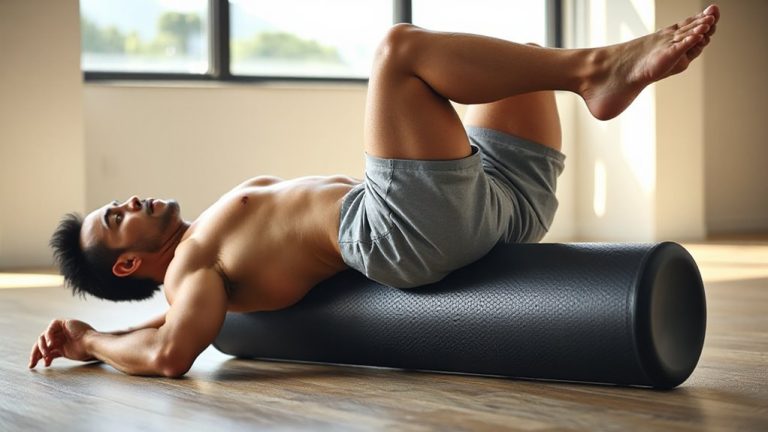
The most effective prehab exercises for VMO strength aren’t just about muscle activation-they’re about precision and timing. You’ll want to focus on movements that promote isolated VMO activation while reducing reliance on the dominant vastus lateralis. The terminal knee extension, performed with a resistance band, forces controlled contraction at 15–30 degrees of flexion-prime VMO range. Wall slides with a ball between the knees enhance neuromuscular feedback, improving knee tracking. Single-leg step-downs are especially valuable because they mimic real-world loads, exposing subtle muscle imbalance. Don’t overlook biofeedback tools; they help you see if your VMO fires properly during reps. Foam rollers and massage guns can aid recovery between sets, ensuring muscles aren’t fatigued during training. Choosing the right best foam rollers can enhance myofascial release and support consistent training. Consistency matters more than intensity-perform these 3–4 times weekly. Over time, you’ll retrain motor patterns and correct alignment issues before they lead to knee valgus collapse.
On a final note
You’ve likely seen knee valgus during squats or lunges-knees caving inward, stressing ligaments and cartilage. The VMO, a key quad muscle, helps prevent this by stabilizing the kneecap. When it’s weak or poorly activated, your risk of injury rises. Prehab exercises like terminal knee extensions and step-downs boost VMO recruitment, improving alignment. Consistent practice enhances neuromuscular control, reducing collapse. These moves are simple but effective, especially when done with focus on form, not speed. Over time, they build resilience-essential for athletes and active individuals alike.