Single-Leg Romanian Deadlifts With Eyes Closed to Heighten Proprioceptive Demand
You’ll sharpen proprioception by closing your eyes during a single-leg RDL, removing visual cues to force reliance on joint feedback and inner-ear balance. This boosts neuromuscular control and movement precision, especially when done barefoot or in minimalist shoes for better ground feel. Avoid wobbling with a stable pelvis and engaged core. Perform 2–3 times weekly post-warm-up for best results. Stick with it and you’ll access deeper coordination gains than standard reps allow.
Notable Insights
- Closing eyes during single-leg RDLs increases reliance on proprioception by removing visual feedback.
- Enhanced neuromuscular control results from heightened joint and muscle sensory input during eyes-closed execution.
- Performing the movement unilaterally challenges balance, amplifying proprioceptive demand on the supporting limb.
- Proper core engagement and neutral spine alignment are critical to maintain control without visual cues.
- Training with eyes closed promotes neural adaptations that improve overall motor control and body awareness.
How to Do a Single-Leg RDL With Eyes Closed
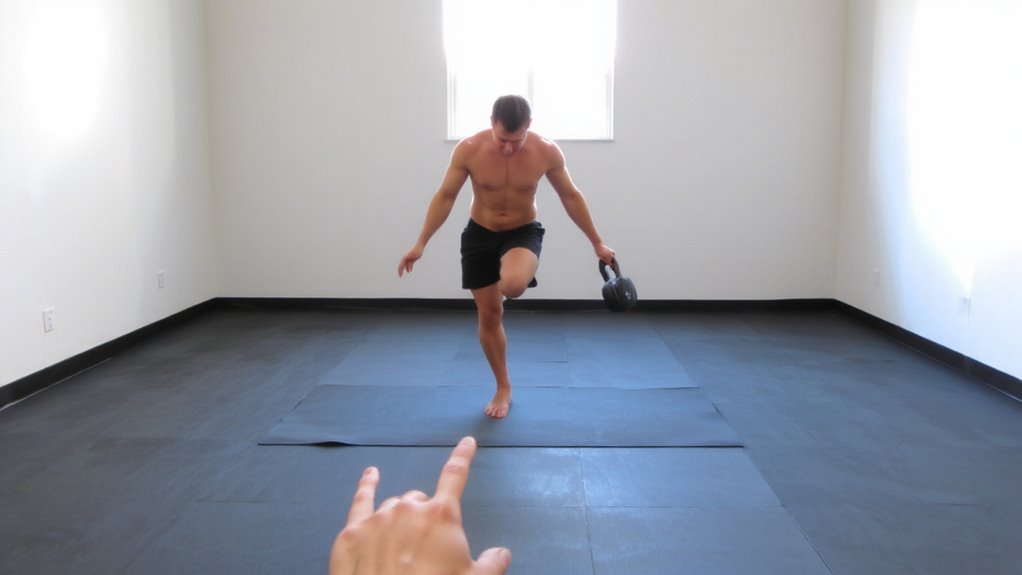
Why challenge your balance with your eyes open when you can test true neuromuscular control by closing them? Stabilizing on one leg without visual feedback forces your body to rely on proprioception, sharpening coordination and joint awareness. Begin standing tall, core tight, weight on your left leg. Shift your torso forward while lifting your right leg straight back, hinging at the hip. Maintain a neutral spine-this is essential. Your form cues should include “chest up,” “hips square,” and “knee slightly bent.” Feel the muscle activation along your standing leg’s hamstrings and glute, not in the lower back. Control each descent and ascent, avoiding any wobble. This variation isn’t just harder-it’s smarter. The heightened demand improves functional strength and balance, making it a potent tool for injury prevention and movement efficiency during fitness recovery. Quality over speed wins.
Fix These Common Eyes-Closed RDL Mistakes
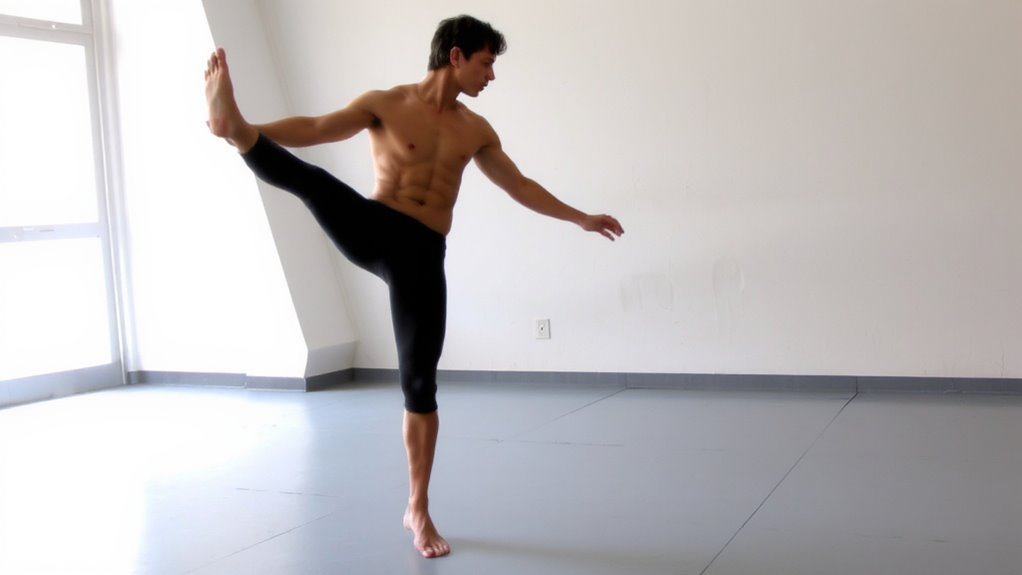
How often do you close your eyes during a single-leg RDL only to wobble out of control or lose your balance halfway through the movement? You’re likely compensating for an unstable pelvis, which disrupts alignment and reduces glute engagement. Many people rely too much on their hamstrings, creating overactive hamstrings that dominate the movement and limit hip hinge depth. This shifts stress to the lower back and decreases posterior chain activation where you want it-your glutes and hamstrings working together, not fighting. Avoid this by engaging your core early and maintaining a neutral spine. Focus on a slow, controlled descent to feel the stretch without jerking. Keep your standing hip stacked over your ankle, not flaring out. If you keep failing at control, regress to eyes-open practice first. Proper footwear also matters-minimalist shoes with good ground feedback help stabilize your base, supporting better proprioception without restricting natural foot motion.
Sharpen Balance: Why Closing Your Eyes Helps
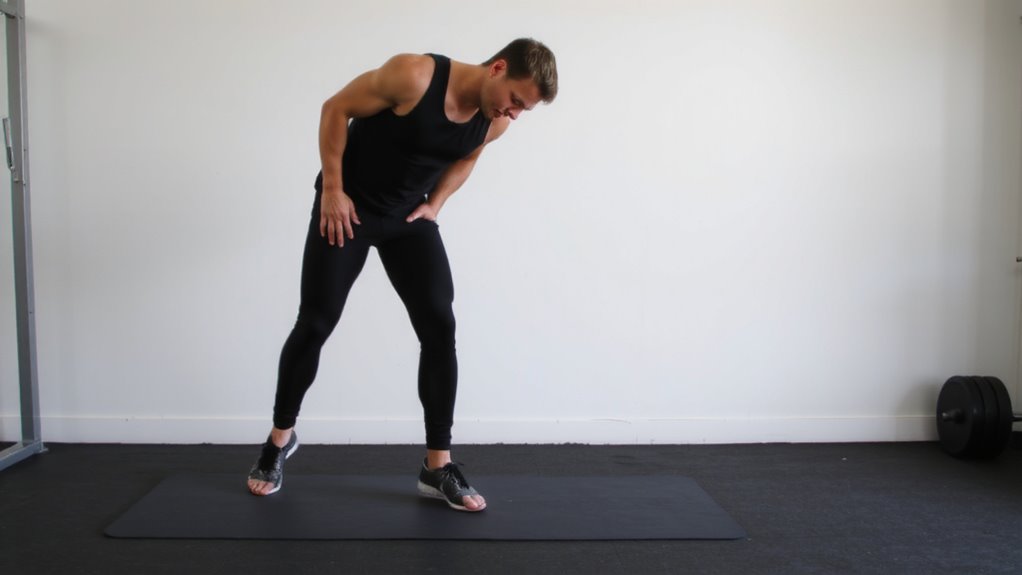
Closing your eyes during a single-leg Romanian deadlift isn’t just a challenge-it’s a recalibration of your balance system. You remove visual input, forcing your body to rely more on proprioception and inner-ear cues. This shift boosts sensory integration, as your brain works harder to combine feedback from muscles, joints, and the vestibular system. Over time, this drives neural adaptation, sharpening the communication between your nervous system and motor control centers. You’ll notice improved stability and body awareness, even with your eyes open later on. Closing your eyes doesn’t just test balance-it trains it at a deeper neurological level. The result? More refined movement patterns and reduced risk of imbalance-related errors during dynamic activities. Though it feels awkward at first, the adaptation is both measurable and functional. This isn’t just another gym trick-it’s a deliberate step toward smarter, more resilient movement using minimal equipment and maximum neuromuscular engagement.
When to Add This Move to Your Routine
Where should this move fit into your weekly plan? This exercise suits best during low-fatigue sessions, ideally after a dynamic warm-up but before strength work-making timing selection essential. If you’re integrating it post-activation, you’ll prime proprioception without taxing stability when spent. Program integration works well 2–3 times weekly, especially in phases emphasizing neuromuscular control. Don’t add it on heavy lower-body days; fatigue compromises form and diminishes sensory feedback. Instead, slot it into mobility-focused or accessory workouts where precision outweighs load. Beginners should start with eyes open, progressing only when balance feels automatic. For recovery cycles, this movement aids body awareness without stressing joints-ideal for active recovery when using proper footwear and adequate mat support. Timing selection isn’t just about the day, but your readiness. Poor stability indicates the need to hold off. Smart program integration turns this drill into a tool, not a strain.
Build Coordination, Control, and Confidence
You’ve already considered when to include single-leg Romanian deadlifts with eyes closed in your routine, recognizing the value of timing and freshness for maximizing proprioceptive feedback. Now, you’re building coordination, control, and confidence with each rep. Closing your eyes removes visual crutches, forcing your body to rely on internal cues-this drives neural adaptation by sharpening signal precision between brain and muscles. Over time, consistent practice strengthens muscle memory, making complex movements feel more natural, even under unstable conditions. You’ll notice smoother shifts, better joint alignment, and fewer balance corrections. This isn’t just strength training-it’s neuromuscular fine-tuning. The result? Greater body awareness that translates to athletic performance and daily function. Confidence grows not from guessing, but from knowing your body can handle demand without visual input. You’re not just moving; you’re mastering movement.
Easier and Harder Versions for Every Level
A few simple tweaks can make single-leg Romanian deadlifts with eyes closed more accessible or considerably more challenging, depending on your current skill level. For beginners, perform the movement with eyes open and a light support hand on a wall-this stability variation reduces fall risk while building foundational balance. As you improve, progress to eyes closed with hands on hips to increase proprioceptive demand. Light dumbbells introduce load, but mastery lies in control, not weight. Advanced athletes can use progress modifications like unstable surfaces (e.g., a foam pad) or holding weight in the opposite hand to challenge coordination further. These stability variations demand greater neuromuscular engagement, enhancing joint awareness and motor precision. Proper footwear with minimal cushioning can also improve ground feedback. Done consistently, these progress modifications refine movement efficiency and reduce injury risk, making them valuable tools in any functional fitness or recovery program.
On a final note
You improve balance and proprioception by closing your eyes during single-leg RDLs, deepening neuromuscular engagement. This variation challenges stability, sharpens control, and reveals imbalances. While effective, it demands proper form to avoid error. Use it strategically in training-not as a default. Pair with supportive footwear and recovery tools like foam rollers to maintain joint health and muscle function, enhancing long-term performance and injury resilience through mindful progression.