Psychological Skills Training for Athletes Returning From Long-Term Injury
You’ve healed physically, but your mind still hesitates-fear of re-injury, lost identity, and isolation are real. Psychological skills training rebuilds confidence through SMART goals, visualization, and emotional control. You rewire your brain with mental reps just like physical ones. Pairing breathwork, positive self-talk, and focus drills with reliable fitness gear creates a cycle of trust and progress. Stronger psychology means better rehab adherence-and better outcomes. There’s a proven method to reclaim your edge.
Notable Insights
- Mental skills training rebuilds confidence and focus during recovery alongside physical rehabilitation.
- SMART goal setting provides clear, measurable targets to track progress and maintain motivation.
- Visualization strengthens neural pathways, improving movement relearning and reducing performance anxiety.
- Reframing negative thoughts and using affirmations combat fear of re-injury and build resilience.
- Daily breathwork, mindfulness, and journaling regulate emotions and support long-term mental recovery.
Why Athletes Need Mental Training After Injury
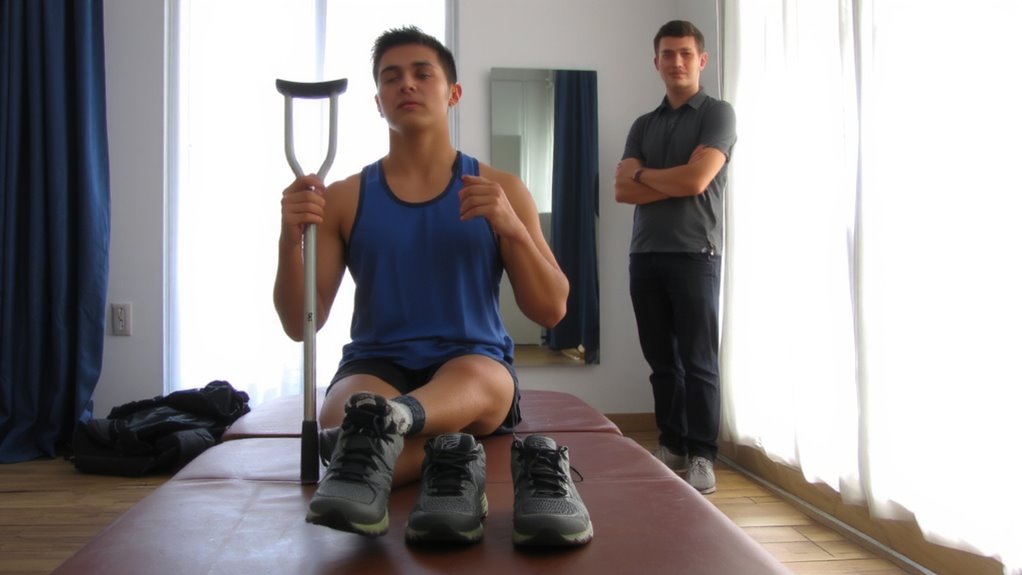
How do you regain not just strength, but confidence, after a season-ending injury? It starts with mental training. Physical rehab rebuilds your body, but emotional resilience rebuilds your mindset. You’ve faced setbacks, frustration, and fear-now you need tools to process them constructively. Without emotional resilience, doubt creeps in, slowing recovery and risking re-injury. Mental training teaches you to regulate emotions, stay focused, and maintain self-belief through discomfort. Equally essential is social support. Coaches, teammates, and therapists provide accountability and encouragement, reinforcing your commitment. Their presence isn’t just comforting-it’s scientifically linked to faster, more consistent recovery outcomes. Pair mental skills training with proper fitness gear-like supportive braces or monitored recovery devices-and you create a feedback loop: better psychology enhances physical compliance, and reliable equipment boosts psychological safety. Together, they don’t just aid return to play-they prepare you for the mental demands of competition.
What Mental Blocks Do You Face After Injury?
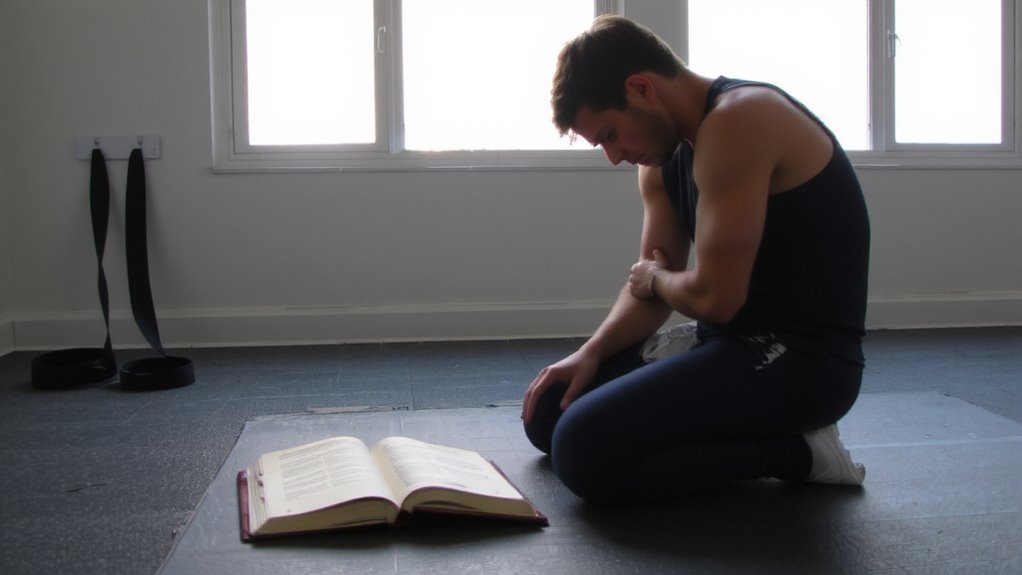
Why does a fully healed knee still hesitate before a jump? Because injury leaves mental scars even when the body recovers. You’re not just healing tissue-you’re rebuilding trust in your body. Fear of re-injury often triggers hesitation, limiting performance despite physical readiness. Loss of identity hits hard when sport defines who you are; being sidelined can make you feel like you’ve lost yourself. Emotional isolation creeps in when teammates move on while you’re stuck in rehab, deepening the disconnect. These blocks aren’t weakness-they’re normal responses to prolonged absence. Ignoring them risks poor comeback outcomes. Confidence doesn’t return overnight, and mental resilience is as critical as strength gains. Addressing fear, redefining self-worth beyond sport, and reconnecting emotionally are essential steps before full reintegration into training and competition.
Build Confidence With SMART Goals
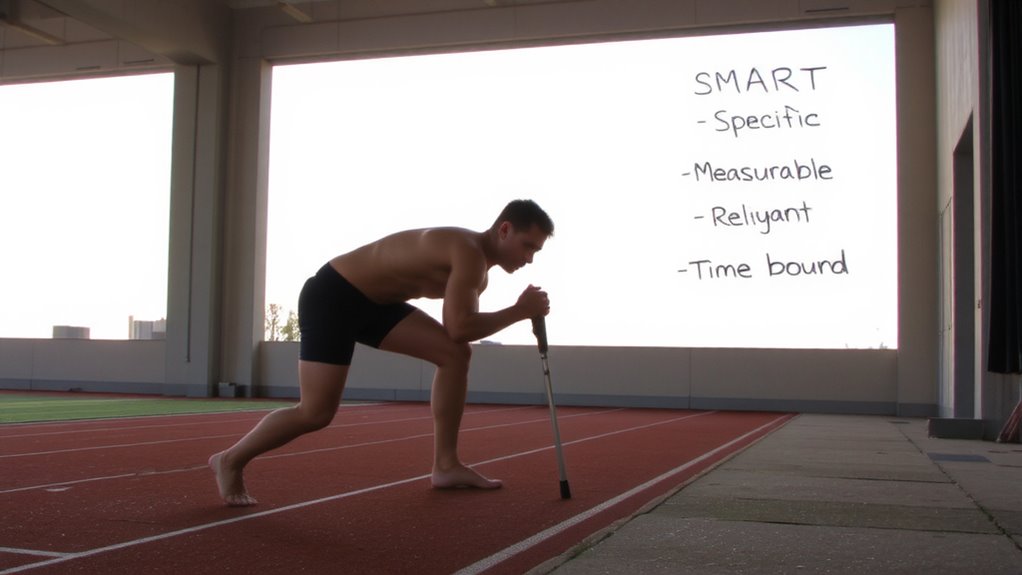
A well-structured confidence-building plan starts with setting goals that are specific, measurable, achievable, relevant, and time-bound-otherwise known as SMART goals. Effective goal setting keeps you focused during recovery and builds momentum. You’ll stay motivated when progress is clear, and positive reinforcement becomes easier when milestones are defined. Consider these examples:
| Goal Type | Example |
|---|---|
| Specific | Regain full knee flexion |
| Measurable | Achieve 120° ROM in 3 weeks |
| Achievable | Walk without crutches by Week 4 |
| Time-bound | Complete 4 rehab sessions weekly for a month |
Each step aligns with your fitness recovery plan, ensuring steady progress. Using fitness gear like resistance bands or joint stabilizers enhances performance and accuracy in reaching targets. When you track outcomes, adjustments become data-driven, not emotional. Smart goal setting isn’t just motivational-it’s practical psychology that supports long-term success and self-belief through consistent positive reinforcement.
Visualize Your Comeback
While physical rehab lays the foundation, your mind plays an equally critical role in recovery-and visualizing your comeback sharpens that mental edge. You can use mental imagery to rehearse every movement, from sprinting drills to game-day decisions, reinforcing neural pathways just like actual practice. Studies show athletes who engage in consistent positive visualization report greater confidence and smoother shifts back to competition. It’s not fantasy-it’s systematic training for your brain. Close your eyes and vividly picture yourself executing skills with precision, feeling strong and agile. Pair this with breath control and muscle relaxation for best results. Unlike fitness gear that wears down, mental imagery strengthens over time with daily use. It requires no equipment, just focus and repetition. When combined with physical readiness, positive visualization boosts performance recall and emotional resilience, making your return feel natural, even inevitable.
Stop Fear of Re-Injury With Better Self-Talk
How do you quiet the voice that whispers, “What if it happens again?” when stepping back onto the field after injury? You challenge it with better self-talk. Negative thoughts feed fear, but thought reframing lets you swap doubt for confidence. Instead of “I can’t risk this,” tell yourself, “I’ve healed, I’m strong, and I’m prepared.” That’s where positive affirmations come in-they’re not just feel-good phrases, but mental reps that condition your mindset. Repeating statements like “My body is resilient” or “I trust my training” rewires your response to pressure. Research shows athletes who practice structured self-talk return with greater consistency and lower anxiety. It’s not about ignoring fear; it’s about managing it intelligently. Over time, this practice strengthens emotional control, much like rehab rebuilds physical capacity. Self-talk is a low-cost, high-impact skill-essential gear for any athlete’s recovery toolkit.
Calm Your Mind With Breath Control
Why do elite athletes regain focus mid-game with such noticeable calm? It’s often because they rely on diaphragmatic breathing to steady their nervous system under stress. You can use this same technique during recovery to reduce mental noise and sharpen focus. Diaphragmatic breathing engages the full lung capacity, increasing oxygen flow and signaling safety to your brain. By practicing rhythmic inhalation-such as inhaling for four counts, holding for four, then exhaling slowly-you create a predictable pattern that counters anxiety. This isn’t just relaxation; it’s cognitive control. Studies show athletes who use rhythmic inhalation during rehab report less perceived effort and greater emotional stability. Unlike fitness gear that supports the body mechanically, breath control trains your mind-body connection from within. It’s portable, immediate, and requires no maintenance. When returning from injury, mastering your breath gives you an edge no equipment can replicate.
Make Mental Training Part of Daily Rehab
You’ve already seen how breath control sharpens focus and calms the nervous system during rehab, but real progress takes more than isolated techniques-it requires consistency. Making mental training part of your daily rehab routine strengthens resilience and supports long-term recovery. Integrating positive affirmations each morning reinforces self-belief, counteracting doubts that often arise during setbacks. Paired with breathwork, these affirmations condition your mind to respond constructively under stress. Emotional regulation becomes more achievable when practiced daily, not just during tough moments. Techniques like journaling, visualization, and mindfulness keep your mental skills sharp, much like physical therapy maintains strength. Just as fitness gear needs regular maintenance, so does mental fitness. Consistent practice leads to measurable improvements in confidence, pain tolerance, and rehab adherence-proving mental training isn’t optional, it’s essential for a sustainable return.
On a final note
You’ve put in the rehab hours, but without mental training, your comeback stays incomplete. Returning from injury isn’t just physical-confidence, fear, and focus shape recovery. SMART goals track progress, visualization primes performance, and breath control reduces anxiety. Positive self-talk combats re-injury fear. These aren’t extras-they’re essentials. Just like gear supports the body, psychological skills support the mind, and both matter in high-demand recovery. Ignore one, and performance suffers.