Proprioceptive Neuromuscular Facilitation Techniques for Complex Movement Pattern Restoration
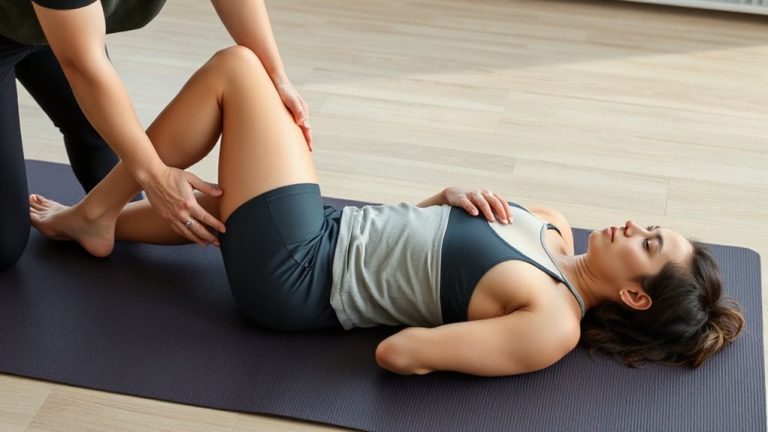
You restore complex movement patterns more effectively with PNF techniques like contract-relax and hold-relax, which combine isometric contractions and controlled stretching to retrain your neuromuscular system. These methods enhance proprioception, coordination, and usable range of motion by promoting neural adaptation and reducing protective inhibition. When applied correctly, PNF bridges rehabilitation and performance, improving muscle activation and joint stability in functional movements. Common errors-like poor alignment or excessive force-can hinder progress, so precision matters. There’s more to optimizing your recovery with the right strategies and tools.
Notable Insights
- PNF enhances complex movement restoration by integrating proprioceptive feedback with coordinated muscle activation.
- Contract-relax and hold-relax techniques improve functional range of motion through autogenic inhibition.
- Controlled isometric contractions retrain neuromuscular pathways to accept new movement ranges safely.
- Proper timing and alignment during PNF optimize neural adaptation and prevent protective muscle tension.
- PNF strengthens mind-muscle connection, supporting fluid, multi-planar movements in rehabilitation and performance.
What Is Proprioceptive Neuromuscular Facilitation (PNF)?
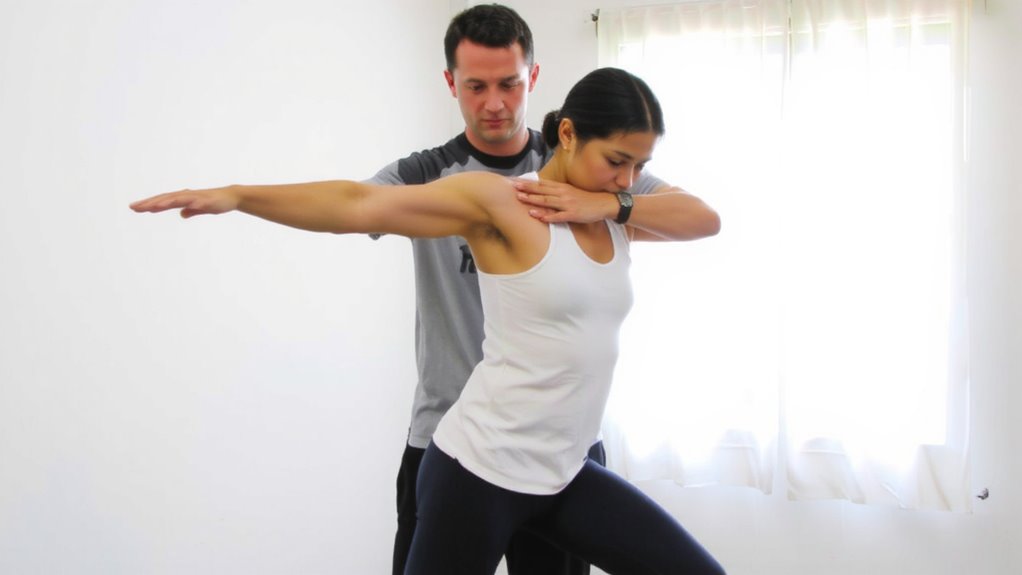
Think of PNF as a bridge-connecting muscle awareness with movement efficiency. You’re not just stretching; you’re engaging a system where muscle elasticity and neural feedback work hand-in-hand to improve performance. This method taps into your body’s proprioceptive pathways, enhancing communication between nerves and muscles for smoother, more controlled motions. Unlike basic stretching, PNF doesn’t just lengthen tissue-it trains your neuromuscular system to accept new ranges as normal. You’ll notice quicker recovery and reduced tightness, especially when using proper fitness gear like supportive bands or stability mats that enhance feedback. Studies show PNF improves functional mobility more effectively than passive methods. It’s ideal for rehab and athletic training alike. With consistent use, you build safer movement patterns, decrease injury risk, and boost overall recovery. Equipment quality matters-durable, responsive tools amplify PNF’s benefits by maintaining consistent resistance and feedback throughout each session.
PNF Stretching Techniques: Contract-Relax, Hold-Relax, and More
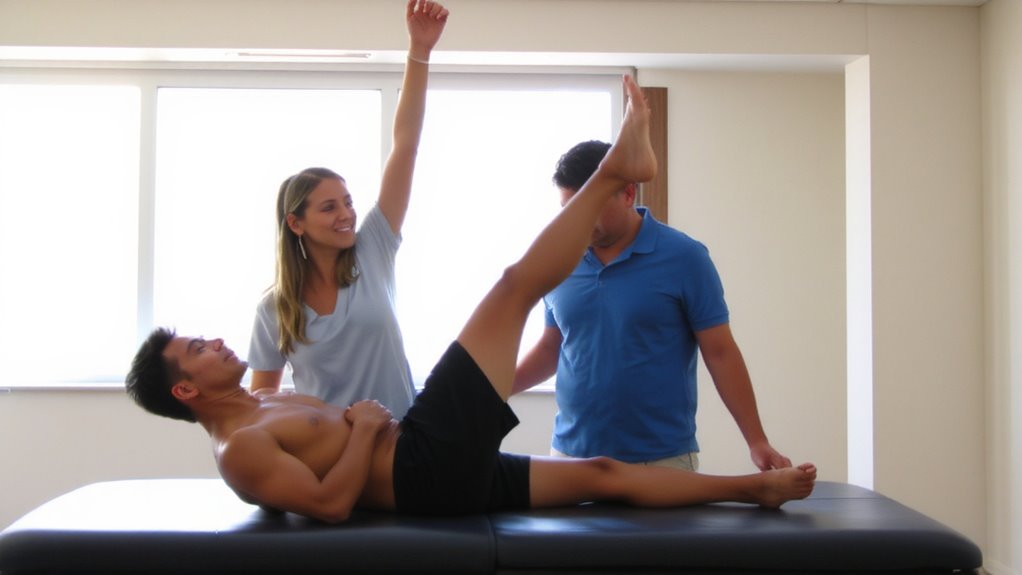
You’ll find that PNF stretching techniques like contract-relax and hold-relax are among the most effective methods for increasing flexibility and neuromuscular control. In contract-relax, you actively contract a muscle isometrically against resistance, then relax into a deeper stretch-this leverages muscle activation to trigger autogenic inhibition. Hold-relax works similarly but involves a sustained contraction, enhancing neural adaptation over time. These techniques rely on your body’s reflexive responses, improving muscle elasticity more efficiently than static stretching alone. You’ll notice quicker gains in range, especially when targeting tight hamstrings or shoulders. The process demands precision: apply about 20–75% of max effort during contractions, hold 5–10 seconds, then stretch for 20–30 seconds post-relaxation. Proper form guarantees safety and efficacy, while tools like resistance bands or partner assistance can support performance. Consistent use fosters lasting neural adaptation, making them valuable in rehab and performance training alike.
How PNF Improves Coordination and Range of Motion
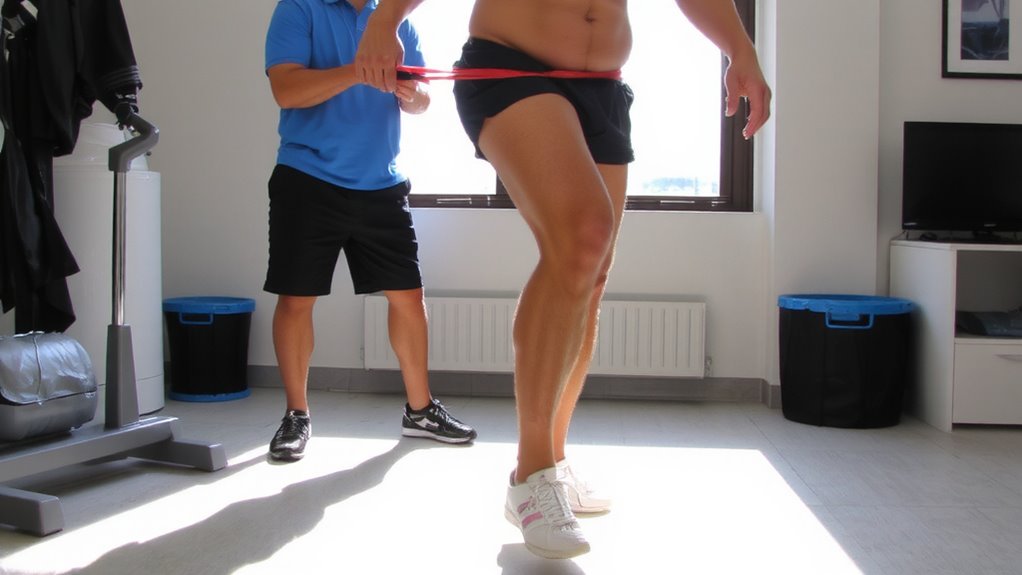
Proprioceptive neuromuscular facilitation doesn’t just boost flexibility-it actively enhances coordination and range of motion by fine-tuning the communication between your muscles and nervous system. When you engage in PNF, you’re not only stretching muscles but also improving motor control through intentional contractions and relaxations. These patterns stimulate neural adaptation, allowing your body to recruit muscle fibers more efficiently and move with greater precision. The repeated cycles of contraction and release train your proprioceptors to recognize safe ranges, reducing neural inhibition and promoting smoother shifts across movements. Over time, this leads to more fluid, coordinated actions in functional and athletic tasks. Unlike passive stretching, PNF demands active participation, which strengthens the mind-muscle connection essential for complex motion. You’ll notice better joint articulation and dynamic control, especially in multi-planar movements. PNF doesn’t just lengthen tissue-it retrains your nervous system to use that range effectively and safely.
Using PNF in Rehabilitation and Performance Training
While PNF originated in clinical settings, it’s since proven equally valuable in performance training, where both rehab specialists and strength coaches leverage its dual ability to restore function and enhance physical output. You apply PNF to drive neural adaptation, improving how your nervous system recruits motor units during complex tasks. This isn’t just stretching-it’s reprogramming movement efficiency. Through controlled contractions, you increase muscle activation, particularly in weakened or inhibited muscles, leading to better strength expression and joint stability. In rehab, this accelerates return-to-function; in performance, it boosts power and coordination. Whether you’re recovering from injury or preparing for athletic competition, PNF bridges the gap between passive mobility and active control. The technique’s versatility makes it a staple across disciplines, offering measurable improvements in motor learning and dynamic readiness. You don’t just gain range-you gain usable, functional range.
Avoid These Common PNF Mistakes
When performing PNF stretches, skipping proper setup can undermine both safety and effectiveness, especially if joint alignment or muscle engagement isn’t calibrated correctly. You’re also risking injury if you ignore cues like muscle trembling or joint strain-signs you’re pushing too hard. Overtraining risks increase when sessions lack adequate rest periods, especially during high-intensity PNF protocols. Without scheduled recovery, you compromise muscle repair and neuromuscular adaptation. Improper timing between contraction and relaxation phases disrupts the autogenic inhibition response, reducing stretch gains. You should aim for a 3- to 5-second isometric hold followed by active relaxation to maximize response. Applying force too abruptly or misaligning resistance direction can trigger protective tension instead of release. Use controlled cues and partner feedback to stay on track. Consistent technique beats aggressive force every time-precision guarantees progress without setbacks.
On a final note
You’ve seen how PNF techniques enhance neuromuscular control, flexibility, and coordination through targeted stretching and agonist-antagonist muscle engagement. When paired with proper fitness recovery tools-like foam rollers or compression gear-PNF becomes more effective, reducing soreness and improving adaptation. These methods aren’t flawless; improper timing or overexertion can hinder progress. Still, with consistent, correct application, PNF remains a scientifically supported strategy for restoring complex movement patterns in both rehab and performance settings.