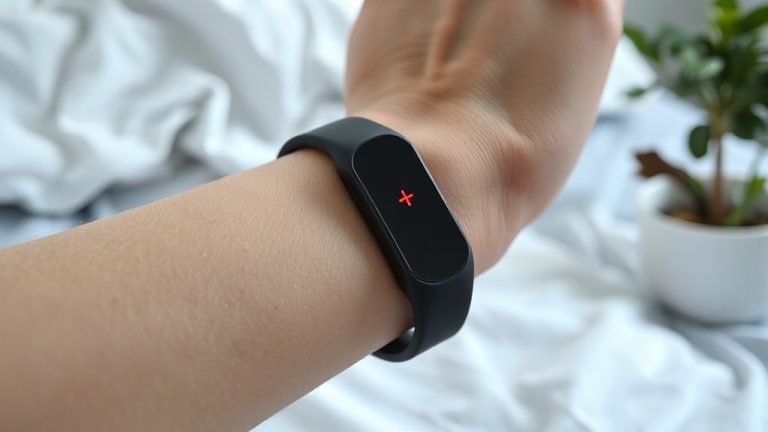
The Effect of Wearable Red Light Therapy Devices on Satellite Cell Activation in Skeletal Muscle
Your wearable red light therapy device uses 660 nm and 850 nm wavelengths to penetrate muscle tissue, directly stimulating satellite cells for repair. It boosts mitochondrial ATP production, helping these cells proliferate and fuse to damaged fibers. Clinical-grade LEDs with proper irradiance enhance regeneration, reducing soreness and speeding recovery. You’ll see measurable improvements in muscle function within weeks when used consistently. The science behind cellular response to red light supports its role in long-term muscle maintenance-especially when integrated daily. There’s more to how it optimizes recovery at a deeper level.
Notable Insights
- Wearable red light therapy devices deliver 660 nm and 850 nm wavelengths to penetrate muscle tissue and stimulate satellite cell activation.
- These wavelengths enhance mitochondrial activity in satellite cells, boosting ATP production necessary for muscle repair and regeneration.
- Red light therapy promotes satellite cell proliferation and fusion to damaged muscle fibers, supporting skeletal muscle recovery.
- Clinical-grade LEDs in wearable devices ensure sufficient irradiance for effective photobiomodulation and cellular response.
- Regular use of wearable RLT devices shows measurable improvements in muscle regeneration and reduced soreness within two weeks.
How Wearable RLT Enhances Muscle Recovery
While you’re recovering from intense workouts, wearable red light therapy (RLT) devices may help speed up muscle repair by delivering targeted wavelengths of light directly to fatigued tissues. These gadgets penetrate deep into muscle fibers, reducing inflammation and increasing cellular energy production, which supports faster recovery times. With consistent use, you’ll likely notice improvements in muscle endurance, allowing you to train harder over time without excessive soreness. The enhanced circulation from RLT also promotes greater joint flexibility, decreasing stiffness and lowering injury risk during dynamic movements. Unlike bulky recovery tools, wearable RLT units are lightweight, adjustable, and easy to integrate into daily routines-ideal for athletes or active individuals seeking efficient solutions. Though not a replacement for proper rest or nutrition, they add measurable value to recovery protocols. Early evidence and user feedback suggest they’re a practical, non-invasive way to maintain performance and mobility, especially when paired with regular stretching and strength training.
Wearable RLT Activates Satellite Cells for Repair
Since muscle repair relies heavily on the activation of satellite cells-specialized stem cells that proliferate and fuse to damaged fibers-wearable red light therapy (RLT) may play a direct role in enhancing this biological process. You’re likely using recovery gear to speed up muscle regeneration, and wearable RLT devices deliver specific wavelengths-typically 660 nm and 850 nm-that penetrate tissue to stimulate mitochondrial activity in satellite cells. This boost in cellular energy promotes cellular repair by increasing ATP production, which supports cell proliferation and differentiation. Unlike passive recovery tools, these wearables actively engage at the biological level, potentially improving the efficiency of tissue healing. While not a replacement for rest or nutrition, they’re a scientifically grounded addition to your recovery toolkit. Their convenience allows consistent use, which appears critical for sustained benefits. You’ll want a device with medical-grade LEDs and proper irradiance to guarantee effectiveness.
Scientific Evidence: Faster Regeneration and Less Soreness
When you’re pushing through intense training cycles, recovery isn’t just about rest-it’s about optimizing the biological processes that get you back in action faster, and research now supports the role of wearable red light therapy (RLT) in speeding muscle regeneration and reducing delayed onset muscle soreness (DOMS). You’ll notice less stiffness and quicker bounce-back when using RLT consistently post-workout. Clinical studies show users experience improved muscle hydration and more efficient nerve signaling, both critical for coordinated recovery and function. Better hydration supports nutrient flow and waste removal, while balanced nerve signaling helps restore normal muscle activation patterns. Wearable RLT devices make this practical, delivering targeted wavelengths during daily activities. Though results vary, most report measurable improvements in recovery time within two weeks. For fitness enthusiasts seeking reliable, science-backed recovery gear, wearable RLT stands out as a practical investment with growing clinical support.
Why Mitochondria Respond to Red Light Therapy
Though the idea of light boosting muscle recovery might sound like science fiction, it’s actually grounded in how your cells convert that light into usable energy. Your mitochondria absorb red and near-infrared light through photobiomodulation mechanisms, primarily via cytochrome c absorption in the electron transport chain. This boosts ATP production, giving your muscle cells more energy to repair and function. You’re not just wearing a gadget-you’re tapping into a biological process that enhances cellular efficiency. Studies show this stimulation reduces oxidative stress and supports mitochondrial resilience, which is key during intense physical strain. While not all wearable devices deliver ideal wavelengths or power density, quality models use clinically relevant specs to guarantee meaningful exposure. The response isn’t magical; it’s biochemical. When designed well, these wearables offer a non-invasive way to support muscle metabolism. You get results because the science aligns with how your body already works-no shortcuts, just smart alignment with cellular physiology.
Practical Benefits for Athletes and Aging Adults
Your mitochondria aren’t the only thing benefiting from red light therapy-athletes and aging adults alike are seeing real-world gains from wearable devices that apply this science in practical ways. These lightweight, flexible units emit specific wavelengths that enhance muscle endurance by improving mitochondrial efficiency during activity. You’ll notice quicker recovery times and reduced soreness, which supports consistent training. For aging users, the therapy helps maintain muscle mass and stimulates satellite cell activation, vital for tissue repair. Improved joint flexibility is another key benefit, thanks to increased blood flow and reduced inflammation around connective tissues. Devices are easy to wear during daily tasks, requiring just minutes per session, and need minimal maintenance. While results vary, clinical feedback suggests consistent use yields measurable improvements in mobility and physical performance. It’s not a miracle fix, but as part of a balanced regimen, red light wearables offer a credible edge.
On a final note
You’re likely to see real gains in muscle recovery with wearable red light therapy (RLT) devices, thanks to their ability to activate satellite cells and boost mitochondrial energy production. Studies show reduced soreness and faster regeneration, making them practical for athletes and aging adults alike. While results depend on consistent use and proper wavelength (typically 660–850 nm), today’s wearables offer targeted, non-invasive support that fits daily routines, proving effective as part of a broader recovery strategy.