A 10-Minute Pre-Bedtime Stretching Routine to Promote Relaxation and Recovery
You’ll recover faster and sleep better with a 10-minute bedtime stretch that targets muscle tension and calms your nervous system. Start lying down to reduce spinal load, then gently stretch your neck, shoulders, and chest to improve breathing and posture. Incorporate supine twists, figure-four holds, and legs-up-the-wall to boost circulation, release tight hips, and ease leg fatigue. Pair with deep 4-7-8 breathing to enhance parasympathetic activation-especially effective when supported by a quality mat and contour pillow. Consistency matters more than intensity, and small upgrades in gear can noticeably improve comfort and alignment night after night. You’ll discover how subtle adjustments elevate your routine’s impact.
Notable Insights
- Perform a 10-minute routine of gentle stretches to enhance muscle recovery and improve sleep quality.
- Include neck tilts and shoulder rolls to release upper body tension and promote relaxation.
- Hug knees to chest, then transition into a figure-four stretch for hips and lower back relief.
- Practice supine twists and child’s pose to decompress the spine and activate the parasympathetic nervous system.
- Use a comfortable mat and supportive pillows to maintain alignment and increase stretch effectiveness.
Start Your Bedtime Stretch Routine in 2 Minutes
While it might seem too brief to make a difference, dedicating just two minutes to start your bedtime stretch routine can substantially enhance your fitness recovery, especially when you pair it with the right gear. These initial moments prime your muscles and nervous system, easing the shift into deeper rest-key for repairing tissue and reducing soreness. Consistent bedtime habits like this signal your body it’s time to unwind, improving sleep onset and quality. A well-designed mat with proper thickness supports joint alignment, while breathable loungewear helps regulate temperature, directly influencing your sleep environment. You don’t need complexity; focus on simple, sustained stretches that engage major muscle groups. Over time, this short investment yields measurable gains in flexibility and recovery speed. Thoughtful gear enhances comfort and consistency, making the routine more sustainable. Ultimately, those two minutes aren’t just prep-they’re foundational to long-term fitness and restorative sleep. A high-quality workout mat for home gyms provides the ideal surface for both comfort and stability during your stretching routine.
Release Neck and Shoulder Tension Lying Down
A few targeted stretches before bed can effectively relieve built-up neck and shoulder tension, especially when performed lying down where spinal support minimizes strain. Start by lying on your back, arms relaxed at your sides. Gently tilt your head side to side, bringing your ear toward your shoulder to enhance neck mobility without overextending. Hold each stretch for 20–30 seconds. Next, perform slow shoulder rolls to reset shoulder alignment and release tightness around the trapezius. These movements encourage balanced posture and reduce overnight muscle guarding. Foam rollers or supportive pillows can aid alignment, particularly if stiffness stems from prolonged sitting. Lying down reduces gravitational pull, allowing deeper relaxation. Unlike aggressive workouts, this recovery-focused routine prioritizes gentle engagement, promoting circulation and tissue repair. Consistent practice improves range of motion and decreases discomfort. For sustained results, pair stretches with ergonomic sleep gear, like contoured neck pillows, which maintain proper alignment and reinforce the benefits of nightly mobility work. Choosing the right support can enhance comfort, and the best options are designed to cradle the neck, such as those in the best neck pillows category.
Open Your Chest and Arms for Easier Breathing
You’ve just eased tension from your neck and shoulders, and now it’s time to create space across your chest and arms to support freer breathing throughout the night. Lie on your back and let your arms fall out to the sides, palms up, in a gentle arm opening stretch. Bend your elbows slightly to deepen the sensation along the front shoulders. This position encourages chest expansion, counteracting the forward hunch of daily sitting. Hold for a minute, breathing deeply into your ribs. You’ll notice how this posture improves lung capacity and signals relaxation to your nervous system. Proper chest expansion here isn’t just about mobility-it’s foundational for recovery, especially when paired with supportive gear like breathable sleepwear or posture-corrective pillows designed to maintain alignment. Consistent arm opening exercises enhance circulation and prepare your body for deeper rest, making them a practical, low-effort addition to nightly recovery. Choosing the right pillow can further support spinal alignment during sleep, and the best options often feature ergonomic designs tailored to your sleeping position, such as posture-corrective pillows that promote neutral neck and shoulder alignment.
Unwind Tight Hips and Lower Back
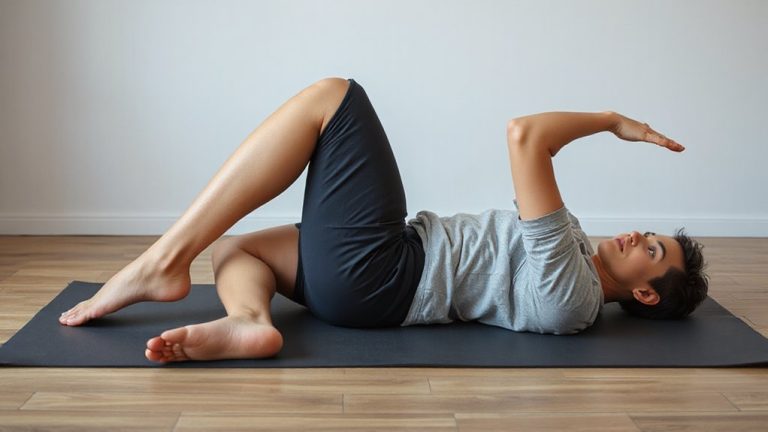
Most people carry tension in their hips and lower back after long hours of sitting, and this simple stretch can make a noticeable difference in how you feel by bedtime. Lie on your back, hug your knees to your chest, then let your legs fall open into a figure-four stretch. It encourages hip mobility and creates a gentle lower back release, easing stiffness from prolonged inactivity. Holding this for 45–60 seconds helps decompress lumbar vertebrae and relaxes overworked glutes. This stretch is especially effective post-walk or after light evening resistance training, supporting recovery by improving circulation. For better comfort, use a folded towel under your hips-especially on hard floors. Consistent nightly use promotes structural balance, reduces strain risk, and enhances sleep quality. While no fitness gear replaces proper form, a supportive mat improves sustainability. This isn’t a quick fix, but a practical step toward lasting mobility and recovery.
Soothe Tired Legs With Simple Stretches
Ever wonder why your legs feel heavy or restless by bedtime? After a long day, accumulated tension in your calves and feet can disrupt relaxation and sleep quality. Addressing this with simple stretches makes a noticeable difference. Try seated forward bends to gently lengthen the hamstrings and calves, then follow with a 30-second calf massage using a foam roller or handheld massager-this boosts circulation and eases muscle tightness. Pair that with slow foot rotation: rotate each foot clockwise and counterclockwise for 15 seconds. This enhances ankle mobility and reduces stiffness, especially if you’ve been standing or wearing restrictive footwear. Consistent use of these movements supports faster recovery and better nighttime comfort. While advanced recovery gear like percussion guns offer deeper relief, these low-tech methods are practical, accessible, and effective when performed daily. They’re a solid foundation for leg recovery, particularly when recovery time matters most-before bed.
Use 4-7-8 Breathing to Deepen Relaxation
A single breathing technique-4-7-8 breathing-can substantially enhance your pre-sleep recovery by activating the parasympathetic nervous system and reducing physiological markers of stress. You inhale quietly through your nose for 4 seconds, hold the breath for 7, then exhale completely through your mouth for 8. This rhythmic pattern strengthens breath awareness, which serves as a foundation for nervous system balance. With consistent practice, you’ll likely notice reduced heart rate and muscle tension, both key indicators of physical readiness for rest. Unlike recovery gear that relies on external stimulation, this method leverages your body’s innate ability to self-regulate. While devices like EMS units or percussion massagers offer mechanical support, they can’t replicate the neurological calming of deliberate breathwork. Incorporating 4-7-8 breathing after stretching deepens relaxation more effectively than passive tools alone, offering a zero-cost, evidence-backed complement to your recovery routine.
Flow Into Sleep With a 10-Minute Sequence
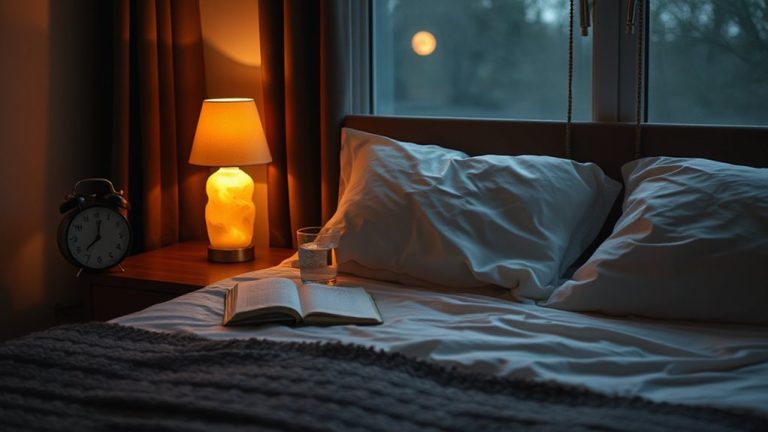
After syncing your breath with the 4-7-8 rhythm to quiet your nervous system, you’re perfectly primed to move into a structured yet fluid stretching sequence that guides your body toward sleep. This 10-minute flow combines mindfulness techniques with gentle mobility work to ease tension and signal your brain it’s time to rest. Optimize your sleep environment by dimming lights and minimizing distractions, allowing full focus on movement and breath. Below are key stretches and their recovery benefits:
| Stretch | Benefit for Fitness Recovery |
|---|---|
| Seated forward fold | Releases lower back and hamstrings |
| Supine twist | Relieves spinal tension |
| Child’s pose | Calms nervous system, aids breathing |
| Legs-up-the-wall | Improves circulation, reduces swelling |
These movements, performed mindfully, enhance recovery by boosting blood flow and reducing cortisol levels. Integrating them into a consistent routine improves sleep quality and muscular repair, especially when paired with breathable, comfortable gear designed for flexibility and ease.
On a final note
You’ve just completed a science-backed recovery ritual that enhances circulation and reduces nighttime muscle tension. This 10-minute stretch routine supports fitness recovery by activating parasympathetic response, easing the shift into deep sleep. When paired with well-designed recovery gear-like supportive mats or foam rollers-results improve. These tools maintain joint alignment and prolong flexibility gains. Consistent use leads to measurable improvements in mobility and rest quality, making this sequence not just relaxing, but functionally effective for long-term physical wellness.