Designing a Phased Running Program for Soccer Players Returning From Adductor Strains
Start with 10–15 minutes of daily walking to restore neuromuscular control and blood flow after an adductor strain. Add gentle mobility work like hip circles and adductor stretches, using ice post-session to manage inflammation. Gradually progress to jogging only when pain-free and hip mobility is restored, focusing on soft landings and midfoot strikes. Then, introduce low-speed cuts and lateral shuffles to prepare for soccer’s demands. Use supportive footwear and consider compression shorts for mild stability, but don’t rely on gear to compensate for poor load management. Build up to angled sprints and shuttle runs to refine deceleration and directional control. Monitor symptoms closely-any pain means you’re moving too fast. Confirm readiness with GPS or wearable data, ensuring limb symmetry stays under a 10% imbalance during cutting and sprinting. Pair objective metrics with recovery markers like HRV and muscle soreness logs. A truly safe return isn’t just about feeling fine-it’s about proven load tolerance and balanced movement patterns, something further exploration of phased progressions makes clear.
Notable Insights
- Begin with daily walking and gentle mobility exercises to restore blood flow and neuromuscular control without overloading healing tissue.
- Progress to jogging only after achieving pain-free walking and full hip range of motion, using short strides and midfoot strikes.
- Introduce controlled change-of-direction drills at low speed, emphasizing proper deceleration and movement symmetry.
- Incorporate soccer-specific running patterns like shuttle runs and curved sprints to simulate game demands safely.
- Clear for return to play only after achieving limb symmetry in GPS data, normal biomarkers, and consistent load tolerance.
Start With Walking and Gentle Mobility After Adductor Strain
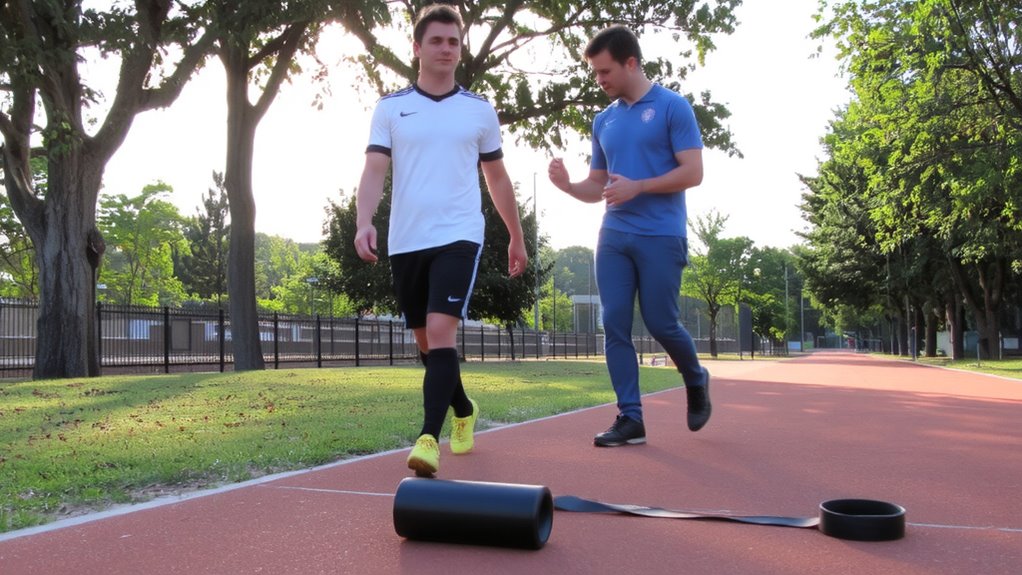
While your adductor strain might tempt you to jump back into sprinting or cutting drills too soon, starting with low-impact walking and gentle mobility work is not only safer-it’s more effective for long-term recovery. You’ll maintain blood flow without overloading healing tissue, and structured daily walks (10–15 minutes) help rebuild neuromuscular patterns. Pair this with hip circles, seated adductor stretches, and leg swings to support range of motion. Cold therapy post-session reduces localized inflammation-use ice packs for 15 minutes to avoid swelling spikes. Importantly, pain monitoring guides your pace; any increase in discomfort during or after activity signals you’ve pushed too hard. Don’t rely on fitness trackers alone-subjective feedback matters more. Basic gear like compression shorts offer mild support, but they’re no substitute for proper load management. Progress isn’t measured by speed, but by consistency, control, and how well you respect your body’s signals.
Build Up to Jogging and Linear Running Safely
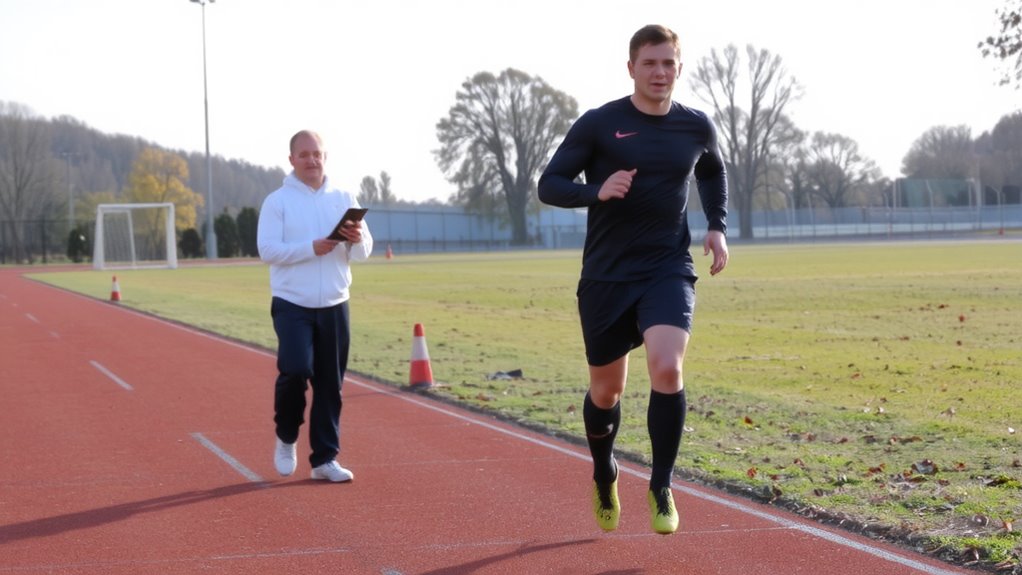
Once you’ve established a consistent walking routine and regained baseline hip mobility, it’s time to cautiously introduce jogging into your recovery-starting at a slow, controlled pace to avoid re-injury. Focus on short, deliberate strides to manage load on the adductor. Your stride length should stay reduced initially; overreaching can increase strain. Keep foot placement under your center of gravity-landing midfoot, not on your heel-to promote efficient mechanics and reduce lateral stress. Gradually increase duration, not speed, over several sessions. Monitor pain closely; even mild discomfort means you’re progressing too fast. Proper footwear with adequate arch support helps maintain correct foot placement and reduces compensatory motion. This phase builds neuromuscular coordination and cardiovascular endurance while protecting healing tissue. Don’t rush it-solid linear running form sets the foundation for more complex movements later. Consistency and precision matter more than intensity right now. Players recovering from lower-body injuries may benefit from wearing shoes designed for high-impact sports, such as the best volleyball shoes for peak performance, which provide superior cushioning and lateral support.
Add Change-of-Direction Drills Gradually
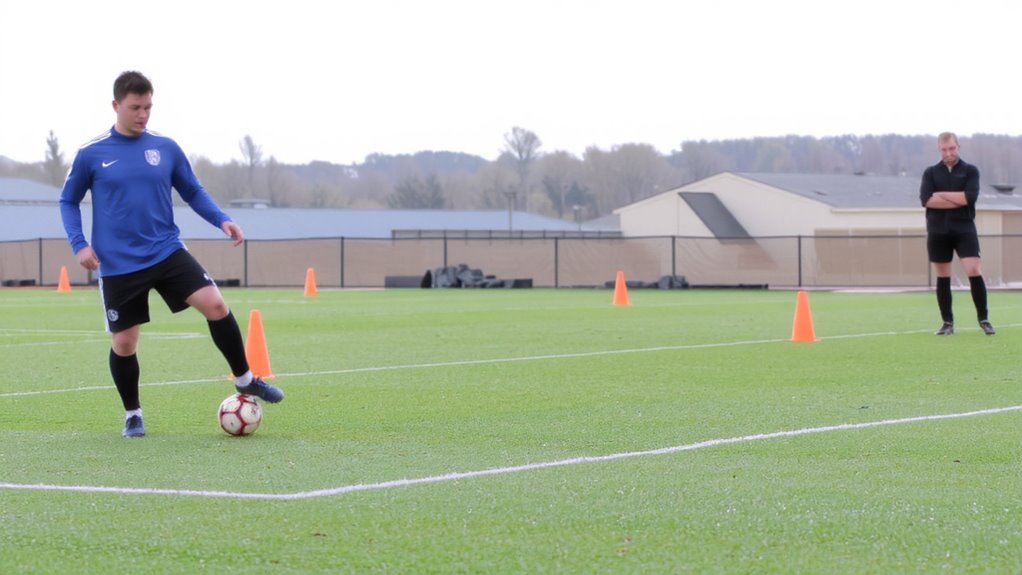
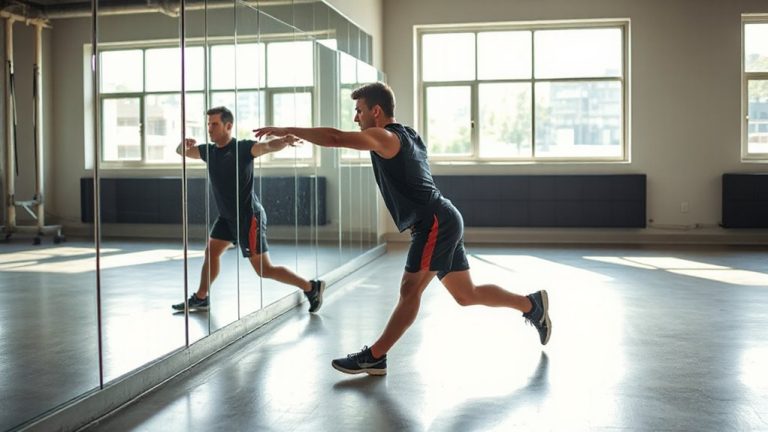
Since straight-line running places predictable demands on your body, it’s essential to start introducing multidirectional movements carefully-especially sharp cuts, pivots, and lateral shuffles-that mimic the dynamic nature of soccer. Begin with low-speed drills to encourage movement variability, guaranteeing your adductor isn’t overloaded by sudden lateral forces. Use an agility progression that starts with controlled 45-degree cuts, then advances to 90-degree turns and reactive shuffling as strength and coordination improve. Perform these on surfaces that offer consistent traction to reduce slipping risks. Focus on proper deceleration mechanics, as poor control during direction shifts often leads to re-injury. These drills enhance neuromuscular coordination and prepare your body for complex physical demands. Track your response-any discomfort or hesitation signals the need to scale back. Gradual exposure guarantees safe adaptation, maintaining tissue resilience while restoring confidence in dynamic motion.
Simulate Soccer-Specific Running Patterns
As you get closer to returning to the field, it’s time to shift from general running drills to movements that closely match what you’ll actually do in a game-think short bursts, sudden stops, and quick shifts between directions. This phase focuses on soccer specific patterns through structured sport mimicry drills that replicate match demands. These drills enhance neuromuscular coordination while safely conditioning the adductor complex under dynamic loads. Incorporating angled sprints, shuttle runs, and curved paths guarantees realistic preparation without premature overload.
| Drill Type | Key Benefit |
|---|---|
| Angled Sprints | Builds lateral impulse control |
| Shuttle Runs | Reinforces deceleration mechanics |
| Curved Path Running | Engages adductors in stretch-shorten cycles |
Progressing through these drills refines movement efficiency and supports a smoother shift into full training.
Clear Return to Play With Load and Symmetry Checks
You’ve built the foundation with soccer-specific movement patterns, honing deceleration, directional shifts, and controlled acceleration under dynamic conditions. Now, clearing return to play hinges on objective load and symmetry checks. You’ll need GPS data and accelerometer metrics to verify both limbs are producing equal forces during sprinting and cutting. Asymmetries over 10% signal unresolved deficits, increasing re-injury risk. Combine this with daily recovery monitoring-tracking HRV, creatine kinase levels, and subjective fatigue-to gauge readiness. These metrics aren’t just numbers; they’re central to injury prevention. Wearable fitness gear helps, but only if calibrated correctly and used consistently. Devices that monitor muscle load-like smart compression shorts-offer real-time feedback, though their accuracy varies. Ultimately, a player’s clearance isn’t just about feeling fine; it’s about data-backed symmetry and sustainable load tolerance across sessions.
On a final note
You’ve progressed from walking to dynamic running, and now you’re ready. This phased return program balances load management with functional demands, reducing re-injury risk. Adductor strains need time, but structured progression guarantees tissue tolerance. Symmetry in strength and movement matters just as much as fitness gear that supports recovery-like compression garments or controlled-resistance treadmills. Smart rehab, backed by data and observation, doesn’t rush-it adapts, guaranteeing you return stronger, not just healed.