Agility Mirror Drills Where Athlete Copies Coach’s Unpredictable Movements
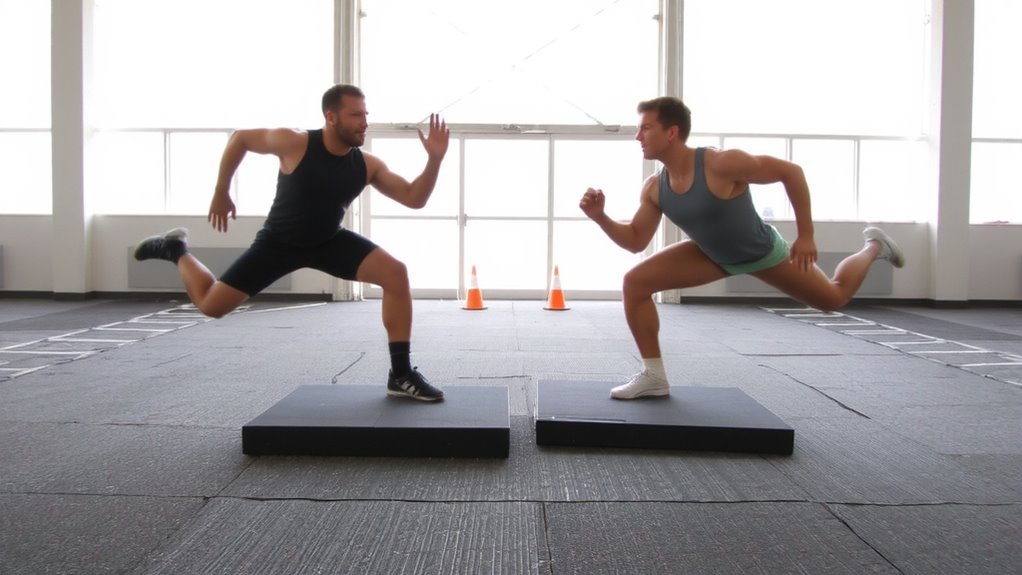
You boost reaction time and athletic IQ when you mirror a coach’s unpredictable movements, not rehearsed patterns. Quick directional changes, tempo shifts, and random footwork force your brain to adapt instantly. Use cones to mark space and keep movements sharp-lateral shuffles, backpedals, zigzags. Lock eyes above the coach’s shoulders and respond to hips, not hands. Crisp cues like “explode” or “freeze” sharpen focus and timing. This drill builds neural speed and real-game precision better than scripted reps. You’ll react faster when movement demands split-second decisions. There’s more to optimizing this drill than just mimicry-details in setup and feedback make all the difference.
Notable Insights
- Athletes mimic coaches’ spontaneous movements to sharpen split-second decision-making and neural adaptability.
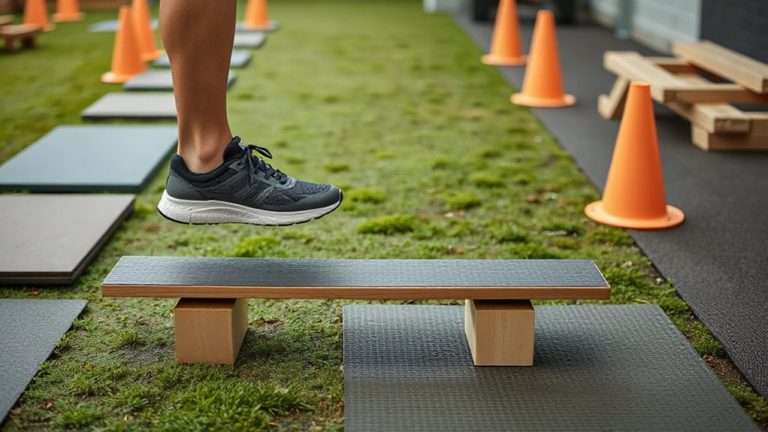
- Use cones or agility rings to mark clear boundaries, ensuring safe and efficient drill execution.
- Coaches deliver crisp cues like “eyes up” to enhance visual focus and real-time responsiveness.
- Unpredictable changes in direction and tempo create cognitive overload, improving on-field reaction speed.
- Non-slip surfaces and responsive footwear prevent slips, supporting precise, game-ready footwork replication.
How Mirror Drills Boost Reaction Time and Athletic IQ
Why do elite athletes consistently outperform their peers when it comes to split-second decision-making on the field? It’s because they train with drills that force rapid neural adaptation and sharpen pattern recognition. When you mirror a coach’s spontaneous movements, your brain learns to process visual cues faster, building stronger connections between perception and action. This isn’t just about reflexes-it’s about developing athletic IQ. The constant need to predict and respond rewires your nervous system over time, making complex motions feel instinctive. Unlike scripted drills, mirror training keeps your brain engaged, enhancing cognitive flexibility. You’re not just moving-you’re learning to read movement, anticipate shifts, and react efficiently. This blend of mental and physical conditioning boosts on-field performance. Incorporating recovery routines and quality fitness gear supports sustained practice, ensuring joints and muscles stay resilient under repetitive, high-speed demands. Consistency here delivers measurable gains in reaction time and decision accuracy.
Set Up Unpredictable Mirror Drills Fast
While consistency in training matters, setting up unpredictable mirror drills quickly hinges on smart preparation and the right tools. You need clear drill positioning to guarantee both you and your athlete have enough space to move safely and effectively. Mark zones with cones or agility rings-this saves time and reduces confusion. Use a stopwatch or interval app to structure bursts of movement variety, keeping the athlete responsive and alert. Pre-plan a short sequence bank of lateral shuffles, backpedals, and zigzags, but keep the order random to maintain unpredictability. Lightweight, non-slip gear helps both coach and athlete stay agile and injury-free. Durable, easy-to-clean mats support repeated use without wear. With efficient drill positioning and dynamic movement variety, you cut setup time and maximize training impact. Smart gear choices don’t replace coaching, but they streamline execution, letting you focus on performance.
Coaching Cues That Sharpen Athlete Response Instantly
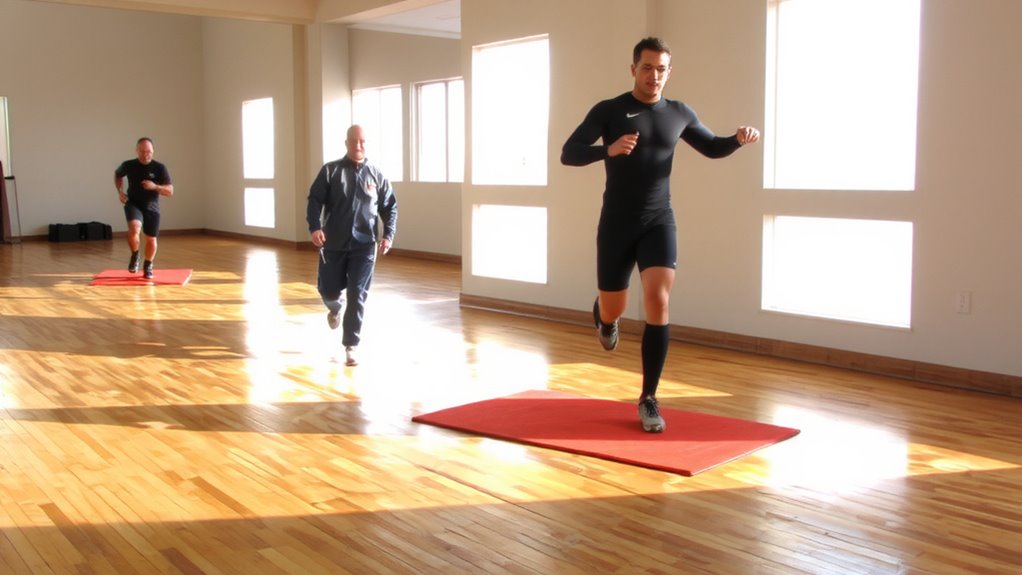
How do some coaches get instant reactions from athletes during high-speed mirror drills? They rely on sharp, well-timed coaching cues that lock in visual focus and regulate movement tempo. Instead of vague commands, they use crisp phrases like “eyes up” or “match my hips” to sharpen attention on key body cues. You’ll notice faster responses when the athlete locks gaze just above your shoulders-this improves reaction time by reducing visual lag. Pair that with sudden shifts in movement tempo, from slow prowls to explosive cuts, and you force the athlete to stay alert, not predictive. Effective cues aren’t just loud; they’re precise, targeting real-time adjustments. Coaches who master this minimize reaction delay and build true neuromuscular responsiveness. It’s not about volume-it’s about timing, clarity, and consistency. The result? Quicker, cleaner mimicry under pressure, making mirror drills far more effective for agility development.
Level-Up Mirror Drills for Faster, Smarter Responses
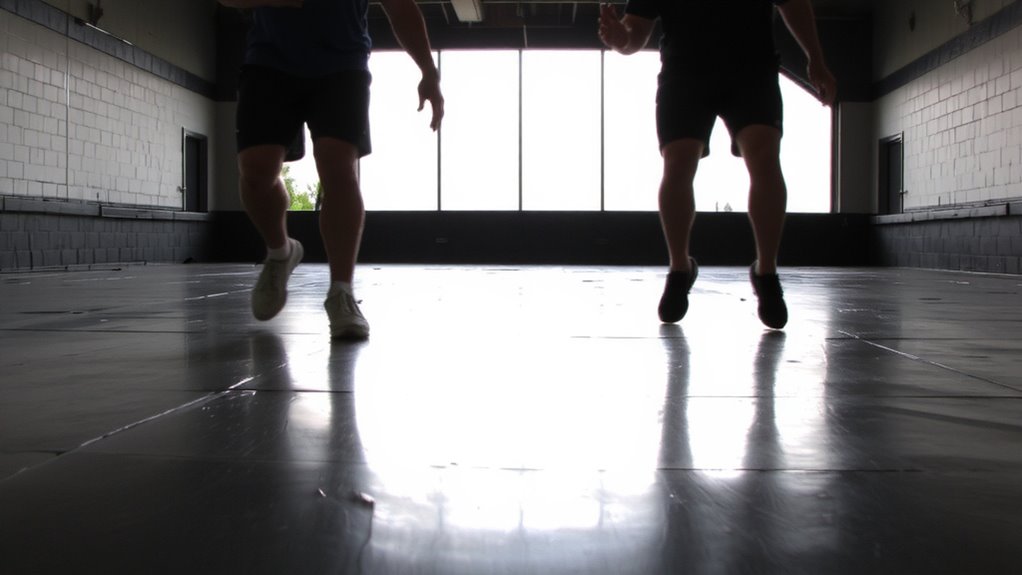
You’ve already sharpened your athlete’s reaction speed with precise cues and visual targeting, but now it’s time to raise the stakes. Introduce unpredictable directional shifts and variable tempos to induce cognitive overload, forcing quicker neural processing. This overload isn’t a flaw-it’s a training tool that accelerates decision-making under pressure. Pair this with sensory adaptation by changing environments: try slick floors, confined spaces, or low light to challenge spatial awareness. These conditions demand sharper focus and refine motor responses. Use minimal gear-agility ladders or cones-to maintain drill simplicity while maximizing mental engagement. Over time, athletes adapt, turning chaotic inputs into smooth, rapid movements. The result? Faster, smarter reactions that translate to real-game scenarios. These advanced mirror drills bridge physical mimicry and tactical thinking. You’re not just building reflexes-you’re shaping instinct.
Fix These Common Mirror Drill Mistakes Now
Why do mirror drills sometimes fail to deliver sharp, game-ready reflexes despite sounding simple in theory? You’re likely making common errors that undermine their effectiveness. Poor timing throws off coordination, causing delayed reactions that won’t cut it in real competition. When you’re half a second behind, you’re not training agility-you’re reinforcing lag. A lack of focus worsens this, turning dynamic movement into mechanical imitation. You’ve got to stay locked on your coach’s cues, not glance around or anticipate. Keep your eyes sharp and your mind present. Also, maintain a consistent distance-drifting too close or far distorts spatial awareness. Use non-slip training surfaces and wear responsive footwear to guarantee clean, precise footwork. These details aren’t just minor tweaks; they’re essential for maximizing neural engagement and movement efficiency. Fix these now, and your drills will actually translate to faster, smarter performance when it counts.
On a final note
You’ve seen how unpredictable mirror drills sharpen reaction time and athletic intelligence. When executed with clear cues and proper setup, they build neuromuscular coordination and decision speed. Common errors, like predictable movements or poor posture, undermine effectiveness. Upgraded variations challenge agility and cognitive load, optimizing performance. Paired with quality recovery gear-compression wear, foam rollers-you maintain readiness. These drills, combined with smart recovery, enhance overall athleticism efficiently and practically.