Developing Personal Recovery Playlists Featuring Isochronic Tones to Aid Theta-State Entry in Trauma-Affected Athletes
You can develop a personalized recovery playlist using isochronic tones in the 4–7 Hz theta range to support neural regeneration and emotional regulation. Select frequencies based on your needs-4.5–5.5 Hz for calm, 6.0–6.5 Hz for focus-and pair them with high-fidelity audio and noise-isolating headphones. Use the playlist consistently each morning, post-workout, and before bed to strengthen nervous system adaptation. Integrating it with therapy and sleep routines boosts mindfulness and somatic awareness, making it a precision tool for long-term resilience-there’s a structured way to optimize every element.
Notable Insights
- Select isochronic tones in the 4–7 Hz theta range to align with emotional regulation and trauma recovery goals.
- Use clinical-grade, EEG-informed headsets for precise theta wave entrainment and optimal neural response.
- Construct playlists that transition from higher beta to deep theta frequencies for gradual, effective state shifts.
- Time sessions in the morning or post-workout to enhance focus, and in the evening to support sleep onset.
- Integrate playlists with therapy and mindfulness practices to improve somatic awareness and neural receptivity.
How Theta Waves Aid Athlete Trauma Recovery
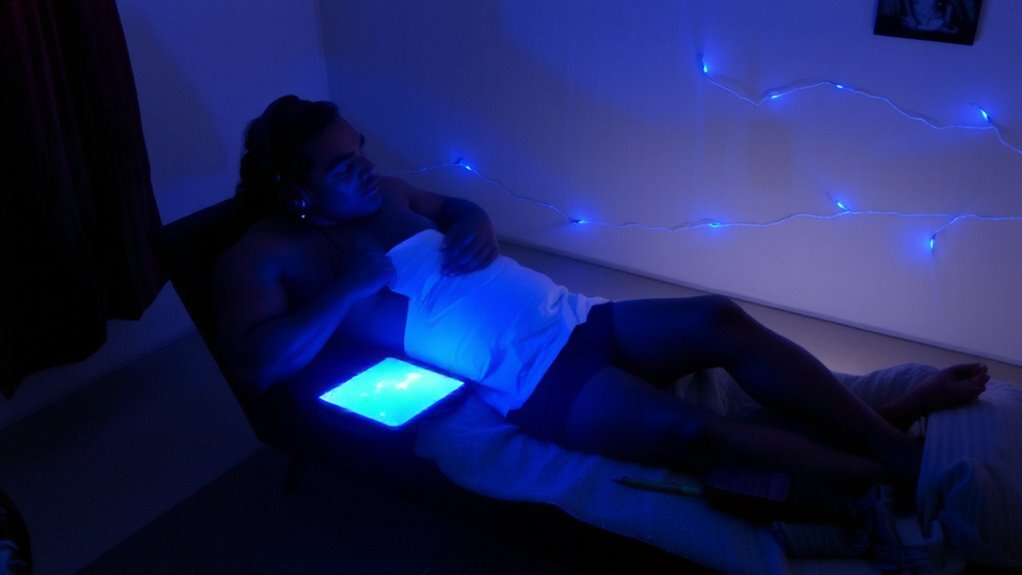
One key factor gaining attention in trauma recovery for athletes is the use of theta wave entrainment, typically delivered through specialized audio devices or recovery headsets. You’re likely familiar with the mental fog and emotional fatigue trauma leaves behind. Theta wave benefits include deeper relaxation and enhanced access to subconscious processing, helping you reframe negative experiences. When used consistently, these frequencies support neural regeneration, improving emotional regulation and cognitive clarity over time. The gear used-like EEG-informed headsets-tracks brain activity to optimize timing and intensity, but not all models deliver equal results. Entry-level devices offer basic entrainment, while clinical-grade systems provide personalized modulation. For trauma-affected athletes, investing in reliable recovery tech makes a difference. It’s not just about rest-it’s about rebuilding mental resilience. Practical integration into daily recovery routines enhances performance and psychological healing.
Pick Isochronic Tones for Your Emotional Needs
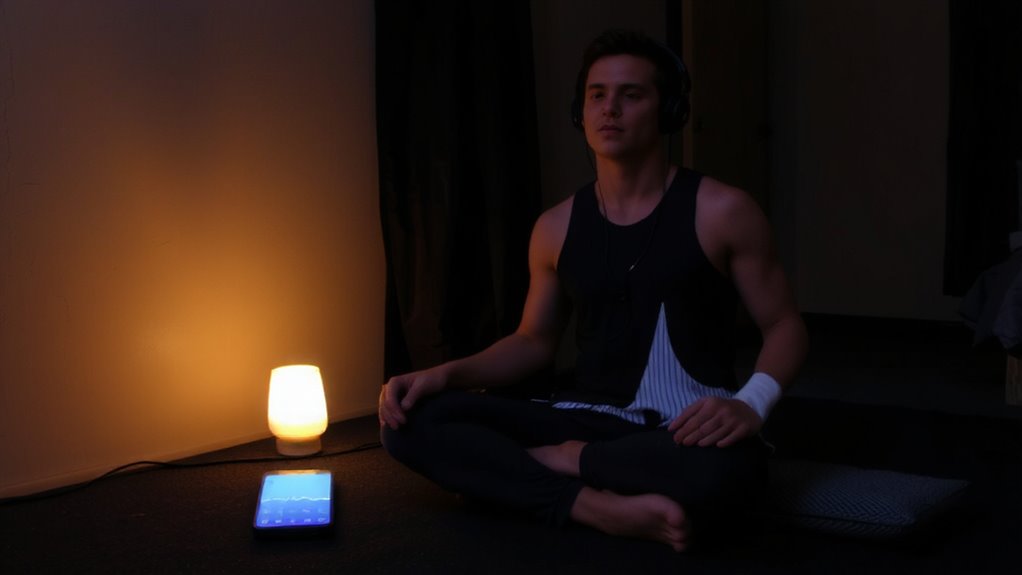
Why do certain sounds cut through emotional static more effectively than others? Because they match your brain’s natural rhythms, creating emotional resonance and improving mood alignment. When you’re a trauma-affected athlete, choosing the right isochronic tones matters more-it’s not just about frequency but how well the tone supports your psychological state. Low theta-range tones (4–7 Hz) help ease anxiety, while mid-range options can sharpen mental clarity during recovery. Match the tone to your emotional goal for stronger therapeutic effects. Here’s a quick guide:
| Emotional Need | Recommended Frequency |
|---|---|
| Calm and grounding | 4.5–5.5 Hz |
| Focus and recentering | 6.0–6.5 Hz |
| Emotional release | 5.5–6.0 Hz |
These selections aren’t arbitrary-they’re based on neural response studies showing improved mood alignment when frequency matches internal state. Pick wisely to support both mental recovery and long-term resilience.
Build Your Recovery Playlist Step by Step
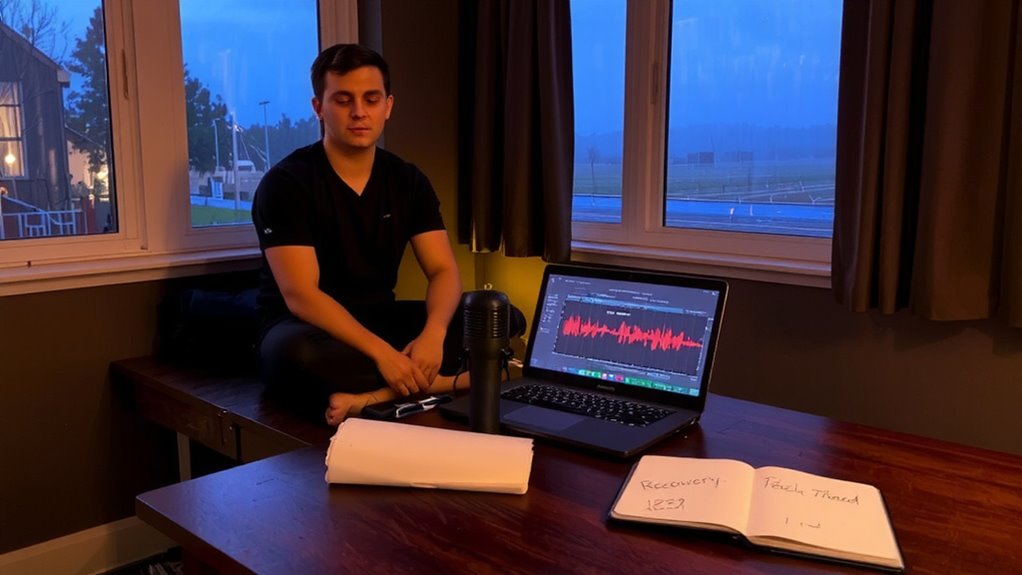
You’ve selected the right isochronic tones to match your emotional state-now it’s time to assemble them into a coherent recovery playlist that supports both mental focus and physical healing. Begin with playlist customization: arrange tones in a sequence that progresses from higher beta frequencies to deeper theta states, allowing your brain to shift smoothly. Your tone selection should prioritize clarity and consistent pulse rates, ideally between 4 to 7 Hz for peak theta induction. Use high-fidelity audio files to preserve signal integrity, as compression can distort the precise timing essential for isochronic effectiveness. Layer tones with subtle ambient backing-nature sounds or soft pads-to enhance receptivity without distraction. Test the flow over multiple sessions, noting shifts in focus and relaxation. Adjust order or duration based on response, refining the sequence to match your recovery rhythm. Effective playlist customization turns precise tone selection into a functional recovery tool.
Use Your Playlist at These 3 Key Times Daily
Timing matters just as much as technique when it comes to recovery-treat your playlist like a precision tool, not background noise. First, use it during morning focus to center your mind and prime neural pathways for performance. Ten to fifteen minutes of isochronic tones at this time can enhance mental clarity and emotional regulation before training. Second, apply your playlist post-workout, when the nervous system is fatigued and more receptive to theta-state entrainment. This supports faster physiological recovery and reduces stress hormone spikes. Third, integrate it into your evening calm routine to signal shift from action to rest, improving sleep onset and depth. Unlike generic fitness gear that only addresses physical wear, your playlist actively supports neurologic resilience. Consistent timing strengthens the brain’s response, making recovery not just habitual, but more effective. Use it daily-your nervous system will adapt, respond, and recover better.
Pair Tones With Therapy and Sleep Routines
While your recovery playlist already serves as a powerful standalone tool, its real potential emerges when integrated with structured therapy and nightly sleep routines-turning passive listening into active neurological training. Pairing tones with cognitive-behavioral therapy sessions enhances neural receptivity, making emotional processing more efficient during trauma work. You’ll find theta-state entrainment supports mindfulness and somatic awareness, especially when used consistently before or after therapy. Therapy integration isn’t automatic-it requires intentional timing, like playing isochronic tracks during grounding exercises or post-session reflection. Likewise, embedding the playlist into your sleep hygiene routine improves sleep onset and depth, both critical for neurobiological recovery. Devices like noise-isolating headphones guarantee peak tone delivery, while apps with sleep timers prevent disruption. Combined, these strategies amplify recovery, transforming sound from background noise into a targeted, adaptive tool that aligns with your nervous system’s healing timeline.
On a final note
You’re using isochronic tones wisely by targeting theta-state access, which supports neural reprocessing vital in trauma recovery. When paired with therapy and sleep hygiene, your playlist becomes a practical recovery tool. Though not a standalone fix, it complements fitness recovery strategies effectively. Consistent use at key daily times enhances mental resilience. As with quality fitness gear, effectiveness depends on correct specification and routine integration-results improve when design meets disciplined application.