Lumbar Mobility Drills With Seated Pelvic Tilts
You’re building lumbar mobility every time you perform a seated pelvic tilt with control and breath. By rocking your pelvis forward and back while sitting tall, you engage your core, release lower back tension, and improve spinal articulation-no gear needed. Do it daily for best results, avoiding common errors like overarching or rushing. Master the basics, then progress to advanced variations to refine neuromuscular control and support long-term spinal health. You’ll discover even more ways to enhance your routine.
Notable Insights
- Seated pelvic tilts improve lumbar mobility by articulating the spine segment by segment in a controlled manner.
- Perform the drill sitting tall with feet flat, rocking the pelvis forward and backward smoothly.
- Coordinate movement with breath: exhale during the tilt to engage core and stabilize the pelvis.
- Avoid overarching the lower back by initiating motion from the pelvis, not the spine.
- Add advanced variations like band resistance or single-leg lifts to enhance neuromuscular control and mobility.
What’s a Seated Pelvic Tilt?
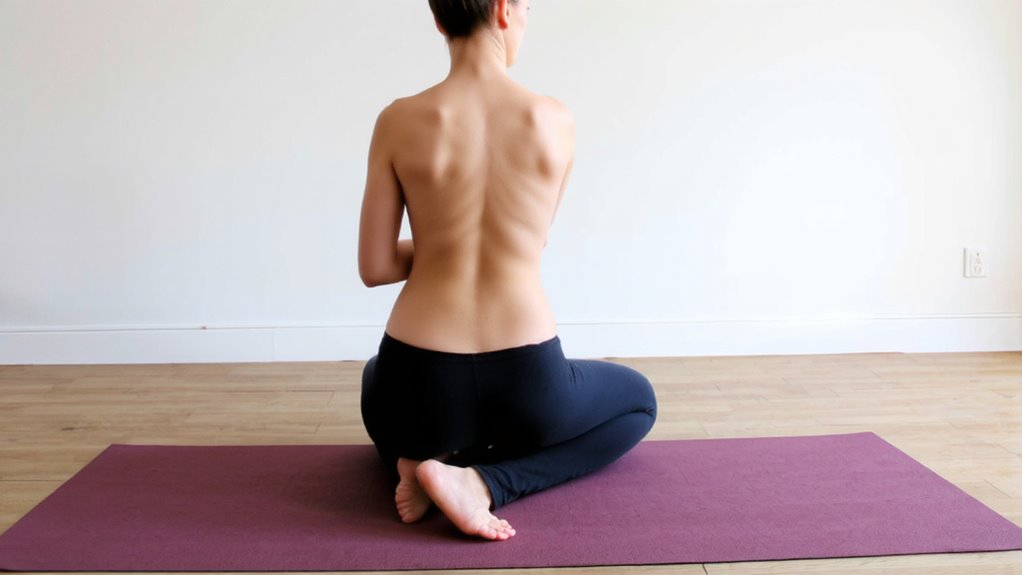
Ever wonder how something as simple as sitting could turn into a powerful tool for spinal health? A seated pelvic tilt is a controlled movement that gently rocks your pelvis forward and backward, guiding your lower spine through intentional motion. You’re not just shifting bones-you’re engaging muscles, ligaments, and joint awareness to refine anatomical alignment. This drill emphasizes precise spinal articulation, segment by segment, which enhances mobility and reduces stiffness. Unlike flashy recovery gadgets or expensive fitness gear, this exercise requires only your body and awareness, making it both accessible and effective. It’s especially useful after long periods of sitting, helping recalibrate your posture without strain. While tools like foam rollers or lumbar support cushions exist, they can’t replicate the neuromuscular control you build here. The seated pelvic tilt isn’t just a warm-up-it’s foundational training for spinal health, promoting long-term resilience with zero equipment and real physiological payoff.
How to Do a Seated Pelvic Tilt Correctly

How can a single movement retrain your spine’s alignment while requiring no equipment and just minutes of your time? You can master the seated pelvic tilt by sitting tall on a chair, feet flat, and gently rocking your pelvis forward and back. Focus on proper alignment-keep your spine neutral at the end-range of motion, avoiding over-arching. Controlled breathing enhances the movement: inhale to prepare, exhale as you engage your core and tilt. Maintain a slow rhythm, letting each rep build awareness. This drill, though simple, delivers real benefits for lumbar mobility, especially post-workout. It’s ideal for recovery, requiring no fitness gear, yet offering measurable gains in body control. Unlike complex recovery tools, this technique relies only on precision and consistency. When done correctly, it supports long-term spinal health, making it a smart inclusion in any routine focused on sustainable fitness.
Avoid These Common Pelvic Tilt Mistakes
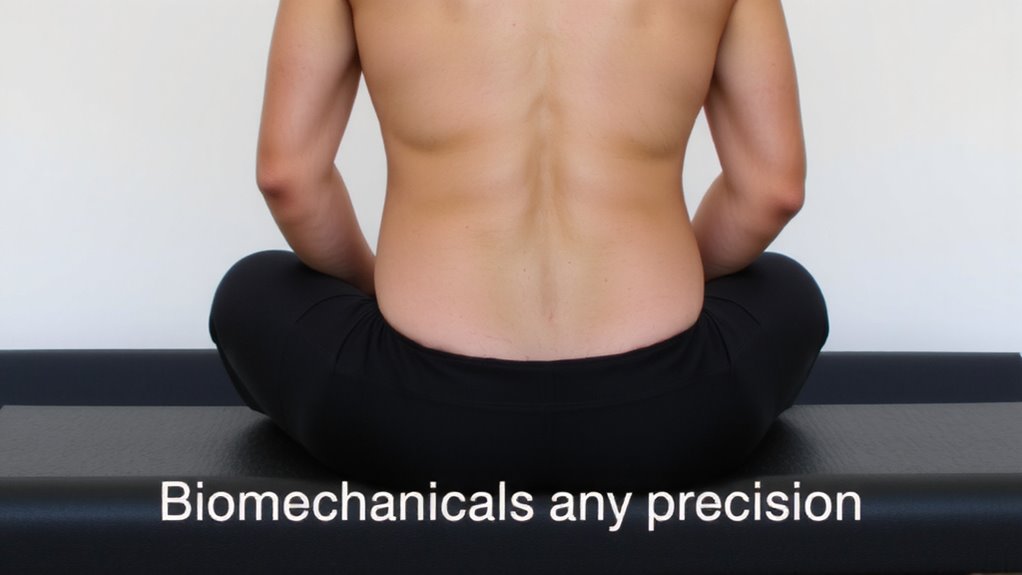
Why do some people miss the full benefits of the pelvic tilt despite practicing it regularly? You’re likely making avoidable mistakes. One common error is overarching posture-arching your lower back too much instead of isolating the pelvis, which shifts focus from lumbar control to spinal compression. This undermines the drill’s mobility benefits and may strain soft tissues. Another issue is insufficient engagement of your core and glutes; without activating these muscles, the movement becomes passive and less effective. You should feel your pelvis, not just your spine, initiating the tilt. Avoid rushing through repetitions-quality trumps speed. Maintain a neutral spine at the start, and move deliberately through each phase. Correct form guarantees you train the right muscles, improve pelvic awareness, and support long-term lumbar health. Fix these errors, and you’ll see real progress.
Try These Advanced Pelvic Tilt Variations
What if you’ve mastered the basic pelvic tilt but still feel stuck in your mobility progress? It’s time to integrate advanced variations that challenge your dynamic stabilization and enhance core activation. These progressions aren’t just harder-they’re smarter, demanding precise neuromuscular control. Try seated pelvic tilts with arm reaches, unilateral leg lifts, or resistance bands to amplify feedback and engagement.
| Variation | Benefit | Focus Area |
|---|---|---|
| Seated with Reach | Improves spinal coordination | Thoracic-lumbar glide |
| Single-leg Lift | Challenges balance | Hip-core synergy |
| Band-resisted Tilt | Increases resistance load | Glute and transverse activation |
| Clock Tilt (360°) | Enhances positional awareness | Full pelvic articulation |
These drills build resilient movement patterns, bridging mobility with functional stability. Each variation amplifies proprioception and deep core engagement, making them essential for those serious about lumbar control and long-term spinal health.
When and How Often to Do Pelvic Tilts
Where should pelvic tilts fit into your routine for maximum benefit? You’ll get the most from doing them daily, ideally as part of your warm-up or cool-down. Aim for a benefits frequency of 2–3 sets of 10–15 reps, morning and night. This regular practice supports lumbar mobility and enhances posture alignment over time. If you sit for long periods, incorporating pelvic tilts every few hours can counteract slouching and relieve lower back tension. Consistency matters more than intensity-gentle, controlled movements yield better long-term results than aggressive reps. You don’t need fitness gear; just a stable chair or the floor works. Over time, you’ll notice improved core engagement and reduced stiffness. While not a standalone fix, pelvic tilts are a low-effort, high-return drill. They integrate well into recovery routines, especially when paired with mindful breathing and spinal awareness.
On a final note
You’ve likely found seated pelvic tilts effective for enhancing lumbar mobility and reinforcing proper pelvic control. When done correctly, they build foundational stability essential for both fitness recovery and performance. Paired with quality recovery gear-like supportive cushions or massage tools-these drills become even more beneficial. Consistency matters more than intensity, so integrate them daily. Over time, you’ll notice improved posture, reduced stiffness, and better movement efficiency-all worth the minimal time investment.