Recumbent Cycling Warm-Up Protocols Before Morning Physical Therapy Appointments
You should start your recumbent cycling warm-up with 5 minutes of easy pedaling to ease joint stiffness and boost blood flow. Set low resistance and adjust the seat so your knees bend slightly at the lowest pedal point, reducing strain. Gradually increase intensity over 10 minutes to activate glutes, quads, and hamstrings efficiently. This protocol enhances neuromuscular readiness and supports safe, effective therapy-especially when consistency is key. There’s more to optimizing your setup and timing for peak performance.
Notable Insights
- Begin with 5 minutes of light recumbent cycling to boost blood flow and joint lubrication before therapy.
- Adjust seat height so knees slightly bend at the pedal’s lowest point to prevent joint strain.
- Maintain a supported back, relaxed shoulders, and aligned neck for optimal posture during warm-up.
- Start with minimal resistance and gradually increase every two minutes to activate muscles safely.
- Target 60–70 RPM pedal rhythm to promote smooth neuromuscular engagement without causing fatigue.
Why Warm Up Before Morning Physical Therapy?
Warming up before morning physical therapy isn’t just routine-it’s a strategic step that prepares your body for targeted recovery, especially when integrating recumbent cycling into rehabilitation. You often wake with increased joint stiffness due to prolonged inactivity, and jumping straight into therapy can compromise form and increase injury risk. A proper warm-up gradually elevates heart rate and enhances blood flow, easing that stiffness. It also promotes muscle activation, priming key muscle groups-like your glutes, quads, and hamstrings-for more effective engagement during exercise. Without this phase, your performance on fitness gear like recumbent bikes may be inefficient, reducing therapeutic benefit. Dynamic movements, such as leg swings or gentle torso rotations, are particularly effective. They mimic motion patterns used during cycling, making them practical and functional. Smart warm-ups aren’t just about readiness-they’re about maximizing every session’s recovery potential with precision and care.
Why Recumbent Bikes Are Perfect for Stiff Mornings
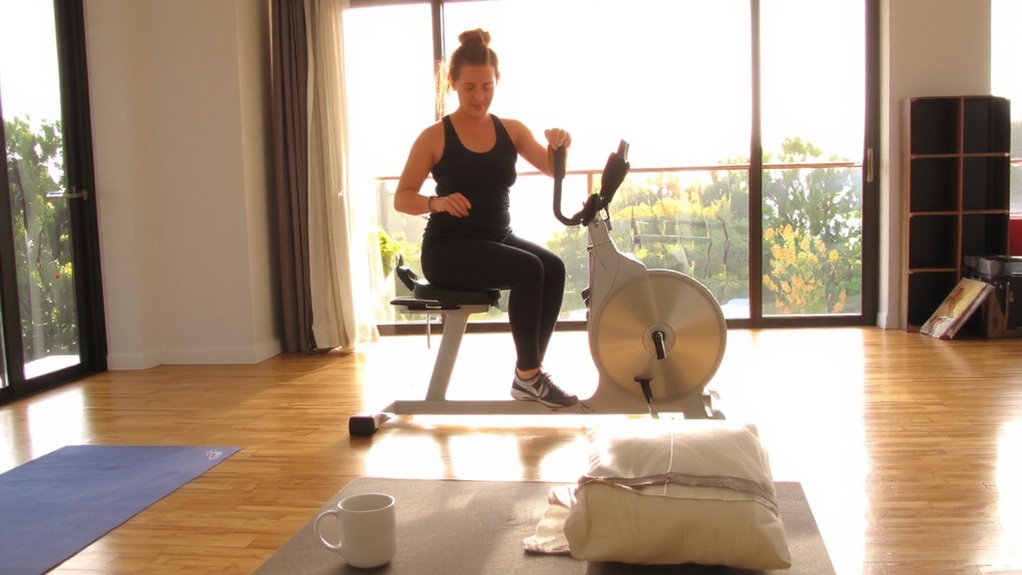
Even if you’re not fully awake, your body still needs effective movement to loosen stiff joints and activate sluggish muscles-and that’s where recumbent bikes shine during morning recovery sessions. Their ergonomic design supports joint comfort by reducing spinal load and stabilizing hips, making them ideal when stiffness peaks. The seated position encourages consistent muscle activation in the quads, hamstrings, and glutes without overstraining tendons. Compared to upright models, recumbents distribute weight more evenly, minimizing morning joint resistance.
| Feature | Benefit |
|---|---|
| Low-impact motion | Enhances joint comfort |
| Reclined posture | Reduces back strain |
| Supported seat | Promotes stability |
| Smooth resistance | Encourages muscle activation |
| Adjustable settings | Fits varied recovery needs |
Therapists often recommend recumbent bikes because their mechanics align with early-morning physiological demands, helping patients shift smoothly into therapy with warmed, responsive musculature. For those seeking optimal performance and comfort, choosing one of the best recumbent bikes for 2025 can enhance the effectiveness of morning warm-up routines.
Start With 5 Minutes of Easy Cycling
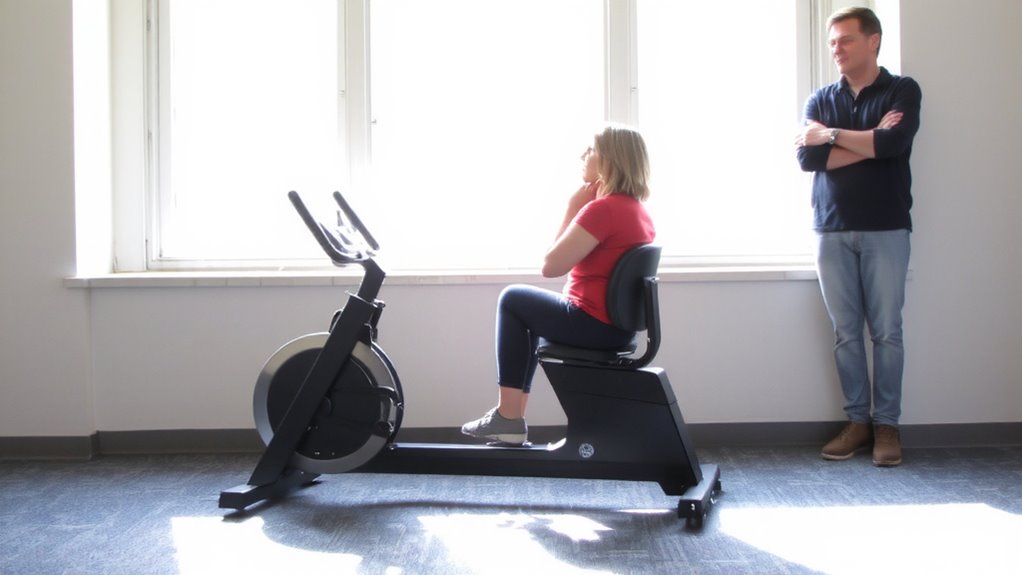
Start with just five minutes of easy cycling to gently prime your system without strain. This brief session helps increase blood flow to your muscles and synovial fluid to your joints, easing morning stiffness. Focus on maintaining proper cycling posture-your back should be fully supported by the seat, shoulders relaxed, and neck aligned. Keep your pedal rhythm smooth and consistent, around 60–70 RPM, to promote joint mobility without overexertion. This low-impact movement is particularly effective in fitness recovery, preparing your body for more active therapy work. It’s not about intensity; it’s about activation. A recumbent bike’s design supports this phase better than upright models, minimizing spinal load. You’ll notice improved coordination and reduced discomfort when you begin your session this way. This simple routine enhances tolerance for later exercises, making it a practical foundation in clinical and home-based rehabilitation settings. For beginners, choosing a best beginner exercise bike can significantly improve comfort and consistency during these warm-up sessions.
Set Resistance and Seat for Joint Support
You’ve already activated your muscles and joints with light pedaling, so now it’s time to fine-tune your setup for maximum joint support and muscle engagement. Adjust the seat so your knees have a slight bend at the pedal’s lowest point-this optimizes joint stability and reduces strain on ligaments. A too-high seat stresses the hips, while too low increases patellofemoral pressure. Set resistance just above zero; enough to feel controlled tension, but not so heavy it compromises form. Proper resistance enhances muscle activation, especially in the glutes and hamstrings, without overloading the knee joint. Recumbent bikes that allow micro-adjustments in seat angle and resistance give better long-term support, particularly before physical therapy. These tweaks aren’t just comfort-they directly influence biomechanical efficiency. Consistent, precise setup supports recovery, making each session safer and more effective for joint stability and targeted muscle activation.
Build Intensity Gradually Over 10 Minutes
A well-structured 10-minute ramp-up phase can make a significant difference in how effectively your body adapts to exercise stress, particularly during recovery-focused cycling. You’ll want to start with light resistance, letting your pedal rhythm settle into a smooth, consistent pace. This initial ease allows gradual muscle activation, especially in the quads, hamstrings, and glutes, without overwhelming healing tissues. Over the next few minutes, slightly increase resistance every two minutes, staying within a comfortable range that elevates heart rate just enough to boost circulation. This progressive build supports neuromuscular coordination and joint lubrication, priming your system for therapy. Maintaining a controlled pedal rhythm prevents early fatigue and guarantees even muscle activation across both legs, reducing imbalance risks. By minute 10, you should feel warm, limber, and ready-never strained. This methodical approach optimizes physiological readiness while respecting recovery limits, making it a smart, sustainable choice for consistent rehab gains. Models with arm exercisers provide upper-body engagement to enhance circulation and coordination before therapy.
When to Skip the Recumbent Bike Before Therapy
Just because a gradual warm-up sets the stage for effective therapy doesn’t mean hopping on the recumbent bike is always the right move. If you’re already dealing with muscle fatigue from an intense session the day before, adding cycling could hinder recovery instead of helping. Overworking fatigued muscles may delay healing and reduce therapy effectiveness. Your body needs time to regenerate, and pushing it further might do more harm than good. Also, tight time constraints can make a 10-minute warm-up impractical. Rushing through a cycle session without proper intensity buildup won’t yield the desired benefits and may leave you strained. In such cases, skipping the bike and opting for dynamic stretches or breathing exercises might be smarter. Always assess how you feel and how much time you have-smart adjustments support better outcomes without compromising recovery or readiness.
Make Warm-Ups a Habit for Better Therapy Results
Often, consistency in pre-therapy preparation makes a noticeable difference in how well your body responds to treatment. When you make recumbent cycling a regular warm-up habit, you tap into real consistency benefits-improved joint mobility, better circulation, and enhanced muscle readiness. These aren’t just short-term wins; over time, they contribute to more effective therapy sessions. A steady routine builds routine motivation, turning effort into automatic action. You’re more likely to stick with therapy when warm-ups feel natural, not forced. Recumbent bikes, with their low-impact design and ergonomic support, are ideal for morning use, especially if you deal with stiffness or joint sensitivity. Their smooth resistance settings let you tailor warm-ups precisely, promoting fitness recovery without strain. Used daily, they integrate seamlessly into pre-therapy care. Commit to the process, and you’ll likely see better range of motion, reduced discomfort, and stronger progress toward rehabilitation goals.
On a final note
You’ll find recumbent cycling an efficient way to prime stiff morning joints before therapy. The low-impact motion boosts circulation, lubricates joints, and activates key muscles without strain. A 5- to 10-minute warm-up at light resistance, with proper seat alignment, enhances therapy engagement and comfort. While not for acute injuries, consistent use supports fitness recovery. Quality recumbent bikes offer smooth resistance systems and ergonomic design, making them practical, durable tools for daily prep-just keep them serviced for peak performance.