The Impact of Sleep on Reducing Muscle Soreness and DOMS Duration
Sleep drastically reduces muscle soreness and shortens DOMS by driving essential repair processes you can’t get from foam rollers or compression gear. During deep sleep, growth hormone surges, repairing microtears and lowering inflammation. REM sleep fine-tunes pain sensitivity and immune response. Without 7–9 hours nightly, recovery stalls. Consistent, high-quality sleep outperforms recovery gadgets-your body heals itself most efficiently at rest, especially when supported by proper nutrition and circadian rhythm. There’s more to optimizing this process than just duration.
Notable Insights
- Sleep promotes muscle repair by releasing growth hormone during deep sleep, accelerating recovery from DOMS.
- Deep sleep reduces inflammatory markers like IL-6, helping decrease muscle soreness and swelling.
- Consistent 7–9 hours of sleep optimizes tissue regeneration and shortens DOMS duration.
- REM sleep modulates pain perception by regulating neural pathways involved in soreness sensitivity.
- Quality sleep supports protein synthesis and cellular turnover, enhancing recovery after exercise-induced muscle damage.
What DOMS Is and Why It Occurs?
Delayed Onset Muscle Soreness, or DOMS, isn’t just stiffness-it’s your body’s response to unfamiliar or intense exercise, especially movements involving eccentric muscle contractions. When you ramp up exercise intensity too quickly, your muscles undergo stress they’re not conditioned for, leading to microscopic damage known as muscle microtears. These microtears aren’t harmful; they’re a natural part of building strength, signaling your body to repair and reinforce muscle fibers. You’ll typically feel DOMS 24 to 72 hours post-workout, peaking in soreness before gradually fading. While fitness gear like compression wear may offer temporary relief, it doesn’t accelerate the biological repair process. Relying solely on gadgets without adjusting exercise intensity or allowing recovery time can undermine progress. DOMS is less about injury and more about adaptation-your muscles recalibrating to new demands through inflammation, repair, and growth.
How Sleep Powers Muscle Recovery After Workouts
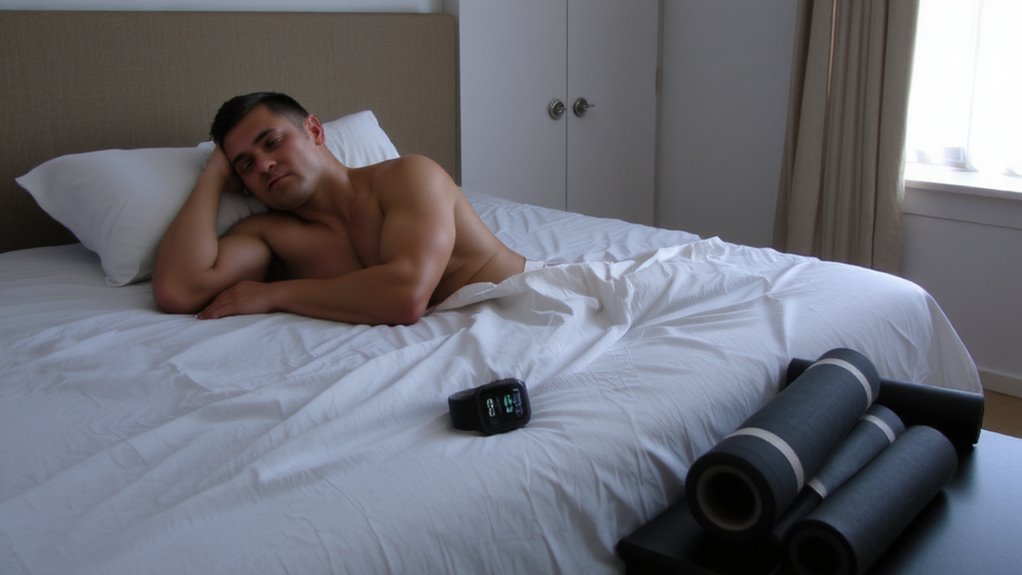
Recovery isn’t just about rest-it’s a biological process supercharged by sleep. While you sleep, your body shifts into high gear for muscle repair and cellular regeneration. This isn’t passive downtime-it’s when growth factors peak and tissues rebuild stronger. Quality sleep optimizes this internal workflow, making recovery more efficient than rest alone.
| Process | Role in Recovery |
|---|---|
| Muscle Repair | Fixes micro-tears from exertion |
| Cellular Regeneration | Replaces damaged cells |
| Hormone Balance | Regulates cortisol and repair signals |
| Inflammation Control | Reduces swelling and soreness |
You’re not just resting-you’re actively rebuilding. Skimping on sleep undermines these processes, slowing progress no matter how advanced your fitness gear. Prioritize 7–9 hours nightly to guarantee your body completes its recovery cycle effectively. Sleep isn’t luxury-it’s essential infrastructure for recovery.
How Growth Hormone Speeds DOMS Relief

While you’re asleep, your body ramps up growth hormone (GH) release, and that’s where the real magic happens for sore muscles. This hormonal regulation accelerates tissue regeneration, helping repair microtears from intense workouts. GH doesn’t just assist in recovery-it actively shortens DOMS duration by enhancing cellular turnover and protein synthesis. You’ll notice less stiffness and faster mobility when sleep is consistent, primarily because GH peaks during deep sleep cycles. Unlike recovery gear that only supports circulation, GH works systemically, making it far more effective for long-term muscle relief. Though recovery tools have their place, they can’t replicate the body’s innate repair mechanisms driven by proper sleep. That’s why prioritizing rest delivers better results than relying solely on foam rollers or compression devices. When you optimize sleep, you’re boosting natural hormonal regulation at no extra cost-proving that sometimes, the best recovery “tool” is already built into your biology.
Which Sleep Stages Lower Inflammation and Pain
When you dive into the science of sleep and recovery, it’s clear that not all stages are equal when it comes to calming inflammation and easing pain. Deep sleep stands out for triggering tissue repair and lowering inflammatory markers like IL-6. During this phase, your body reduces stress hormones that amplify soreness. REM sleep, while less direct, helps regulate pain perception by stabilizing neural pathways linked to discomfort. You need both for best recovery, but deep sleep has a stronger impact on physical healing.
| Sleep Stage | Role in Inflammation | Role in Pain Relief |
|---|---|---|
| Deep sleep | Reduces cytokines | Supports tissue repair |
| REM sleep | Stabilizes immune signals | Modulates pain sensitivity |
| Light sleep | Minimal effect | Limited benefit |
Prioritizing sleep quality means enhancing these restorative phases naturally.
Why Poor Sleep Lengthens Muscle Soreness
If you’re skimping on sleep after a tough workout, you’re likely extending the life of your muscle soreness without realizing it. Sleep deprivation disrupts key recovery processes, impairing tissue repair and weakening your immune response. Without enough rest, your body can’t efficiently clear metabolic waste or reduce exercise-induced inflammation. This leads to delayed recovery, meaning soreness from DOMS lingers longer than it should. Growth hormone, essential for muscle repair, is primarily released during deep sleep stages-stages you miss when sleep is short or fragmented. Poor sleep also heightens pain sensitivity, making soreness feel worse even if damage hasn’t increased. In practical terms, cutting corners on rest undermines even the best fitness gear or recovery tools. You might use state-of-the-art compression devices or massage rollers, but without adequate sleep, their benefits are limited. Prioritizing rest isn’t just supportive-it’s foundational to effective recovery.
Optimal Sleep Duration for Faster DOMS Recovery
You’re likely wondering just how much sleep you really need to shake off DOMS quickly-and the answer isn’t one-size-fits-all, but research points to a sweet spot. Most adults recover faster with 7 to 9 hours nightly, supporting muscle repair and inflammation control. This range optimizes growth hormone release, which peaks during deep sleep, accelerating tissue recovery. Consistent sleep timing enhances this effect, aligning your circadian rhythm with repair processes. Going to bed and waking around the same time-even on weekends-boosts sleep quality, making recovery more efficient. Pairing adequate sleep with proper recovery nutrition, like protein and carbohydrates within 45 minutes post-workout, magnifies results. Without enough shut-eye, even the best supplements or compression gear lose effectiveness-your body simply can’t rebuild efficiently. Prioritize sleep duration and timing like you do your training regimen; both are non-negotiable for fast, effective DOMS recovery.
Science-Backed Sleep Habits for Athlete Recovery
Nearly every elite athlete prioritizes recovery sleep not just for rest but as a core component of performance adaptation, and science confirms that targeted sleep habits substantially enhance muscle repair, cognitive function, and immune resilience. You’ll recover faster when you optimize your sleep environment-cool, dark, and quiet-using blackout curtains and white noise to minimize disruptions. Consistent sleep and wake times regulate your circadian rhythm, boosting growth hormone release critical for tissue repair. Pair this with deliberate recovery nutrition: consuming protein and carbs within 30–60 minutes post-exercise fuels glycogen replenishment and muscle synthesis. Don’t overlook tech like sleep trackers-they help monitor sleep quality and identify patterns. While recovery gear like compression boots or cooling mats may support circulation, they’re most effective when combined with solid foundational habits. Ultimately, superior recovery isn’t about gadgets alone-it’s about discipline in sleep environment control and timely recovery nutrition that truly accelerates healing.
On a final note
You need sleep to fight muscle soreness and shorten DOMS. During deep sleep, your body releases growth hormone, which repairs tissues and lowers inflammation. Poor or short sleep slows recovery, making soreness last longer. Aim for 7–9 hours nightly, especially after intense training. Consistent, quality rest boosts circulation, reduces cortisol, and supports faster healing-just as essential as hydration, nutrition, or recovery gear like foam rollers or compression wear.