How to Track and Optimize Sleep Stages Using Wearable Technology for Athletes
You need deep and REM sleep to repair muscles, sharpen focus, and balance recovery hormones-wearables track these stages using heart rate, movement, and sometimes temperature data. While not perfect, they reliably spot trends when used consistently. Look for features like readiness scores, sleep environment monitoring, and long battery life to stay accurate and comfortable. Use your data to adjust training intensity and nutrition, and keep refining your routine-you’ll uncover smarter ways to recover and perform at your best.
Notable Insights
- Wearables use sensor fusion and machine learning to estimate sleep stages like deep and REM for recovery insights.
- Prioritize devices with accurate sleep staging, readiness scores, and long battery life for consistent tracking.
- Monitor deep and REM sleep duration to assess muscle repair, hormone release, and cognitive recovery quality.
- Use nightly sleep trends to adjust training intensity, volume, and macronutrient intake for optimal adaptation.
- Combine sleep data with subjective feedback and environmental factors to personalize recovery and performance strategies.
Why Athletes Need More Deep and REM Sleep
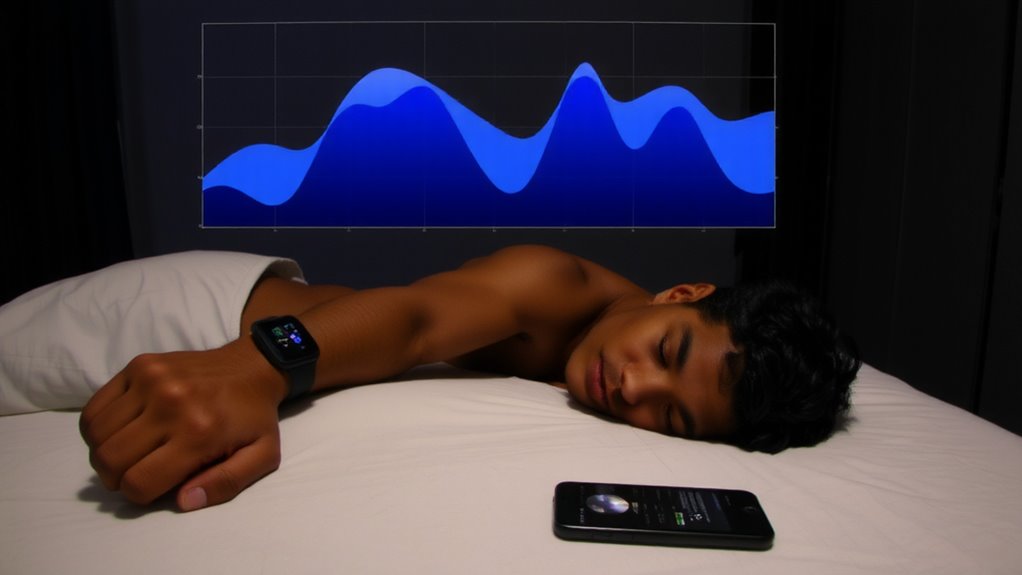
Recovery isn’t just about rest-it’s about quality sleep, especially the deep and REM stages that drive physical repair and mental sharpness. You need deep sleep for muscle repair, when your body rebuilds tissue and strengthens fibers broken down during intense training. Growth hormone release peaks during this stage, making it essential for recovery and performance gains. REM sleep, on the other hand, supports cognitive function, emotional regulation, and memory consolidation-key for mastering technique and staying focused. Hormone regulation depends on consistent, high-quality sleep cycles, balancing cortisol and insulin sensitivity. Without enough deep or REM sleep, your body struggles to maintain peak condition, increasing injury risk and slowing progress. Athletes who prioritize these stages recover faster, adapt better, and perform at higher levels. Tracking these patterns helps you optimize recovery strategies, ensuring your body gets what it needs to thrive.
How Wearables Detect Your Sleep Stages Accurately
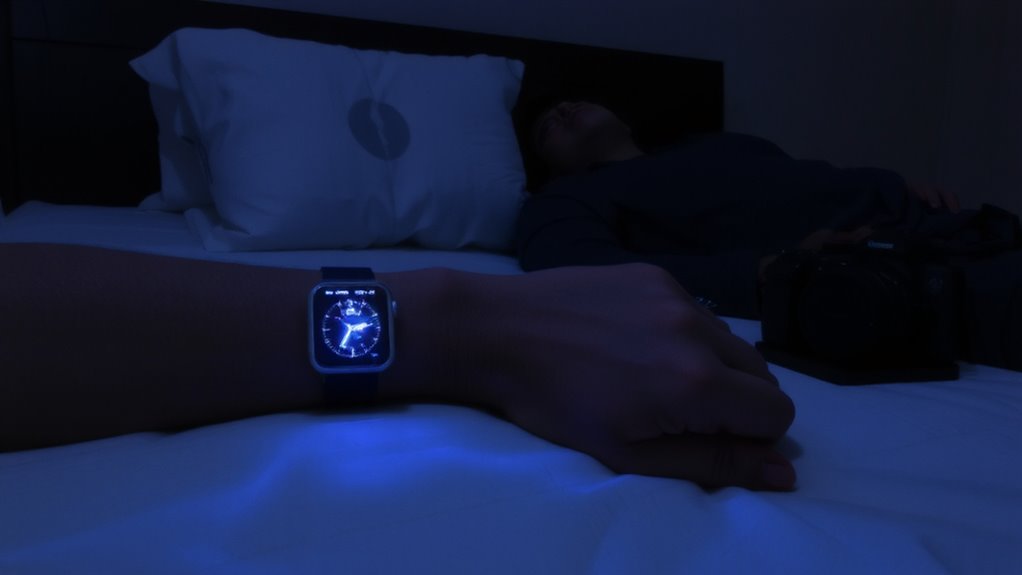
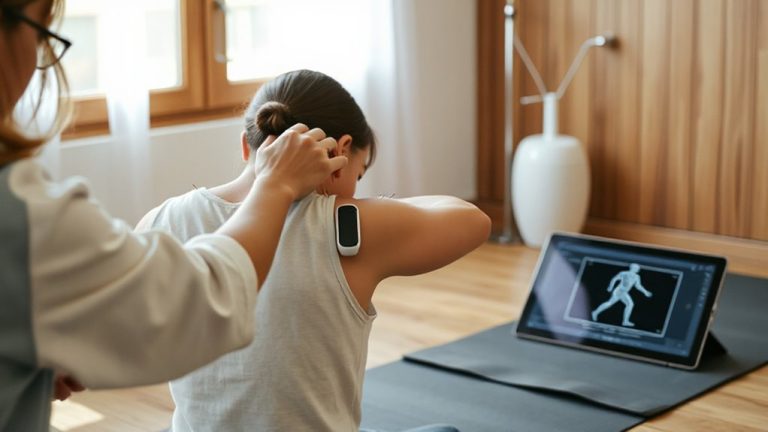
While you’re asleep, your wearable is hard at work, using a combination of sensors to estimate when you’re in light, deep, or REM sleep with increasing accuracy. It relies on sensor fusion-blending data from accelerometers, heart rate monitors, and sometimes even skin temperature sensors-to distinguish between movement, rest, and physiological shifts linked to sleep stages. These raw signals feed into sleep algorithms, which analyze patterns over time to classify your sleep cycles more reliably. Though not as precise as polysomnography, modern wearables have improved markedly, especially for tracking trends across nights. The best devices use machine learning to adapt to your personal rhythms, making their estimates more relevant. You’re not getting lab-grade data, but for practical insights into your sleep architecture, the combination of sensor fusion and evolving sleep algorithms offers a powerful, accessible tool-especially when used consistently.
Best Sleep-Tracking Features for Performance Recovery
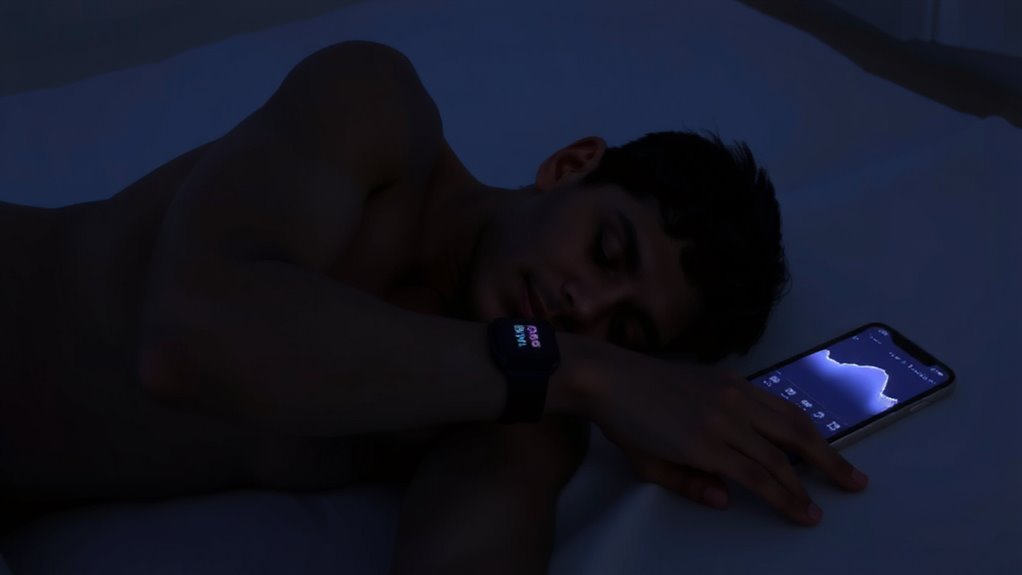
You’re already tracking your sleep stages with decent accuracy, thanks to the sensor fusion and smart algorithms in your wearable, but now it’s time to focus on which metrics actually help you recover and perform better. Look for features that monitor your sleep environment-things like room temperature, light levels, and noise-since poor conditions disrupt deep sleep and hinder recovery. Bedtime consistency is another key feature; wearables that track and encourage a regular sleep schedule help stabilize your circadian rhythm, improving sleep quality over time. Advanced models also offer readiness scores that combine heart rate variability, sleep duration, and movement to gauge recovery. But don’t overlook battery life and sensor comfort-devices that irritate or die mid-week disrupt long-term tracking. The best wearables balance precise data with practical insights, turning raw numbers into actionable recovery habits without overwhelming you.
What Your Sleep Data Reveals About Recovery
How often does your sleep data actually tell you whether your body’s ready to perform at its peak? Quite often-if you know what to look for. Your wearable tracks more than just hours slept; it monitors sleep quality by analyzing deep and REM cycles, restlessness, and awakenings. These metrics directly correlate with recovery markers like heart rate variability (HRV), resting heart rate, and overnight recovery speed. When your sleep quality dips, your device flags suboptimal recovery, suggesting your body hasn’t fully repaired muscle tissue or replenished energy stores. Consistently poor data may mean increased injury risk or reduced training adaptation. While not medical-grade, modern wearables offer reliable trends when used consistently. You’re not just tracking sleep-you’re quantifying readiness. High sleep quality paired with stable recovery markers usually means you’re prepared to push hard. Low scores? That’s your cue to ease up, prioritize rest, and let your body catch up before going all-in again.
Optimize Your Routine Using Sleep Stage Feedback
Why do some nights leave you feeling restored while others leave you drained, even with the same amount of sleep? It often comes down to sleep timing and the quality of your sleep stages. Wearables reveal patterns, like how consistent bedtime consistency improves deep and REM sleep. When you go to bed around the same time each night, your body’s circadian rhythm stabilizes, making it easier to enter restorative phases. Irregular schedules disrupt this, reducing recovery efficiency. By reviewing your sleep stage feedback, you can tweak habits-shifting bedtime by even 30 minutes might boost slow-wave sleep. Devices with accurate heart rate and movement tracking help distinguish between light, deep, and REM cycles, offering precise insights. Acting on this data sharpens recovery, enhancing performance. But remember: tracking means nothing without action. Adjusting your routine based on stage distribution is how real gains happen.
Use Sleep Trends to Adjust Training and Nutrition
Sleep quality doesn’t just reflect how well you rest-it actively informs how you should train and fuel your body. By tracking sleep trends over time, you can align your training load and nutrition with your body’s recovery timing. Poor sleep quality often signals the need for lighter workouts or increased carb and protein intake post-exercise to support recovery. Wearables that monitor deep and REM sleep help pinpoint when your body is ready for intensity. Use the data weekly to adjust rather than reacting daily.
| Sleep Trend | Training Adjustment | Nutrition Focus |
|---|---|---|
| High sleep quality | Increase intensity | Balanced macros |
| Low sleep quality | Reduce volume | Extra protein, hydration |
| Delayed recovery timing | Active recovery | Electrolytes, carbs |
Why Athletes Misread Sleep Data (And How to Fix It)
Isn’t it frustrating when your wearable says you slept well, yet you feel drained before noon? You’re not alone. Many athletes misread sleep data because they rely too heavily on surface-level metrics without questioning data accuracy. Wearables estimate sleep stages using motion and heart rate, but they can’t always distinguish between light sleep and wakefulness, skewing sleep quality scores. You might see a high sleep efficiency rating, but if your deep sleep or REM is inconsistent, recovery suffers. Environmental factors like caffeine, stress, or training load also affect sleep quality, yet wearables don’t always account for them. To fix this, pair your device data with subjective feedback-how rested do you feel? Track trends over weeks, not nights, and cross-reference with performance. Calibration, proper wear position, and updated firmware improve data accuracy. You’ll gain a clearer, more useful picture of true recovery.
On a final note
You’re relying on wearables to fine-tune recovery, and they deliver-when used wisely. These devices track sleep stages via heart rate variability and movement, giving actionable insights into deep and REM cycles critical for athletic repair. While not medical-grade, top models offer sufficient accuracy to guide training and nutrition adjustments. Over time, spotting trends helps prevent overtraining. Just remember: data isn’t flawless. Cross-check with how you feel, maintain consistent usage, and prioritize long-term patterns over nightly noise.