Tai Chi Movements That Release Hip Flexor Tension From Prolonged Sitting
Prolonged sitting keeps your hip flexors tight and short, but tai chi helps release that tension effectively. Movements like *Golden Rooster* challenge balance while opening hips, and *Wave Hands Like Clouds* integrates weight shifts with subtle hip rotation to improve mobility. Joint mobilization prepares your body, enhancing range of motion and joint lubrication. With mindful alignment and deep breathing, these forms reduce compensatory patterns and restore natural movement-discover how a simple routine can transform your daily comfort and movement efficiency.
Notable Insights
- Slow, weighted tai chi movements lengthen tight hip flexors caused by prolonged sitting.
- Joint mobilization with gentle circles prepares hips for deeper mobility work.
- Golden Rooster stance lifts the knee high to stretch hip flexors and improve balance.
- Wave Hands Like Clouds uses weight shifts and hip rotation to release sitting-related tension.
- Mindful alignment and breathing in tai chi reduce compensatory patterns and enhance flexibility.
How Sitting Tightens Hip Flexors
While you’re seated, your hip flexors stay in a shortened position, and over time, that can lead to chronic tightness and reduced mobility. This prolonged contraction encourages anatomical changes, altering pelvic alignment and increasing lumbar lordosis. You’re not just uncomfortable-you’re setting the stage for long-term muscle imbalance, where tight hip flexors overpower weakened glutes and hamstrings. Such imbalance compromises posture, gait, and overall movement efficiency. Office workers, drivers, and frequent sitters often overlook this gradual decline, mistaking stiffness for normalcy. Fitness recovery isn’t just about post-workout stretches; it requires addressing these silent, repetitive stressors. Even high-end fitness gear like posture-correcting chairs or standing desks only mitigate the problem-they don’t reverse existing tightness. Without corrective movement, the body adapts to dysfunction, making everyday activities more taxing. Recognizing early signs of hip flexor strain allows for timely intervention, preserving mobility and preventing compensatory injuries down the line.
Try Tai Chi to Release Tight Hips

You’ve probably tried foam rolling or static stretching to loosen tight hips, but if you’re still feeling restricted, tai chi offers a more dynamic-and often overlooked-solution for hip flexor release. Its slow, weighted movements encourage lengthening through the hip flexors while promoting joint stability. Unlike passive stretching, tai chi integrates qigong breathing to relax tension and enhance oxygen flow, supporting deeper tissue release. Each movement emphasizes mindful alignment, ensuring you engage the right muscles without compensation. This focus improves neuromuscular control, which is often disrupted by prolonged sitting. Movements like “Wave Hands Like Clouds” or “Golden Rooster Standing on One Leg” gently open the hips through controlled weight shifts and rotation. These actions not only stretch but also retrain movement patterns. Plus, tai chi requires no fitness gear, making it sustainable for daily recovery. It’s a practical, accessible practice that supports long-term hip health when performed consistently.
Warm Up With Joint Mobilization
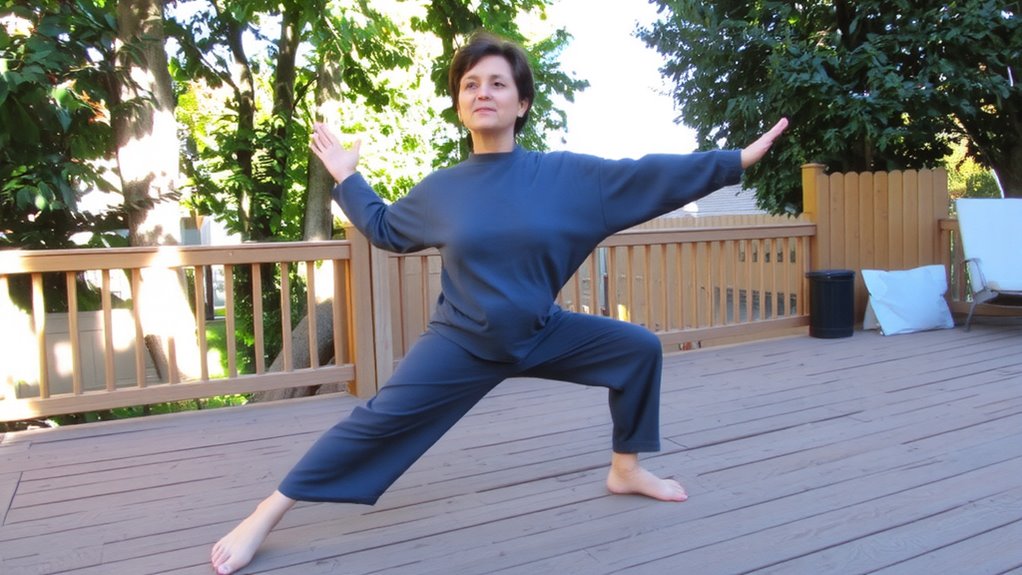
How often do your hips feel stiff before you even begin to move? That tension builds from sitting too long, restricting joint rotation and weakening spinal alignment. Before diving into deeper Tai Chi postures, you should warm up with joint mobilization to prep your body safely. Gentle circles at the hips, knees, and ankles stimulate synovial fluid production, improving range of motion. These small joint rotations activate proprioception, helping you move with more control. Pair this with mindful weight shifts and a neutral spine to reinforce proper spinal alignment from the start. This isn’t just about feeling loose-it’s about creating functional readiness. Unlike recovery tools like foam rollers or massage guns, which offer temporary relief, joint mobilization builds sustainable mobility. You’re not just warming up; you’re re-educating your movement patterns. Do it consistently, and you’ll notice sharper balance, reduced stiffness, and smoother passages into more challenging forms.
Golden Rooster: Balance & Open Hips
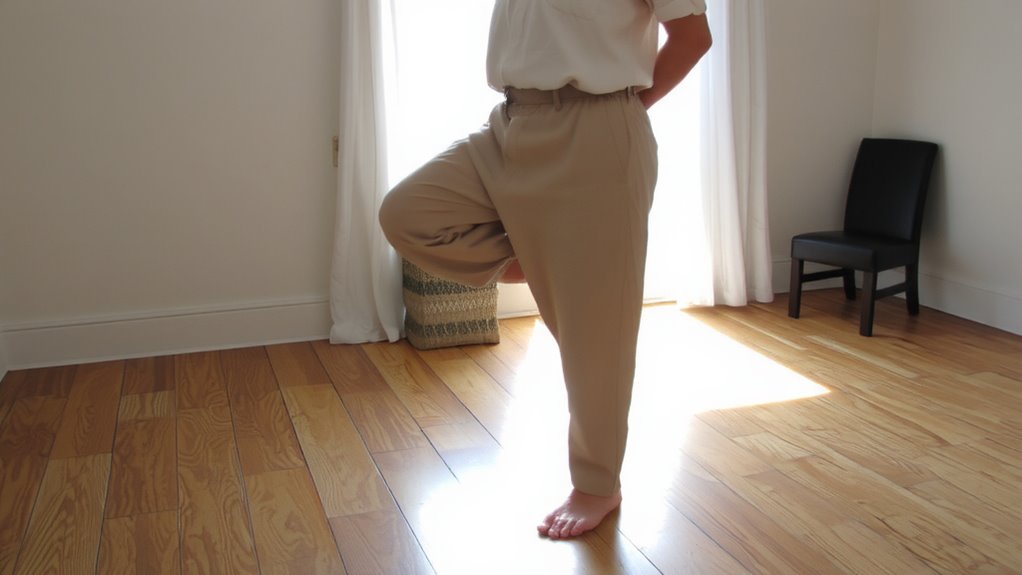
The Golden Rooster stance builds directly on the fluid groundwork laid during joint mobilization, taking your hip awareness into more dynamic territory. You shift weight onto one leg, lifting the opposite knee high while opening the hips, mimicking crane gazing-calm, poised, and alert. This balance pose challenges stability, awakening deep stabilizers often dulled by sitting. The motion encourages a feather floating lightness, reducing tension as you maintain alignment. Regular practice enhances joint proprioception and strengthens gluteal engagement essential for hip flexor release.
| Benefit | Purpose |
|---|---|
| Hip abduction | Releases tensor fasciae latae |
| Single-leg support | Improves proprioception |
| Spinal elongation | Reduces lower back strain |
| Mindful focus | Enhances neuromuscular control |
| Gentle lift | Promotes fluid circulation |
Hold for 20–30 seconds per side, breathing deeply. Ideal when used after warm-ups, it primes the body for deeper movement without aggressive stretching-making it a smart addition to recovery-focused routines.
Wave Hands Like Clouds for Hip Flow
Gentle, continuous motion characterizes *Wave Hands Like Clouds*, a Tai Chi movement that seamlessly integrates hip mobility with coordinated weight shifting. As you shift your weight from one leg to the other, subtle hip rotation initiates each turn of the waist, releasing tension stored in the hip flexors from sitting. Your pelvis stays neutral, allowing safe, controlled movement that enhances joint lubrication and circulation. The arms float laterally in harmony with the lower body, reinforcing fluid shifts that mirror natural walking mechanics. This coordination trains neuromuscular efficiency, improving balance and functional flexibility over time. Unlike static stretches, this dynamic form engages the hips through their full range, making it ideal for recovery. You don’t need specialized fitness gear-just supportive, flexible footwear or bare feet on a non-slip surface. Consistent practice refines movement quality, aiding long-term hip health and mobility without strain.
Build a 5-Minute Hip Release Routine
Why spend ten minutes stretching when five deliberate movements can deliver lasting hip relief? This 5-minute Tai Chi-inspired routine targets tension at its source. Begin with Gentle Hip Circles to loosen tight joints, then shift into Weight Shifts to awaken deep stabilizers. Follow with the Step-and-Rotate Flow to encourage muscle symmetry and improve hip alignment. Integrate Wave Hands Like Clouds to link upper and lower body motion, enhancing coordination. Finish with Sitting to Standing, a functional movement that reinforces mobility under load. Each shift should be slow, controlled-about 60 seconds per exercise. These movements don’t just stretch; they re-educate your neuromuscular patterns. Unlike aggressive foam rolling or passive stretching, this routine builds dynamic resilience. When paired with supportive recovery gear like compression sleeves or posture-correcting mats, results in mobility and joint awareness improve noticeably within two weeks of daily use.
On a final note
You’ll find these tai chi movements effective for relieving hip flexor tension caused by too much sitting. They combine controlled weight shifts, gentle stretches, and mindful breathing to improve mobility and muscle balance. Unlike aggressive stretches, tai chi supports sustainable recovery by enhancing joint awareness and alignment. When paired with quality recovery gear-like supportive mats or rollers-the practice becomes even more practical for daily use, offering a low-impact, high-return solution for long-term hip health and functional movement.