A Holistic Approach to Healing Chronic Overuse Injuries: Combining Traditional Treatments With Modern Technologies
You’re dealing with more than just pain-chronic overuse injuries stem from imbalances, poor mechanics, and tissue breakdown over time. Combining physical therapy to correct movement flaws with shockwave therapy for pain and healing tackles the root causes. Wearable biofeedback helps you maintain proper form daily, while regenerative injections like PRP support tissue repair. Add in recovery tech like compression boots, and you’ve got a smarter, more complete strategy that works even when you’re not in the clinic. There’s a more effective way to recover, and it’s already changing how athletes heal.
Notable Insights
- Address muscle imbalances and joint misalignments through targeted physical therapy and manual care to correct underlying movement dysfunctions.
- Use shockwave therapy to stimulate tissue repair and reduce chronic inflammation in tendons and connective tissues.
- Incorporate wearable biofeedback devices to monitor and correct harmful movement patterns in real time during daily activities.
- Enhance natural healing with regenerative injections like PRP or stem cells, tailored to the specific type and severity of injury.
- Combine traditional rehab with modern recovery tools such as compression boots and anti-gravity treadmills for optimal load management and circulation.
What’s Really Causing Your Chronic Overuse Injury?
Why does that nagging ache in your shoulder or knee never seem to go away, no matter how much you rest? Chances are, it’s not just wear and tear-muscle fatigue builds up when you repeat movements without adequate recovery, weakening support around joints and altering your biomechanics. Over time, this strains connective tissues and can lead to nerve compression, especially where nerves pass through tight spaces like the carpal tunnel or between vertebrae. You might not feel sharp pain at first, but persistent tingling or radiating discomfort signals nerve involvement. Common fitness gear like compression sleeves or foam rollers offers temporary relief but rarely resolves the root cause. Without addressing underlying movement patterns, you’re just managing symptoms. Chronic overuse injuries thrive on imbalance and repetition, and gear alone won’t retrain your body. True recovery starts with understanding how fatigue and compression interact-not just suppressing the warning signs. A high-density foam roller can improve myofascial release when used correctly as part of a broader recovery strategy.
Fix Imbalances With Physical Therapy and Manual Care
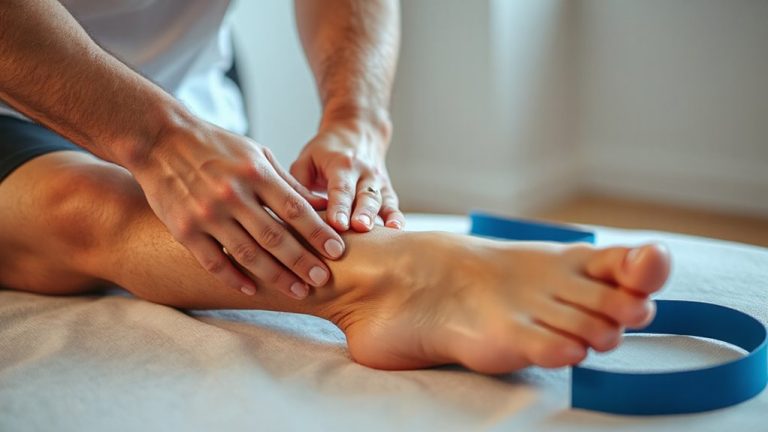
Muscle imbalances and faulty movement patterns don’t correct themselves-they adapt, worsen, and often become the blueprint for recurring injury. You’ve likely compensating without realizing it, creating uneven stress across your body. Physical therapy targets these issues by restoring muscle symmetry and improving joint alignment through guided exercises and hands-on techniques. A therapist assesses how you move, then designs a plan that reprograms dysfunctional patterns. Manual care-like joint mobilizations and soft tissue work-helps release restrictions and reset neuromuscular control. This combo isn’t just about relief; it’s about rebuilding proper biomechanics. You’ll notice improved stability, smoother motion, and fewer flare-ups. Evidence shows interventions focusing on symmetry and alignment reduce recurrence rates markedly. It’s not a quick fix, but consistent, skilled care reshapes how your body functions. When done right, physical therapy and manual care lay the foundation for lasting recovery.
Break the Pain Cycle With Shockwave Therapy
While your body tries to heal itself, chronic pain from long-standing injuries often stalls progress, locking you into a cycle of inflammation and dysfunction-this is where shockwave therapy steps in. This non-invasive treatment uses high-energy acoustic waves to stimulate cellular repair, offering both pain suppression and inflammation reduction. You’ll typically feel a tapping sensation during sessions, each lasting about 15 minutes. Clinical studies show significant improvement in conditions like plantar fasciitis and tendinopathy, with many patients reporting reduced discomfort after just a few treatments. Unlike medications, shockwave therapy doesn’t mask symptoms-it addresses the root cause by jumpstarting tissue regeneration. Though not pain-free, side effects are minimal compared to surgery. When combined with physical therapy, it enhances recovery outcomes, making it a credible addition to modern rehabilitation protocols. It’s not a standalone fix, but part of a broader, integrated approach to healing. Home users can now access clinical-grade results with best shockwave therapy machines designed for personal use.
Track and Correct Movement With Wearable Biofeedback
A growing number of athletes and rehab patients are turning to sensor-guided garments and smart wearables to fine-tune recovery-because correcting movement isn’t just about strength, it’s about accuracy. These devices deliver real time feedback on your biomechanics, alerting you when form deviates from ideal patterns. Whether it’s a smart sleeve tracking knee alignment or a posture-correcting vest, the data helps you adjust mid-movement, reinforcing safer habits. This isn’t just about performance-it’s a tool for injury prevention, especially crucial when recovering from chronic overuse. Studies show consistent use reduces compensatory motions that lead to re-injury. While not a replacement for clinical evaluation, wearables bridge the gap between therapy sessions, offering continuous monitoring. Their real value lies in integration: pairing biofeedback with guided rehab exercises enhances motor learning. Over time, this awareness helps retrain muscle memory, making correct movement instinctive. For long-term recovery, these tools offer a measurable, proactive edge.
Heal Damaged Tissue Using Regenerative Injections
Envision your body’s own healing power boosted by medical innovation-regenerative injections do just that, targeting stubborn tissue damage that’s resisted rest, rehab, or even surgery. You’re not just managing pain; you’re addressing the root cause. Platelet therapy, or PRP, uses your concentrated blood platelets to accelerate tissue repair, showing strong results in tendons and ligaments. It’s minimally invasive and leverages your body’s natural growth factors. Stem cell injections go a step further, potentially regenerating damaged cartilage or degenerated discs by introducing cells that can differentiate into needed tissue types. While research is still evolving, early outcomes suggest meaningful improvement for chronic issues, especially when combined with targeted rehab. These treatments aren’t magic, but they’re a promising upgrade over traditional options. They work best when personalized-your injury type, history, and physiology guide the choice between platelet therapy and stem cell solutions.
Build Your Hybrid Recovery Plan for Long-Term Relief
Because healing chronic injuries demands more than a single approach, your best path forward lies in crafting a hybrid recovery plan-one that blends cutting-edge treatments like regenerative injections with proven rehab strategies and purpose-built fitness gear. You’ll need consistent physical therapy to rebuild strength, paired with wearable tech that tracks movement and recovery metrics in real time. Mindset shifts are essential: view setbacks as data, not failure. Lifestyle adjustments-like improving sleep quality, managing stress, and modifying daily movement patterns-support long-term healing. Tools like anti-gravity treadmills or neuromuscular stimulation devices aren’t just for athletes; they’re practical for anyone reducing joint load during rehab. Recovery can also be accelerated with targeted circulation support, making leg compression boots a valuable addition to your recovery toolkit. The real value comes from integrating these tools with behavioral change. Done right, your hybrid plan isn’t just about recovery-it’s about building resilience, ensuring you return stronger, smarter, and less prone to re-injury. Your body adapts when you give it the right mix of innovation, discipline, and care.
On a final note
You’re not stuck with chronic pain-combining physical therapy, shockwave therapy, and regenerative injections targets both symptoms and root causes. Wearable biofeedback helps correct movement in real time, reducing re-injury risk. This hybrid approach integrates proven traditions with cutting-edge tech for lasting recovery. It’s not just about healing tissue; it’s about rebuilding function, strength, and confidence through precise, data-driven care that adapts to your body’s needs.