How to Perform Eccentric Single-Leg Squats on a Deficit for Hip Strength
Stand on a 1–2 inch deficit to safely deepen your range of motion, then lower yourself slowly on one leg for 3–5 seconds to build eccentric strength. Keep your foot neutral, knee aligned with toes, and resist leaning or hip drop. This controlled descent maximizes glute and stabilizer activation while promoting resilient tissue. Pair with progressive overload and only advance when form stays solid-consistency here leads to stronger, more stable hips over time, especially when recovery and technique go hand in hand.
Notable Insights
- Use a 1–2 inch deficit to safely increase range of motion while maintaining joint stability and proper alignment.
- Lower yourself slowly for 3–5 seconds to maximize time under tension and glute activation during the eccentric phase.
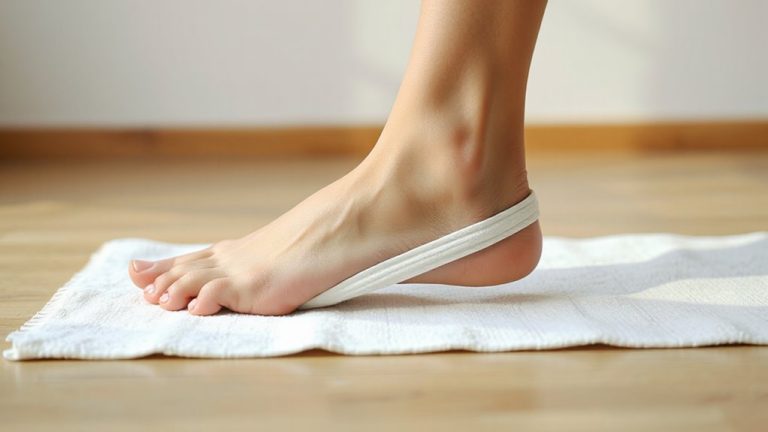
- Keep your foot flat, weight on the heel and midfoot, and align your knee with your second and third toes.
- Prevent hip drop by engaging glutes and abductors, and use mirror feedback to maintain form.
- Progress to full unassisted reps only after achieving consistent 4-second eccentric control with stable, full-depth squats.
Build Hip Strength With Eccentric Overload
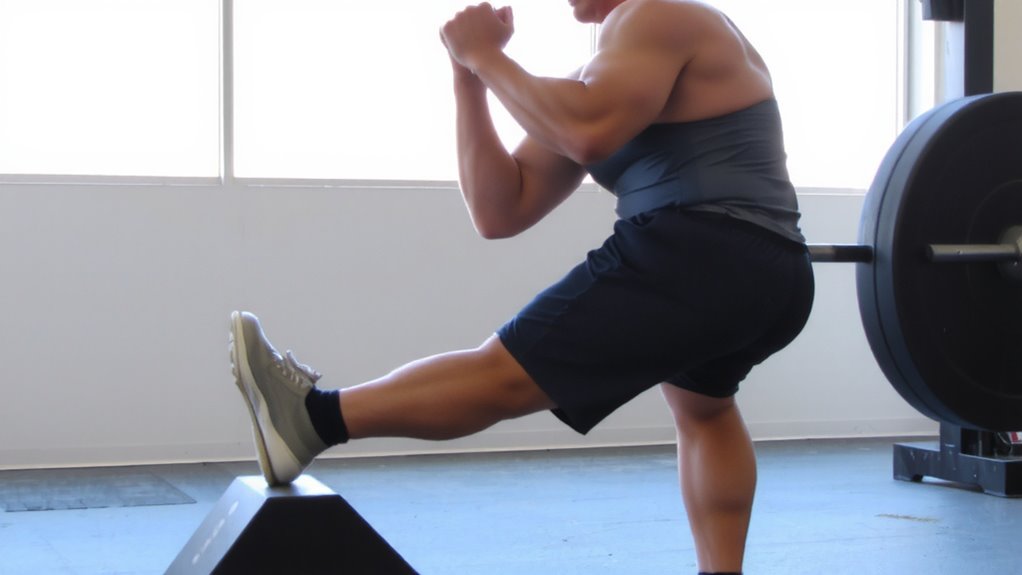
While most people focus on the upward phase of a squat, it’s actually the slow, controlled descent-known as the eccentric policity-that can deliver superior gains in hip strength when properly overloaded. You’re not just lowering your body; you’re actively resisting gravity, which increases time under tension and recruits more muscle fibers in the glutes and hip stabilizers. By emphasizing eccentric focus, you create microtears that, when recovered, build stronger, more resilient tissue. Pair this with systematic load progression-adding weight or resistance gradually-and you guarantee continuous adaptation without compromising form. This method outperforms traditional reps in building functional strength, especially when performed on a deficit. The right fitness gear, like stable lifting shoes and supportive apparel, enhances control and alignment, making each repetition safer and more effective. Consistent eccentric overload, supported by proper recovery tools, becomes a cornerstone of lasting hip development.
Set the Right Deficit Height for Your Mobility
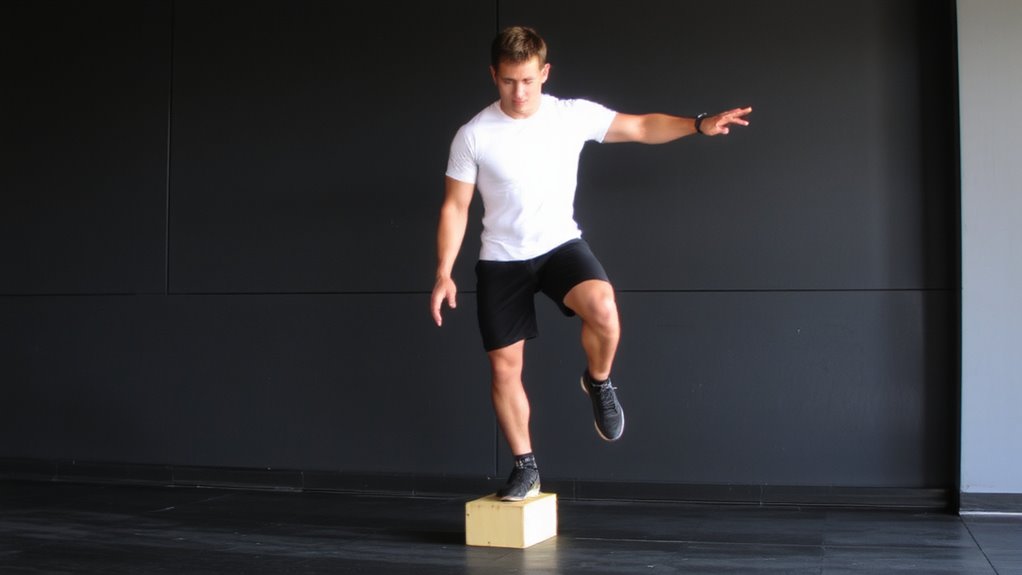
Since your hip and ankle mobility directly influence squat depth and control, you’ll want to set your deficit height just high enough to challenge your range of motion without compromising your form. Too high a deficit forces your joints into excessive flexion, risking poor alignment and reduced joint stability. Start with a 1–2 inch elevation-like a small weight plate or step-to gauge your comfort and control. This modest height often provides enough range to engage the glutes and hip extensors fully while maintaining proper alignment. As mobility improves, you can gradually increase the deficit, but only if form stays consistent. Avoid chasing depth at the expense of stability; uncontrolled descent defeats the purpose. A well-chosen deficit enhances muscle activation without overloading vulnerable joints, making it a smart, sustainable approach. Focus on precision, not height-your hips, knees, and ankles will respond better with balanced progression.
Use Slow Lowering to Maximize Strength Gains
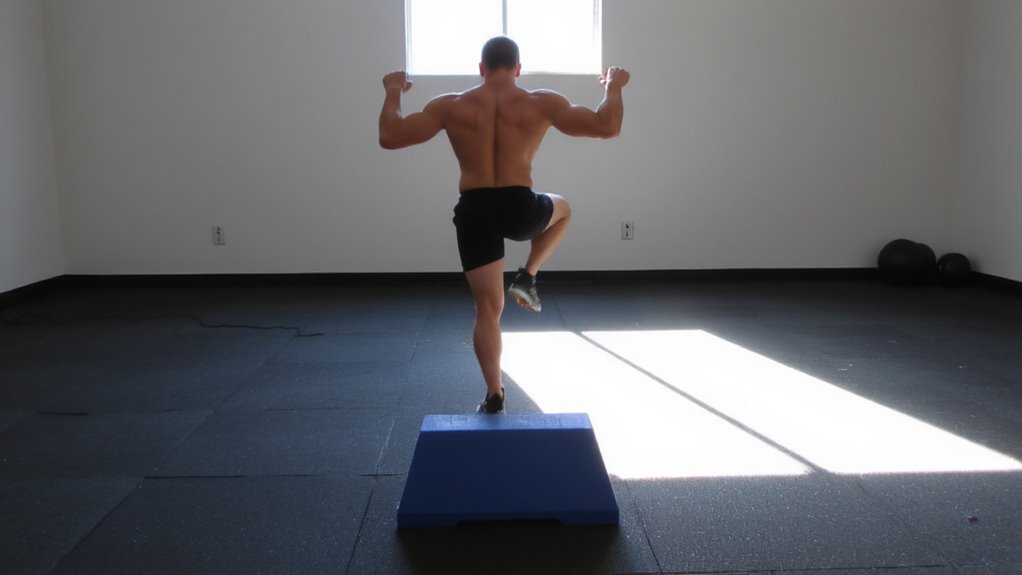
You’ll often get more out of eccentric single-leg squats by slowing down the lowering phase, turning each repetition into a controlled strength-building opportunity. This increased muscle time under tension forces your hips and glutes to adapt, driving greater strength gains. A deliberate tempo enhances control focus, helping you engage the right muscles without relying on momentum. To optimize results, target a 3-5 second descent. Below are tempo variations and their effects:
| Tempo (sec) | Muscle Time | Control Focus |
|---|---|---|
| 2 | Moderate | Low |
| 3 | High | Medium |
| 4 | Very High | High |
| 5 | Maximal | Very High |
| >5 | Excessive | Diminishing |
Tempos between 3–5 seconds offer the best balance of workload and form integrity. Longer durations increase fatigue but may compromise control focus if form breaks down. Stick to controlled lowering to maximize strength without sacrificing joint safety or motor precision.
Stop Leaning or Hip Collapse in Single-Leg Squats
Slowing down your descent in single-leg squats builds serious strength, but even perfect tempos won’t fix balance issues if your form breaks down under load. If you’re leaning excessively or your hip collapses inward, you’re likely compromising both performance and joint safety. Proper foot positioning is key-place your foot straight ahead, weighted through the heel and midfoot, to create a stable base. This alignment supports better force distribution and reduces strain. Focus on keeping your knee aligned over your second and third toes throughout the movement; let it drift inward, and you’ll trigger imbalances that undermine glute activation. Hip drop usually stems from weak abductors or poor motor control, not just fatigue. Use a mirror or video check to catch form breakdown early. Correct alignment isn’t just about technique-it enhances muscle recruitment and protects connective tissues, making each rep more effective and sustainable in the long term.
Advance Safely From Assisted to Full Reps
How do you know when you’re ready to ditch the support and tackle full single-leg squats on your own? It comes down to consistent form cues and honest progress tracking. If you can control the eccentric phase for 4 seconds, reach parallel hips, and maintain a neutral spine without wobbling, you’re close. Use this table to self-assess:
| Rep Quality | Depth | Balance |
|---|---|---|
| Smooth tempo | Full | Minimal sway |
| No hand reliance | Near parallel | Controlled |
| Stable pelvis | Full | One-foot contact |
| Quiet landing | Deep | No arm swing |
| Repeated success | Consistent | Steady |
When these become routine, attempt unassisted reps. Progress gradually-strength builds not in shortcuts, but in disciplined execution and attentive recovery. Trust the data, not ego.
On a final note
You’ve learned how eccentric single-leg squats on a deficit build hip strength by increasing time under tension and targeting muscle imbalances. A proper deficit height guarantees mobility isn’t compromised, while slow lowering boosts neuromuscular control. Correcting lean and hip collapse improves movement efficiency. Progressing from assisted reps guarantees sustainable gains. This method, supported by functional equipment like lifting shoes and stable platforms, enhances strength with measurable carryover to performance and joint resilience when programmed consistently and recovered from properly.