Ankle Mobility Drills With Resistance Band Plantarflexion Circles
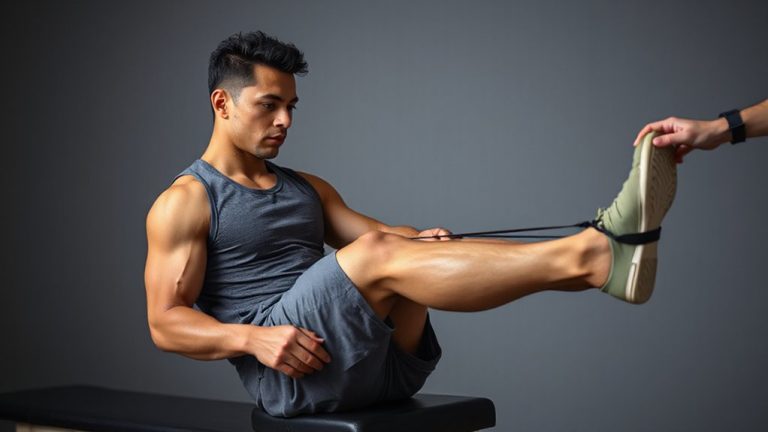
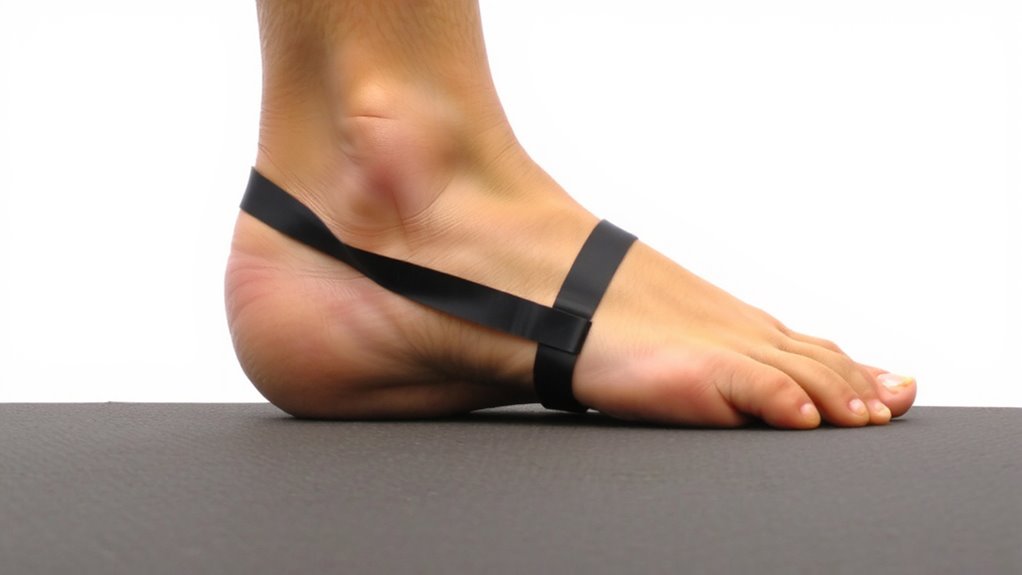
Anchor a resistance band securely and loop it around the ball of your foot, then slowly trace circles with your toes. This drill boosts ankle mobility by combining controlled range of motion with resistance, enhancing joint alignment and neuromuscular control. It strengthens calf and stabilizing muscles better than passive stretches. Use a durable band for consistent tension and safety. Mastering proper form maximizes gains-small adjustments make a noticeable difference over time.
Notable Insights
- Anchor a resistance band securely and loop it around the ball of your foot to perform controlled plantarflexion circles.
- Move slowly through each circle to maximize ankle range of motion and joint alignment.
- Engage calf and stabilizing muscles actively instead of relying on the band’s pull.
- Avoid common errors like ankle rolling or rushing the movement to ensure effective results.
- Perform 1–2 minutes daily per ankle for improved mobility, strength, and injury prevention.
Do This: Plantarflexion Circles With a Resistance Band
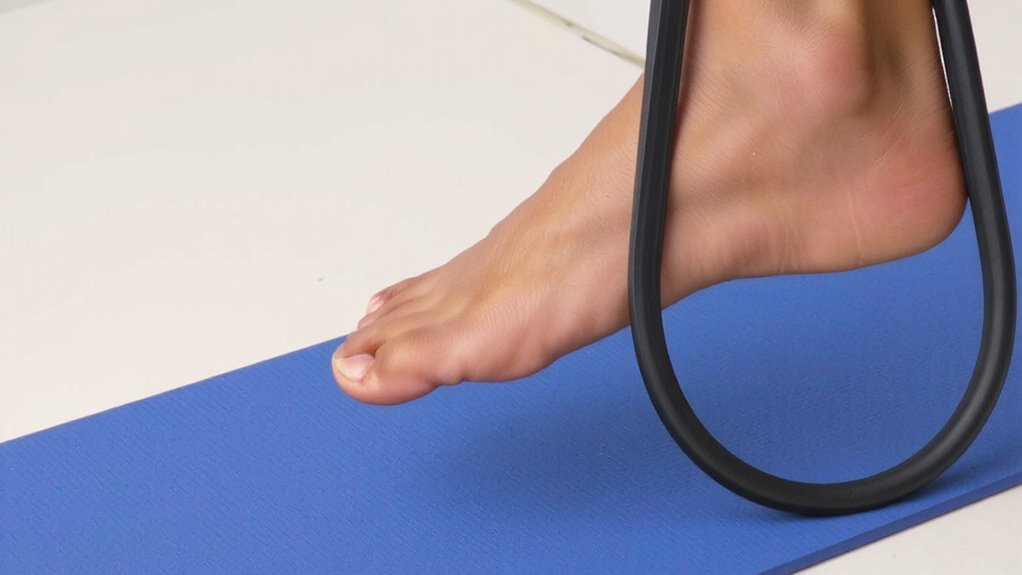
Plantarflexion circles with a resistance band offer a targeted way to improve ankle mobility, especially when done consistently. You anchor the band securely, loop it around the ball of your foot, and slowly trace circles with your toes, engaging the calf and stabilizing muscles. This motion strengthens ankle stability while promoting joint activation, key for injury prevention and functional movement patterns. High-quality bands provide consistent tension, enhancing muscle feedback during rotation. Cheaper versions may slip or snap, compromising safety and effectiveness. Perform 10–15 controlled circles per direction, gradually increasing resistance as strength improves. The exercise integrates well into warm-ups or recovery routines, supporting tendon health and neuromuscular coordination. It’s low-impact, requires minimal space, and adapts easily to rehab or performance goals. Proper form matters-avoid jerking motions to maximize joint activation without strain. Over time, this drill supports resilient, responsive ankles.
How These Circles Improve Ankle Mobility
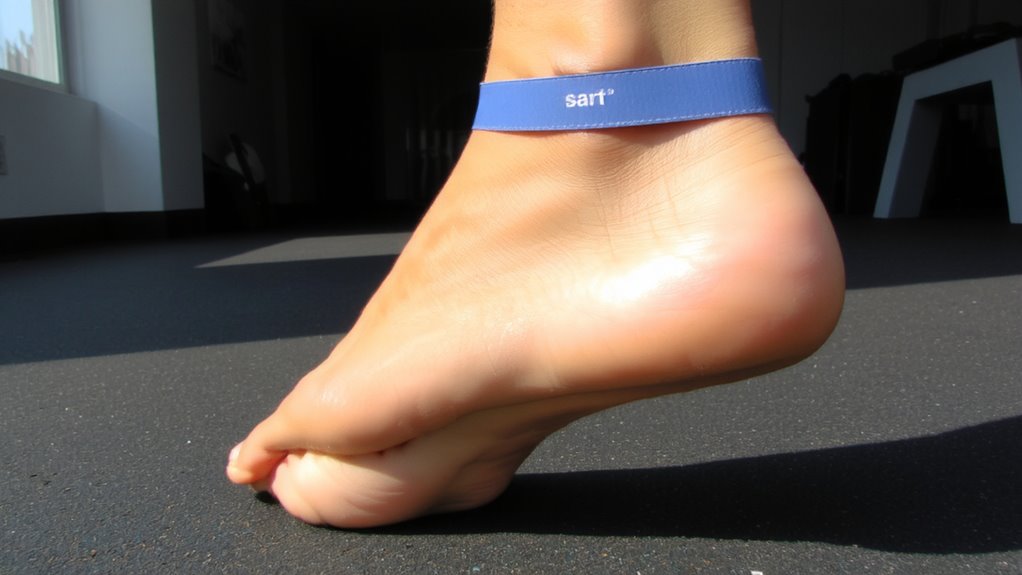
You’re already looping the resistance band around your foot and carving out smooth circles, but it’s worth breaking down just how this simple motion translates into real gains in ankle mobility. These circles boost joint alignment by guiding the ankle through a full, controlled range of motion, reducing stiffness and encouraging balanced movement patterns. The resistance band adds gentle tension, promoting consistent muscle activation in the calf, tibialis anterior, and smaller stabilizing muscles around the ankle joint. This combination enhances neuromuscular coordination, making movements more efficient and reducing injury risk. Unlike passive stretches, plantarflexion circles actively engage the joint, improving both flexibility and strength. Over time, this leads to better performance in activities requiring ankle stability, like running or squats. The drill’s simplicity, paired with its effectiveness, makes it a valuable addition to recovery and maintenance routines, especially when using durable, high-quality resistance bands designed for repeated use.
Fix These Common Plantarflexion Circle Mistakes
Why do some people see quick improvements in ankle mobility while others struggle, even with consistent practice? The answer often lies in overlooked errors during plantarflexion circles. You might be rushing through the motion, sacrificing ankle alignment for reps. Poor alignment-like letting your ankle cave inward or roll outward-reduces effectiveness and risks strain. You should maintain a neutral ankle position throughout. Another common mistake? Inadequate muscle engagement. If you’re relying solely on the band’s pull instead of actively controlling the movement, you’re missing key neuromuscular benefits. Engage your calf, shin, and intrinsic foot muscles deliberately. Without proper engagement, gains stall. These subtle faults undermine progress, even with daily practice. Fixing them isn’t just about form-it’s about intentionality. Correct alignment and active muscle use turn a passive stretch into a mobility-building drill. Pay attention, adjust, and you’ll see real change.
Perform Band Circles With Perfect Form
Form is everything when it comes to building real, functional ankle mobility-especially with resistance band circles. You’ve got to maintain proper joint alignment throughout each rep: keep your leg stable, foot neutral, and avoid letting your ankle cave inward or twist outward. That’s how you develop true ankle stability, not just movement for the sake of movement. Engage your core slightly, and don’t let your hips rock-stay locked in place so the work stays isolated to the ankle. Control every inch of the circle, both clockwise and counterclockwise, resisting the band’s pull without jerking. A quality resistance band with consistent tension helps; cheap ones snap or stretch unevenly, compromising form. Move slowly, focus on precision, and you’ll train your joint to move correctly under load. Perfect form isn’t flashy, but it’s the foundation of lasting mobility, injury resilience, and smooth, efficient movement patterns.
Add the Drill to Your Daily Routine
Once you’ve mastered the precision of band circles with clean form, the next step is making them a consistent part of your movement practice. Consistency benefits go beyond mobility gains-they prime your joints for daily loading, improve neuromuscular control, and reduce stiffness over time. The resistance band’s lightweight, portable design makes routine integration easy: perform the drill during a morning warm-up, post-workout cooldown, or even while sitting at your desk. Commit to 1–2 minutes per ankle daily, and you’ll notice improved range of motion and reduced tightness within weeks. Unlike bulkier fitness gear, this simple tool delivers high ROI with minimal setup. Done regularly, the drill doubles as both preventive maintenance and functional rehab. You don’t need complexity-just disciplined, repeated use. The truth is, long-term joint health hinges not on intense sessions but on smart, daily habits. With routine integration, plantarflexion circles become more than a drill-they become a mobility micro-habit that supports everything else you do.
On a final note
You’ll find plantarflexion circles with a resistance band effective for boosting ankle mobility and joint stability. They target the calf and foot muscles precisely, promoting circulation and tissue recovery. Used consistently, they support injury prevention and movement efficiency. The band adds light resistance, enhancing neuromuscular control. Just make sure proper form-avoid rushing or using excessive tension. This drill integrates smoothly into warm-ups or cooldowns, offering measurable functional gains without overcomplication.