How to Design Proprioceptive Training Programs for Field Sport Athletes
You should start by analyzing your sport’s movement demands and identifying any neuromuscular control gaps. Build foundational balance with static drills on stable surfaces, ensuring proper joint alignment. Progress to dynamic, reactive exercises like agility cuts and visual tracking that mimic real-game decisions. Add unstable surfaces and sport-specific contact cues strategically to sharpen joint awareness. Track sway velocity, stabilization time, and symmetry to guide progression-your training must evolve with your performance gains if you’re to stay ahead.
Notable Insights
- Analyze sport-specific movement and cognitive demands to tailor proprioceptive training effectively.
- Begin with foundational static balance drills on stable surfaces to ensure proper joint alignment.
- Progress to dynamic, reactive exercises that mimic real-game agility and decision-making needs.
- Incorporate unstable surfaces and sport-like contact cues to enhance joint position awareness.
- Track balance metrics regularly to guide progression and ensure performance transfer.
Assess Sport Demands and Athlete Gaps
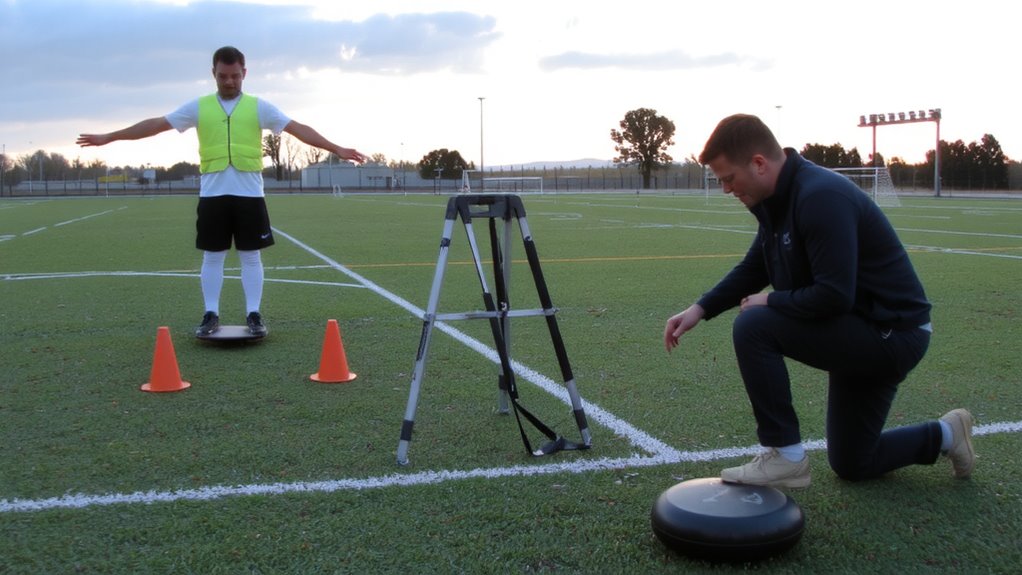
A smart starting point in crafting effective proprioceptive training for athletes is digging into the specific movement demands of their sport and identifying where their neuromuscular control falls short. You’ve got to assess how much visual focus their position requires-goalkeepers, for instance, track fast-moving objects while adjusting balance, increasing cognitive load. Field players constantly shift direction under pressure, so their training must mirror those multitasking demands. If you overlook sport-specific patterns, you risk building stability in contexts that don’t transfer to real performance. Evaluating movement gaps lets you tailor drills that challenge coordination without overwhelming processing capacity. Tools like wobble boards or foam pads help, but only if integrated with tasks that simulate in-game decision-making. Simply adding instability isn’t enough-you need precision, progression, and purpose. Matching proprioceptive stimuli to actual athletic load guarantees adaptations stick and reduce injury risk long-term.
Start With Foundational Proprioceptive Drills
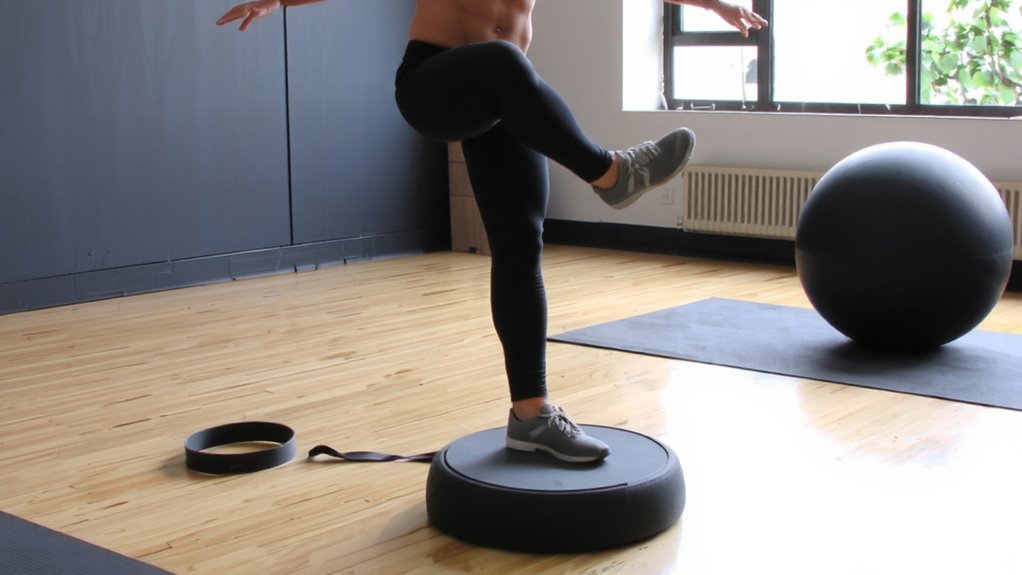
You’ve pinpointed the movement demands of the sport and zeroed in on where the athlete’s neuromuscular control isn’t keeping up-now it’s time to build stability from the ground up. Start with foundational proprioceptive drills that emphasize static balance and proper joint alignment. These drills-like single-leg stands, tandem stances, and controlled weight shifts-help recalibrate the body’s ability to sense position and adjust without movement. They’re simple but effective, especially when performed on stable surfaces initially. Good joint alignment reduces compensatory patterns, while consistent static balance work sharpens feedback between muscles and the nervous system. Don’t rush this phase; mastering these basics strengthens motor control and prepares the athlete for more dynamic challenges. Use mirrors or video feedback to monitor form, guarantee accuracy, and track improvement. These drills aren’t flashy, but their impact on coordination, injury resilience, and movement efficiency is well-supported in training literature.
Progress to Reactive, Sport-Specific Movements
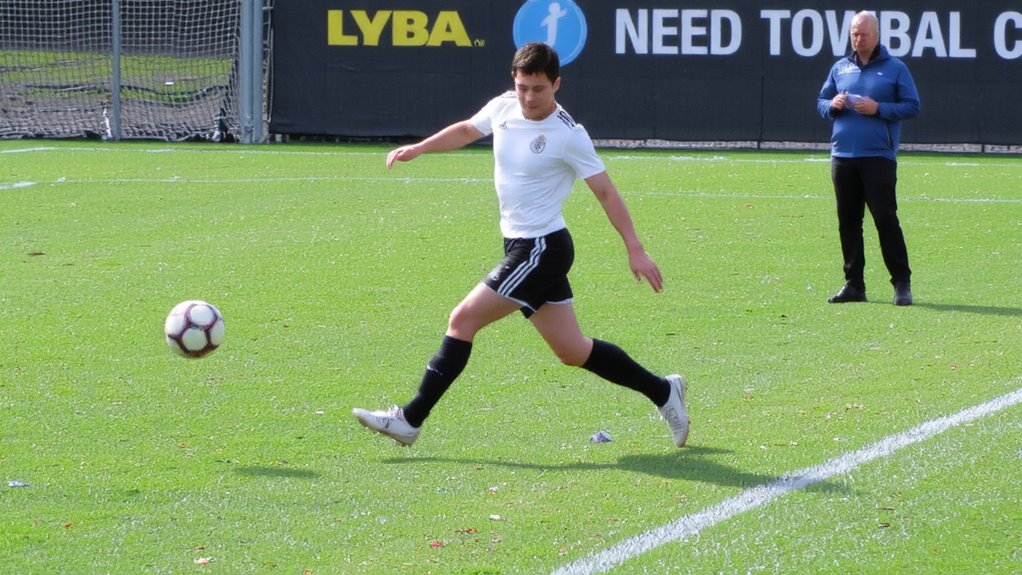
How do you bridge the gap between basic balance and real-game demands? You progress to reactive, sport-specific movements that mimic actual play. This means shifting from static holds to dynamic actions requiring split-second decisions. Agility training becomes key-ladder drills, cone cuts, and change-of-direction sprints train your body to stabilize under load while moving efficiently. Incorporating visual tracking-for example, reacting to a coach’s hand signals or a moving ball-enhances neuromuscular coordination and sharpens on-field awareness. These drills demand precision and timing, not just strength. You’re not just moving; you’re responding. That’s where true proprioceptive gains happen. By simulating game-like scenarios, you condition the nervous system to process input faster and adjust movement in real time. It’s structured chaos that builds dependable control.
Integrate Unstable Surfaces and Contact Cues
While stable ground forms the foundation of movement, introducing unstable surfaces takes proprioceptive training into higher-demand territory where control truly gets tested. You’ll find that using unstable surfaces-like balance pads, wobble boards, or foam trainers-forces your neuromuscular system to adapt rapidly, sharpening joint position awareness and dynamic stability. These tools aren’t just gimmicks; when applied correctly, they enhance ankle and knee joint control during unpredictable movements. Pairing these with sport-specific contact cues-such as a light shoulder tap during a single-leg squat or a timed bump during a lunge-mimics real-game collisions. These contact cues train you to stabilize instantly under load, just like in match scenarios. The combo builds reactive resilience, critical for field sport athletes who must maintain control amid chaos. Just make certain progression aligns with skill level-too much instability too soon increases injury risk.
Track Balance Gains and Adjust for Performance
Isn’t it surprising how often athletes skip measuring progress in balance, despite its clear impact on performance and injury prevention? You can’t improve what you don’t track. By monitoring balance metrics like sway velocity, time-to-stabilization, and symmetry scores, you gain objective insight into neuromuscular control. These data points help determine when an athlete has hit key performance thresholds-critical for returning to play or advancing drills. Without them, training stays guesswork.
| Metric | Target Threshold | Assessment Frequency |
|---|---|---|
| Sway Velocity | <1.5°/sec | Bi-weekly |
| Time-to-Stabilization | <2.0 seconds | Weekly |
| Symmetry Index | >90% limb balance | Post-phase |
Regular testing adjusts programming with precision, ensuring gains translate to dynamic field performance.
On a final note
You’ve built a smart, progressive proprioceptive program tailored to field sport demands. Starting with foundational drills and advancing to reactive, sport-specific tasks on unstable surfaces guarantees athletes develop real-world stability. Tracking balance gains lets you tweak for performance. Good recovery gear-like compression wear and foam rollers-supports adaptation. It’s not just training hard; it’s training wisely, with gear and progression that match athletic needs.