Cervical Mobility Drills With Supine Chin Tucks and Nods
You can prevent neck pain by restoring control with supine chin tucks and nods, which target deep cervical flexors often neglected in daily life. Lying on your back with knees bent, gently tuck your chin to create a double chin, keeping your head on the surface. This precise glide improves joint alignment, enhances nerve mobility, and re-educates movement patterns. Avoid common errors like neck extension or head lifting-focus on slow, controlled reps. Combining these drills into a short routine boosts spinal health more effectively than passive supports. You’ll discover how small, consistent movements yield lasting improvements.
Notable Insights
- Supine chin tucks improve cervical mobility by activating deep neck flexors with proper nodding motion.
- Perform chin nods lying on your back, keeping head contact with the surface throughout the movement.
- Focus on slow, controlled glides to enhance joint repositioning and neuromuscular control.
- Avoid common errors like head lifting, jaw clenching, or neck rotation during the drill.
- Include 10 reps of chin tucks and nods in a 5-minute daily routine for optimal neck health.
Why Cervical Mobility Stops Your Neck From Hurting
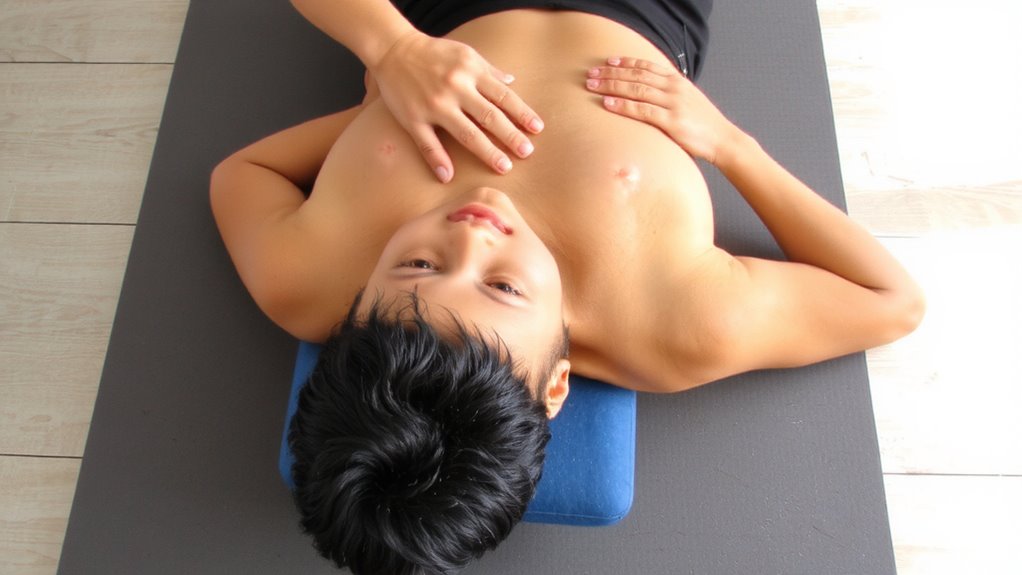
While poor posture and repetitive strain often sneak up on you, staying ahead of neck pain means addressing cervical mobility before discomfort sets in. You rely on consistent joint health to maintain smooth, pain-free neck movement, and stiff cervical segments increase wear on discs and ligaments over time. Limited motion can compress critical structures, directly affecting nerve function and potentially causing tingling or weakness in the arms. Daily mobility work supports circulation, nutrient exchange in spinal tissues, and ideal alignment-factors that equipment like ergonomic pillows or posture trainers may assist but can’t replace through passive use alone. Active drills outperform reliance on fitness gear because they strengthen intrinsic neck stabilizers and retrain neuromuscular control. You’ll notice improved head positioning and reduced strain when working at a desk or looking at your phone. Prioritizing movement quality now protects long-term joint health and preserves clear nerve function, keeping dysfunction at bay before it starts. A supportive sleeping setup, including the right best cervical pillows, can complement these mobility efforts by maintaining proper neck alignment overnight.
How to Do Supine Chin Tucks the Right Way
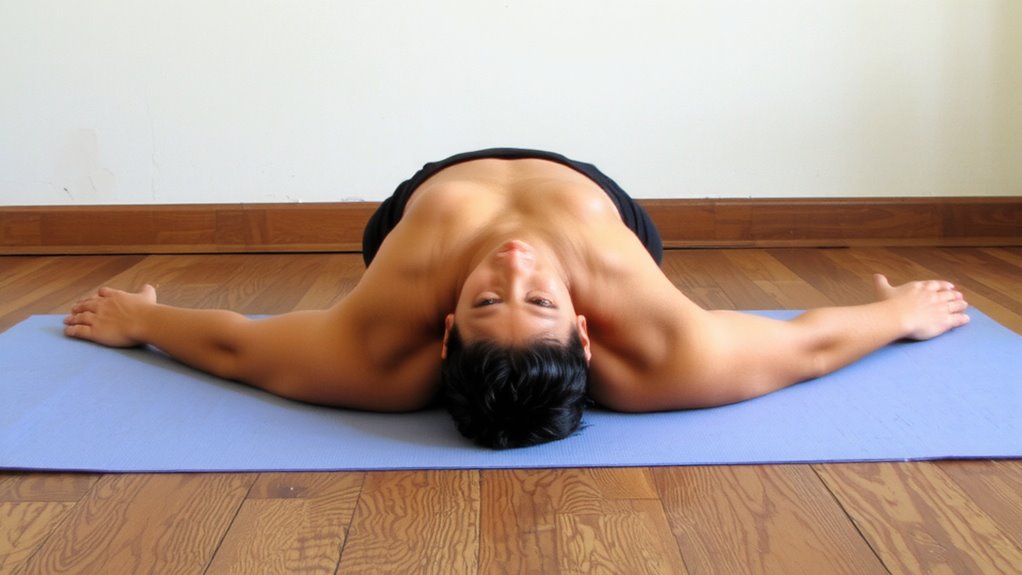
The supine chin tuck is a foundational cervical mobility drill that targets deep neck flexors and promotes proper alignment of the head over the spine. You’ll lie on your back, knees bent, and gently nod your chin downward as if making a double chin. Focus on muscle activation without lifting your head-just a subtle glide. Keep your eyes forward and avoid tilting your head down too hard. This motion re-educates neck posture and builds endurance in stabilizing muscles. To guarantee effectiveness, check these key cues:
| What to Do | What to Avoid |
|---|---|
| Gently tuck your chin | Lifting head off the floor |
| Keep skull grounded | Over-rotating the neck |
| Feel tension under jaw | Holding your breath |
| Maintain slow movement | Rushing through reps |
Proper alignment and consistent muscle activation guarantee long-term neck health and movement efficiency. Using the right cervical pillow can further support proper spinal alignment during sleep, enhancing the benefits of daily mobility work.
Perform the Supine Chin Nod for Better Neck Movement
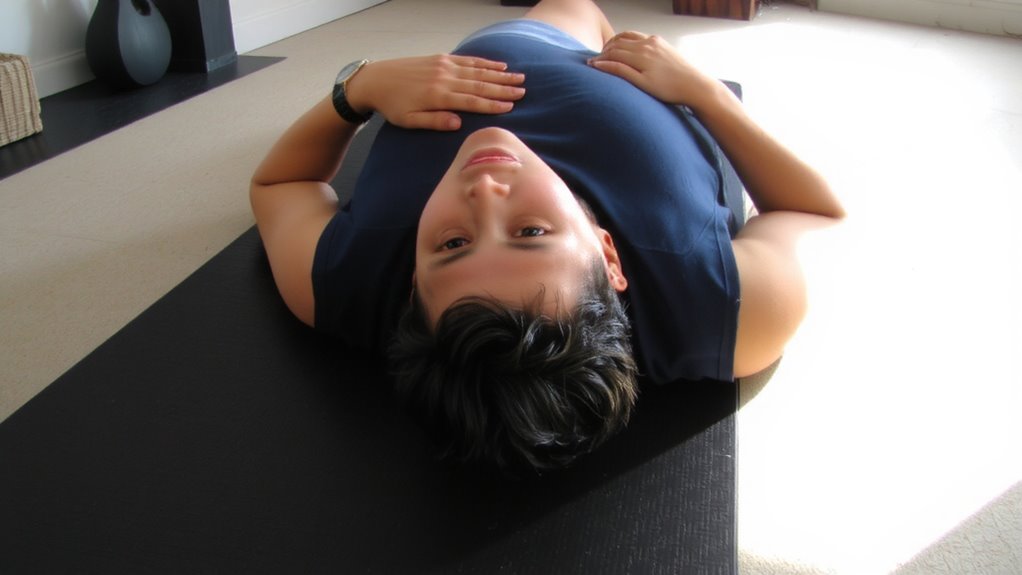
Think of the supine chin nod as a precision tool for fine-tuning cervical control-it’s subtle but packs a punch when done right. You’re not just moving your neck; you’re retraining neuromuscular patterns essential for healthy movement. Unlike basic chin tucks, the chin nod emphasizes a small, controlled glide of the head straight backward, aligning the cervical spine without flexing the entire neck. This motion supports joint repositioning exercises by improving proprioception and restoring proper segmental alignment. When paired with neural gliding techniques, it enhances nerve mobility, reducing stiffness and discomfort caused by poor posture or prolonged sitting. Done regularly, the drill boosts coordination between deep neck flexors and stabilizers, making it a smart addition to recovery routines, especially if you use fitness gear like foam rollers or resistance bands. It’s low-risk, high-reward-ideal for maintaining long-term cervical health without strain or overexertion. For targeted relief between sessions, consider using a neck decompression device to support spinal alignment and reduce disc pressure.
Common Mistakes in Cervical Mobility Drills
Why do so many people struggle to gain real mobility from cervical drills despite consistent effort? You’re likely making subtle but critical errors. One common mistake is performing chin tucks with neck extension instead of pure nodding, which reinforces improper movement patterns. If you’re not lying flat in a true supine position, your results will be compromised. Overhead posture during drills shifts focus away from deep cervical flexors, recruiting larger neck muscles that mask weakness. This can worsen existing muscle imbalance, especially if you spend hours at a desk. You might think you’re engaging the right muscles, but without proper feedback-like a mirror or physical cueing-form deteriorates. Also, rushing reps sacrifices neuromuscular control for quantity, reducing effectiveness. For lasting change, precision beats repetition. Address these flaws, and your drills will actually reprogram movement, not just mimic it.
Build a 5-Minute Daily Routine for Neck Relief
You’ve likely been performing cervical drills with small errors that limit progress, but fixing those mistakes opens the door to real improvement-now it’s time to put that precision to work in a focused, daily routine. Start by lying supine, knees bent, spine neutral. Perform 10 slow chin tucks, emphasizing neck alignment-your head should glide straight back, not lift or tilt. Follow with 10 gentle nodding motions, maintaining contact between your head and the floor. These movements boost deep neck flexor muscle activation, supporting postural stability. Repeat the sequence twice, taking care to breathe steadily and avoid jaw clenching. This 5-minute protocol enhances mobility, reduces stiffness, and reinforces proper movement patterns critical for long-term neck health. Consistent practice yields measurable improvements in comfort and control, especially when paired with mindful posture during daily activities. Equipment isn’t needed, though a firm mat improves comfort and form.
On a final note
You’ve seen how supine chin tucks and nods improve cervical mobility by activating deep neck flexors and aligning the spine correctly. When done consistently, these drills reduce stiffness and prevent strain. Pair them with quality recovery gear-like contoured pillows or posture trainers-for better results. The routine’s simplicity makes it sustainable, and its effectiveness is backed by biomechanics. Done right, it’s a practical, low-effort investment in long-term neck health.