The Science of Yoga Nidra for Athletic Recovery and Performance Enhancement
You’re not just rebuilding muscle when you recover-you’re recalibrating your nervous system, and that’s where Yoga Nidra makes a difference. This guided practice drops your brain into theta states, boosting parasympathetic activity, slashing cortisol, and cutting inflammation more effectively than passive rest. It sharpens focus, speeds reaction time, and improves sleep architecture, giving you deeper recovery in less time. Paired with smart training and recovery gear, it’s a practical edge. There’s more to how it transforms performance from the inside out.
Notable Insights
- Yoga Nidra shifts brainwaves from beta to theta states, promoting deep rest and neurological recovery akin to early stages of sleep.
- It enhances parasympathetic activity, reducing sympathetic overdrive and improving heart rate variability for better stress resilience.
- The practice significantly lowers cortisol levels, decreasing inflammation and accelerating physical recovery post-exercise.
- Theta wave induction during Yoga Nidra sharpens focus, reaction time, and mental clarity, enhancing athletic performance.
- Regular use improves sleep architecture by increasing deep sleep and REM balance, leading to superior restorative recovery.
Why Athletes Need More Than Physical Recovery

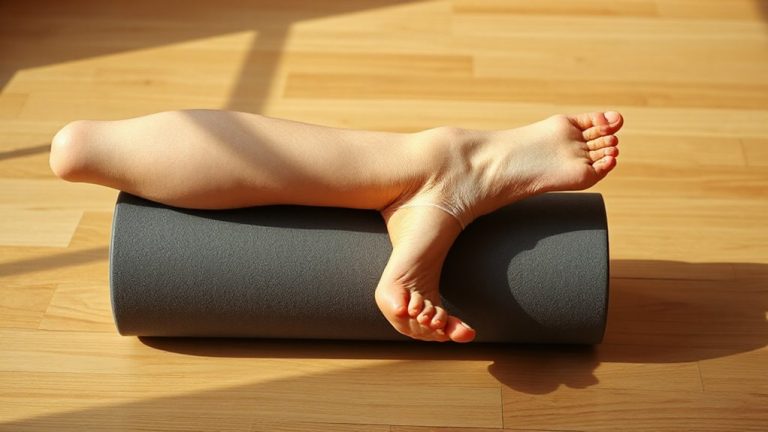
While physical training pushes the body to adapt and grow stronger, you might not realize that true recovery extends far beyond rest and muscle repair. As an athlete, your performance hinges not just on physical conditioning but on mental resilience and emotional balance-factors often overlooked in recovery protocols. Persistent training without addressing psychological strain can lead to burnout, impaired focus, and reduced motivation. Fitness recovery isn’t complete when only muscles are healed; your nervous system needs recalibration too. Unlike passive rest or standard recovery gear-foam rollers, compression sleeves-practices supporting mental and emotional regulation offer deeper restoration. These elements directly influence injury prevention, consistency, and long-term athletic sustainability. Ignoring them limits overall adaptation. You need recovery that integrates mind and body, not just repairs tissue. Without that holistic approach, even the most advanced fitness gear falls short in delivering peak readiness. True recovery prepares you to perform, not just recover.
Understanding Yoga Nidra: The Basics and Mechanism

A state of deep relaxation awaits you with Yoga Nidra, a guided practice that bridges the gap between wakefulness and sleep, offering a scientifically supported method for resetting both mind and body. You remain in a state of conscious sleep, where awareness stays present even as your body deeply rests. This isn’t ordinary relaxation-your brain waves shift from active beta to slower theta patterns, similar to those seen in deep meditation or the early stages of sleep. These changes support mental clarity and emotional regulation, essential for athletes. Unlike passive recovery, Yoga Nidra actively guides you through body scans and breath awareness, maintaining subtle engagement. The practice demands no equipment or gear, making it efficient and accessible. It’s not just downtime-it’s a structured mental reset backed by neuroscientific evidence, optimizing the mind’s role in physical recovery without strain or logistical complexity.
How Yoga Nidra Resets the Athlete’s Nervous System
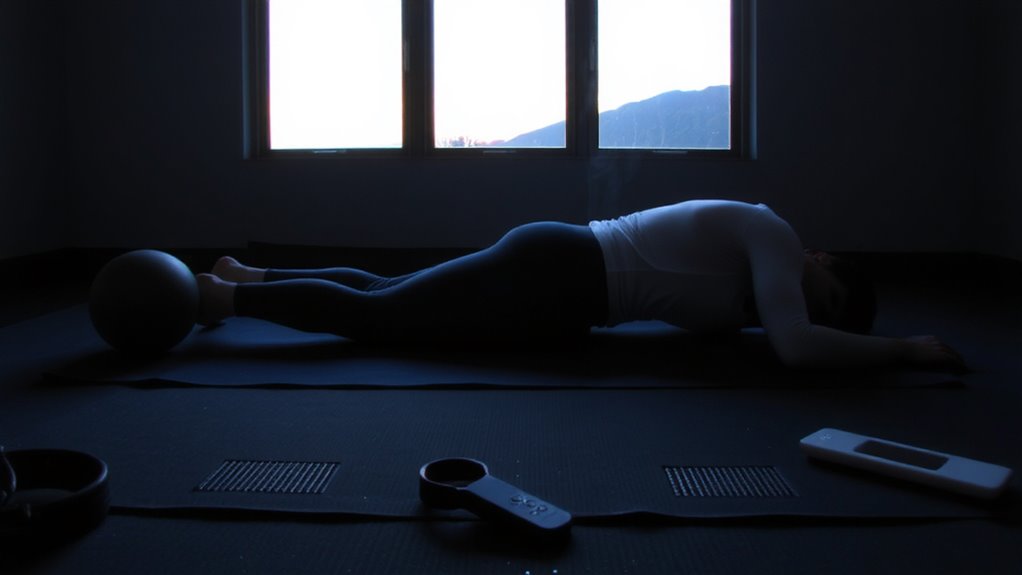
Since your nervous system bears the brunt of intense training loads, it’s no surprise that recovery isn’t just about muscle repair-it’s about recalibrating your autonomic balance, and that’s where Yoga Nidra delivers. Through guided relaxation and directed awareness, you enter a state where brain wave synchronization occurs, shifting from high-frequency beta waves to restorative alpha and theta rhythms. This neural slowdown supports autonomic rebalancing, dampening sympathetic overactivity and enhancing parasympathetic tone. Unlike passive rest, Yoga Nidra actively trains your nervous system to disengage from hyperarousal, a key benefit for athletes prone to overtraining. You’re not just resting-you’re reprogramming stress responses. Studies show consistent practice improves heart rate variability, a marker of autonomic resilience. While fitness gear tracks performance, Yoga Nidra addresses what metrics can’t: the internal environment driving recovery. It’s a low-tech intervention with high-impact neurophysiological returns, making it a practical, accessible tool in any athlete’s recovery protocol.
How Deep Rest Lowers Cortisol and Inflammation
Deep rest isn’t just about feeling refreshed-it’s a physiological state that actively reshapes your body’s stress and inflammatory responses, building on the nervous system regulation you gain from Yoga Nidra. During deep rest, your brain waves slow markedly, shifting into theta and delta ranges associated with profound relaxation and healing. This shift helps suppress cortisol production, reducing systemic inflammation that can delay recovery. You’re not just resting-you’re enabling neuroplasticity, allowing your brain to rewire stress responses for greater resilience. Studies show athletes who engage in structured deep rest experience lower inflammatory markers and cortisol levels post-training. Unlike passive recovery or standard sleep, Yoga Nidra induces this state more efficiently, making it a strategic recovery tool. Recovery isn’t merely downtime; it’s an active process where physiology recalibrates. When paired with quality fitness recovery gear-like supportive mats or temperature-regulated clothing-the effects are enhanced, optimizing the body’s ability to return to homeostasis. Incorporating tools like a high-density foam roller can further support recovery by releasing muscle tension and improving circulation.
Sharper Focus and Faster Reactions After Yoga Nidra
What if you could sharpen your focus and speed up reaction times simply by resting more effectively? Yoga Nidra enhances mental clarity and neural efficiency by guiding your brain into theta waves-linked to deep relaxation and heightened learning. This state allows your nervous system to reset, improving how quickly and accurately you process stimuli. Unlike passive rest, Yoga Nidra actively trains attention regulation, translating to sharper in-game decisions and faster motor responses.
| Benefit | Mechanism | Performance Impact |
|---|---|---|
| Improved focus | Increased theta activity | Enhanced situational awareness |
| Quicker reactions | Optimized neural efficiency | Reduced decision lag |
| Sustained mental clarity | Lower mental fatigue | Consistent performance under pressure |
You’re not just recovering-you’re reprogramming your brain for peak responsiveness. With regular practice, the gains in cognitive control become instinctive, supporting elite-level agility and precision when it matters most.
Proven Benefits: What Studies and Elite Athletes Say
The growing body of evidence around Yoga Nidra’s impact on athletic recovery isn’t just anecdotal-it’s been tested, measured, and validated through both scientific study and real-world performance. You’ll find consistent reports of improved mental clarity and emotional balance after regular practice, especially in high-pressure environments. Studies show reduced cortisol levels, faster heart rate recovery, and better sleep efficiency among athletes using Yoga Nidra. Elite competitors, from Olympic swimmers to pro basketball players, credit it with sharpening focus and accelerating recovery between events. Unlike physical recovery tools that target muscles, Yoga Nidra works on the nervous system, promoting deep restoration without strain. It complements recovery gear like compression devices or foam rollers by addressing the cognitive and emotional demands of training. You’re not just repairing tissue-you’re resetting your mind. When mental clarity and emotional balance are prioritized, performance gains follow.
How to Add Yoga Nidra to Your Training Routine
How can you weave Yoga Nidra into your training without disrupting hard-earned routines? Start by scheduling 15–20 minute sessions post-workout or before bed, aligning with recovery peaks. Use a quiet space and supportive mat-your recovery gear matters, but simplicity wins. Begin with breath awareness to calm the nervous system, priming your body for deeper rest. Follow guided scripts regularly, ensuring consistency. Incorporate mental rehearsal during the hypnagogic state: visualize perfect form, race strategies, or injury recovery, reinforcing neural pathways like elite athletes do. Evidence suggests this dual focus enhances both recovery and performance. Though not a substitute for sleep, Yoga Nidra amplifies rest quality, especially during high-load cycles. Unlike expensive recovery tools, it demands only time and focus. Over weeks, users report sharper focus, faster recovery, and better sleep architecture. Pair it with smart training, and you’ll find Yoga Nidra isn’t just additive-it’s transformative.
On a final note
You’re not just recovering when you practice yoga nidra-you’re optimizing. This deep rest state lowers cortisol, reduces inflammation, and resets your nervous system, supporting faster physical recovery and sharper mental focus. Unlike passive rest, yoga nidra actively enhances neuroplasticity and sleep quality, giving athletes an edge. Used by elites and backed by research, it’s a low-cost, high-return tool. When paired with effective recovery gear, it completes a smart, science-driven regimen.