How to Progress Isometric Holds for Athletes With Chronic Ankle Instability
Start with pain-free isometric holds in a neutral ankle position, targeting the peroneals and tibialis anterior to build foundational stability. Gradually increase hold duration from 15 to 60 seconds over several weeks, ensuring consistent form. Add resistance using bands or light weights only when control is mastered. Progress to single-leg stances on stable surfaces first, then introduce foam or BOSU to challenge balance. Integrate sport-specific positions to condition the ankle under relevant demands. Mastery of each phase reduces re-injury risk and prepares you for more advanced strategies.
Notable Insights
- Begin with pain-free isometric holds in a neutral foot position to activate stabilizing muscles without joint movement.
- Gradually increase hold duration from 15 seconds to 60 seconds over several weeks as tolerance improves.
- Add resistance using bands or light weights during isometric dorsiflexion or inversion to progressively challenge the ankle.
- Progress to single-leg stance holds on stable surfaces before introducing unstable surfaces like foam or wobble boards.
- Ensure pain-free performance, full range of motion, and symmetrical strength before advancing to sport-specific loading.
Start With Foundational Isometric Holds
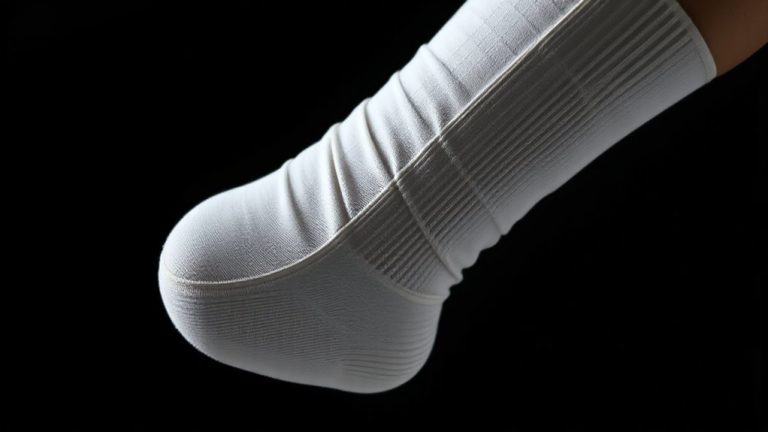
While stability begins from the ground up, you’re better off nailing the basics before chasing advanced moves-starting with foundational isometric holds is one of the most effective ways to rebuild strength and control in an unstable ankle. You’ll begin by positioning your foot in a neutral stance, focusing on proper ankle alignment to prevent excessive inward or outward tilt. This small adjustment guarantees targeted muscle activation in the peroneals, tibialis anterior, and calf complex. Holding static positions-like dorsiflexion or resisted eversion-trains your joint to stabilize under load without movement. You’re not just building strength; you’re re-educating neuromuscular control. The simplicity of these holds makes them efficient for daily rehab, requiring minimal equipment-just a strap or band works. Over time, consistent practice improves joint feedback and reduces wobble during basic activities. It’s a low-risk, high-reward entry point, especially when paired with supportive recovery gear like compression sleeves that enhance proprioception and warmth during rehab. For optimal results, consider using best compression sleeves that provide graduated pressure and durable support throughout rehabilitation.
Increase Isometric Hold Duration Gradually
Because your ankle’s endurance builds over time, you’ll want to slowly increase the duration of each isometric hold-starting with 15 to 20 seconds per set and progressing toward 45 to 60 seconds as tolerance improves. This gradual extension in hold timing enhances neuromuscular control without triggering excessive muscle fatigue. You should only advance when your form stays consistent and discomfort remains low. Extending holds too quickly may compromise joint stability, especially with chronic ankle instability. Think of it like training a muscle to sustain tension efficiently-longer isn’t better if quality drops. Aim for 3–4 sets daily, monitoring how your ankle responds over 1–2 weeks. Proper progression boosts endurance and joint support, laying the groundwork for more challenging resistance later. Consistency in timing guarantees adaptation, reducing injury risk during dynamic movements. This approach reflects sound fitness recovery principles-measured, responsive, and sustainable.
Add Resistance to Your Isometric Holds
You’ve built a base of endurance with longer isometric holds, and now it’s time to challenge your ankle further by adding resistance. Introducing resistance bands is an effective way to progressively overload the joint without excessive joint strain. These bands offer variable tension, letting you control intensity while maintaining proper alignment. Secure the band under your foot and pull it taut against a fixed point to create opposition during dorsiflexion or inversion holds. As stability improves, integrate weighted variations using a light dumbbell or sandbag placed across the top of your foot. This increases demand on the tibialis anterior and peroneal muscles, promoting greater neuromuscular control. Unlike dynamic loading, these methods preserve joint integrity while boosting strength. Consistent use of resistance bands and weighted variations enhances tissue resilience, essential for athletes managing chronic ankle instability. Always prioritize form over load to guarantee targeted muscle engagement and reduce reinjury risk.
Progress to Single-Leg Isometric Holds
How stable is your ankle really when you’re standing on one leg? Single-leg isometric holds challenge your balance control far more than double-leg variations, making them essential for athletes with chronic ankle instability. By removing the support of your non-working leg, you force the injured ankle to bear full load, enhancing proprioceptive feedback and neuromuscular coordination. Start by holding a single-leg stance for 20–30 seconds, keeping your pelvis level and knee aligned over your toes. Focus on engaging the glutes and ankle stabilizers throughout. This movement doesn’t just build strength-it fine-tunes your body’s ability to detect joint position and respond to subtle shifts. Over time, improved proprioceptive feedback reduces injury risk during dynamic tasks. Perform these holds daily, ideally post-workout, to support recovery without adding fatigue. Proper progression here sets the foundation for more advanced stability work.
Use Unstable Surfaces for Isometric Challenges
Standing on one leg on a stable surface already demands significant control, but introducing instability takes the challenge further by amplifying the demands on your neuromuscular system. Using tools like foam pads, BOSU balls, or wobble boards introduces surface variability, making balance training more dynamic and functional. These surfaces disrupt proprioceptive feedback, forcing your ankle stabilizers to work harder during isometric holds. That heightened demand improves joint awareness and strengthens supporting musculature more effectively than stable ground alone. Incorporating surface variability isn’t just about difficulty-it’s about preparing your ankle for real-world conditions where footing is rarely perfect. High-quality unstable surfaces offer consistent resistance and durability, essential for safe, progressive overload. You’ll notice improvements in control and confidence, especially during weight-bearing activities. Just verify you’ve mastered single-leg holds first-adding instability too soon can worsen compensation patterns. This progression bridges foundational strength and dynamic stability.
Make Isometric Holds Sport-Specific
A well-designed isometric program accounts for the specific movement patterns and demands of your sport, because not all ankle stabilization needs are the same across disciplines. You must apply sport specificity to guarantee the exercises prepare your body for real-game stresses. A basketball player, for instance, benefits more from isometric holds in a loaded squat position-mimicking rebounding landings-than generic wall sits. Incorporating sport-specific stances and joint angles enhances functional integration, linking training directly to performance. Use positions that replicate cutting, landing, or pivoting demands, holding them isometrically under load. This trains your neuromuscular system to stabilize efficiently in context. Equipment like resistance bands or split-stance setups can help mirror on-field posture. When isometrics reflect actual biomechanical demands, you improve joint integrity and movement confidence. It’s not just about strength-it’s about training the right strength, in the right position, at the right time.
Prevent Re-Injury With Progressive Isometric Training
Many rehab programs fail to address the full spectrum of mechanical stress that an injured ankle must endure, but you can close that gap with progressive isometric training. By gradually increasing hold duration and resistance, you enhance tendon stiffness and joint stability, which are critical for long-term recovery. This method isn’t just about strength-it integrates proprioception training, helping your body sense ankle position under load. Combined with neuromuscular control work, isometrics retrain the reflexive muscle responses needed to prevent rolling or twisting during dynamic movements. You’ll notice improved balance and precision when changing directions or landing awkwardly. Unlike traditional rehab, progressive isometrics simulate real-world demands, preparing your ankle for sport-specific challenges. Equipment like resistance bands or isometric trainers can support consistency, but bodyweight variations are equally effective when properly progressed. The key is systematic overload, ensuring the joint adapts safely and fully before returning to play.
On a final note
You’ve built a solid base with isometric holds, gradually increasing duration and resistance while progressing to single-leg and unstable surface variations. This structured approach enhances ankle stability and neuromuscular control, essential for athletes with chronic instability. When paired with proper recovery techniques and supportive fitness gear-like compression sleeves or well-cushioned training shoes-these exercises reduce re-injury risk. Consistent, progressive loading guarantees long-term joint resilience and functional performance in sport-specific movements.