Cervical Mobility Drills With Gentle Neck Rolls to Improve Circulation
You can ease shoulder tension and boost circulation with cervical mobility drills like gentle neck rolls. These movements restore natural neck alignment, reduce overactivity in tight trapezius muscles, and improve blood flow to fatigued tissues. Slow, controlled rolls help flush metabolic waste and maintain joint health without straining connective tissue. Avoid common mistakes like dropping your head back or rolling too fast. Consistency matters more than intensity-small daily efforts bring lasting benefits. There’s more to discover about aligning form and recovery rhythm.
Notable Insights
- Gentle neck rolls enhance cervical circulation by promoting blood flow to fatigued neck and shoulder tissues.
- Slow, controlled half-circle motions help maintain joint alignment and prevent strain during cervical mobility drills.
- Performing 5–6 reps in each direction stimulates oxygen delivery and metabolic waste removal from muscles.
- Avoid fast or forced movements to reduce injury risk and maximize circulation and mobility benefits.
- Practice neck rolls post-workout, in the morning, or during breaks to sustain cervical health and tissue recovery.
How Neck Mobility Eases Shoulder Tension

Why do your shoulders feel tighter when you’ve been hunched over a desk all day? Poor posture disrupts cervical joint alignment, forcing surrounding muscles to compensate, which radiates tension into your shoulders. When your neck lacks mobility, the strain redistributes, limiting your range of motion and delaying muscle relaxation. Cervical mobility drills counteract this by restoring natural spinal curves and reducing muscular grip. You’re not just moving your neck-you’re reeducating your posture. Devices like foam rollers or cervical traction units support this process, but consistent, controlled motion often outperforms gear reliant on passive use. Think alignment over assistance. Gentle, repeated neck movements encourage neuromuscular reset, easing shoulder tightness at its root. Over time, improved joint alignment decreases overactivity in trapezius and levator scapulae muscles, promoting lasting muscle relaxation. It’s recovery that prioritizes function, not just comfort. For long-term results, movement precision beats expensive fitness gear every time. Among the most effective supportive tools are neck decompression devices, which can enhance traction and alignment when used mindfully alongside mobility exercises.
How Neck Rolls Improve Blood Flow and Reduce Stiffness

While gentle neck rolls may seem like a simple warm-up, they play a crucial role in enhancing blood circulation and reducing morning or screen-induced stiffness. As you slowly roll your head in controlled motions, you stimulate blood circulation in the cervical region, delivering oxygen and nutrients to fatigued tissues. This increased flow helps flush out metabolic waste, supporting faster recovery and sustained muscle relaxation. You’ll likely notice reduced tightness, especially if you spend long hours at a desk or wear supportive fitness gear that restricts natural movement. The rhythmic motion loosens stiff joints and eases micro-tensions in connective tissue, promoting better range of motion over time. Regular practice doesn’t just feel good-it’s a functional tool for maintaining neck health. When paired with proper posture and mobility work, neck rolls become a practical, low-effort habit that supports overall recovery and musculoskeletal balance. For added relief, consider using one of the best neck massagers to complement your daily routine.
How to Do Safe Neck Rolls Step by Step
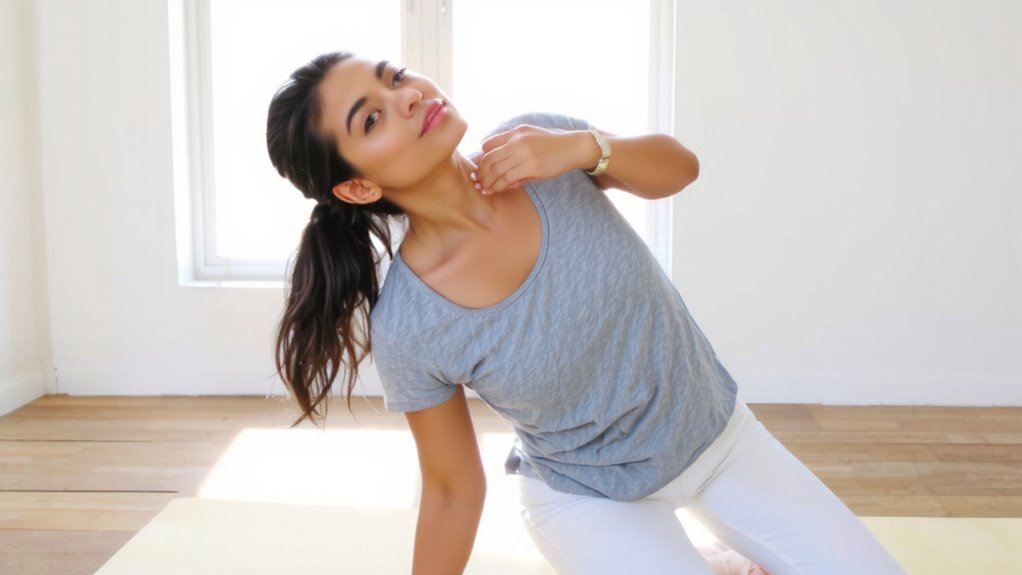
A properly executed neck roll can substantially enhance recovery and maintain cervical health, especially when you’re frequently using fitness gear that limits natural movement. Begin seated or standing with your spine tall, shoulders relaxed-this guarantees proper anatomical alignment. Gently tilt your right ear toward your shoulder, then slowly roll your chin down toward your chest, continuing to the left side in a smooth half-circle. Keep the motion slow and controlled, letting your muscles guide the movement rather than momentum. This engages muscular coordination, enhancing neuromuscular efficiency. Perform five rolls in one direction, then reverse, using light resistance if desired. Your neck’s complex joint systems require precision, not force. Done correctly, this drill supports circulation and joint lubrication. Consistency matters more than intensity-integrate these movements post-workout or during breaks from equipment use to maintain mobility and reduce strain over time. Pairing these mobility drills with supportive sleep ergonomics, such as using the right cervical pillow, can further reduce neck tension and improve overall recovery.
Don’t Make These Neck Roll Mistakes
How often have you finished a workout only to realize your neck feels tighter than before? That’s usually due to improper technique during neck rolls. Avoiding common mistakes keeps you safe and boosts circulation effectively. Rushing through rolls or using jerky motions heightens your risk of neck injuries. Always move slowly and with control.
| Mistake | Risk | Fix |
|---|---|---|
| Rolling too fast | Strain and dizziness | Slow, smooth motion |
| Dropping head back | Pinched nerves | Keep chin slightly tucked |
| Forcing range of motion | Neck injuries | Respect natural limits |
| Repeating excessively | Muscle fatigue | Limit to 5–6 reps per side |
Using improper technique undermines recovery and cervical mobility. Listening to your body guarantees long-term benefits without setbacks.
Best Times to Do Neck Rolls for Relief
You’ll often find the most benefit from neck rolls when timing them right-ideally after a workout or during periods of prolonged sitting. Adding them to your morning routine helps release overnight tension, promoting better circulation and mobility for the day ahead. The gentle movement warms the cervical tissues, much like a soft tissue warm-up in fitness recovery protocols. For those dealing with stress or screen fatigue, incorporating neck rolls into bedtime relaxation can ease muscular tightness and support winding down. Unlike passive recovery tools, this active mobility drill enhances blood flow without relying on fitness gear. Performance observations suggest consistency matters more than duration-short sessions timed effectively deliver greater long-term relief. Whether you’re targeting stiffness or preventing discomfort, strategic timing amplifies results. Done correctly, neck rolls become a practical, no-cost adjunct to daily wellness-especially when woven into existing habits like your morning routine or bedtime relaxation.
Improve Posture With Daily Neck Rolls
That slight forward head tilt you carry through your workday isn’t just a minor habit-it’s a postural pattern that builds tension and restricts cervical mobility over time. Daily neck rolls help recalibrate your neck alignment by gently mobilizing stiff joints and relaxing overloaded muscles. When done correctly, they encourage your head to sit centered over your shoulders, reducing strain on the upper spine. This simple movement supports long-term spine health by promoting balanced muscle engagement and reducing asymmetrical loading. You don’t need fitness recovery tools or specialized gear-just consistent, mindful motion. Perform slow, controlled circles morning and evening to reinforce proper alignment. Over time, you’ll likely notice less fatigue and sharper posture awareness. Though modest, this drill delivers functional benefits comparable to more complex interventions-proving that sometimes, recovery hinges on consistency, not equipment.
On a final note
You’ll find cervical mobility drills, like gentle neck rolls, effective for easing tension and boosting circulation. When done correctly, they enhance recovery by loosening stiff muscles and supporting posture. Poor form or overdoing it, though, can cause strain. For best results, pair them with quality recovery gear-foam rollers or massage balls-that target related zones. They’re practical, low-risk, and fit smoothly into daily routines, especially after screen time or workouts.