Using Body Scan Meditations to Detect Lingering Muscle Tension From Overtraining
You’re not just sore-you might be overtrained, and tools like foam rollers won’t fix the root issue. Overtraining causes neurological fatigue, leaving muscles tense even at rest due to impaired relaxation signals. Body scan meditations detect this hidden tension early, revealing areas like your jaw, shoulders, or low back where stress lingers. By tuning into subtle sensations post-workout, you gain real-time insight into nervous system strain and tissue recovery needs most fitness trackers miss-there’s more to discover about optimizing your recovery from within.
Notable Insights
- Body scan meditations detect hidden muscle tension by revealing residual activation missed during active movement.
- They help identify early signs of overtraining through sensations like tightness or asymmetry at rest.
- Scanning enhances awareness of neural feedback, such as twitching or warmth, indicating underlying inflammation.
- Regular practice restores the mind-muscle connection weakened by neurological fatigue from overtraining.
- It guides effective recovery by pinpointing tension sites before using tools like foam rollers or massage guns.
Why Overtraining Leads to Hidden Muscle Tension
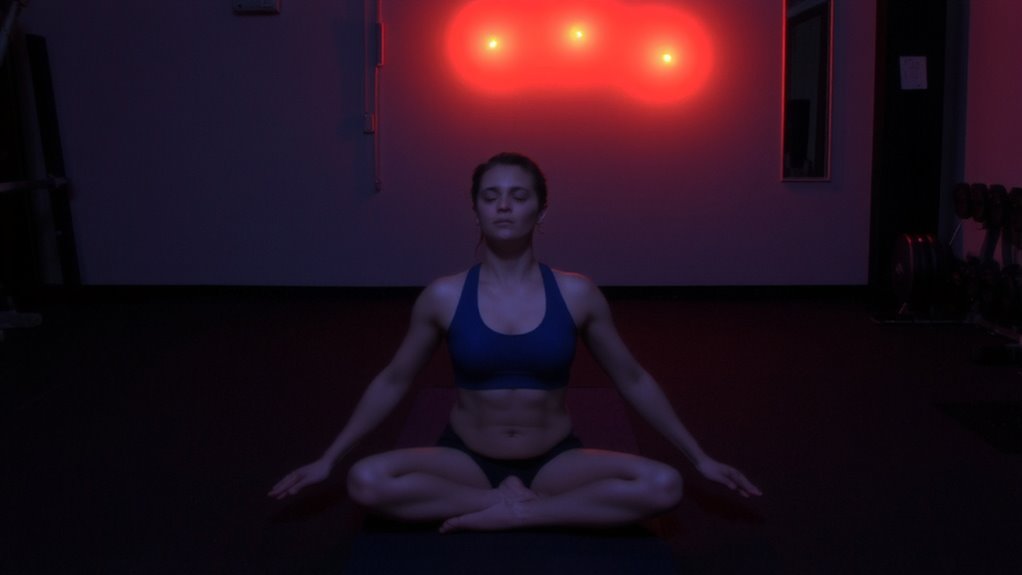
While you’re pushing through tough workouts to build strength or endurance, your muscles may be holding onto stress long after the session ends-especially if recovery isn’t prioritized. Overtraining doesn’t just strain your body physically; it triggers neurological fatigue, dulling your nervous system’s ability to properly signal muscle relaxation. This lingering activation keeps muscles subtly tense, even at rest. Simultaneously, a hormonal imbalance develops-cortisol rises while testosterone and growth hormone dip-slowing tissue repair and amplifying inflammation. These internal shifts create a hidden cycle of tension that standard recovery tools, like foam rollers or massage guns, may temporarily soothe but won’t fully resolve. Unlike passive recovery aids, body scan meditations directly address this mind-muscle disconnect, helping you detect and release stored strain before it escalates. Ignoring these signals risks chronic tightness and injury. Incorporating tools like best recovery bands can further support physical recovery when used in conjunction with mindfulness practices.
How Body Scans Detect Early Signs of Overtraining
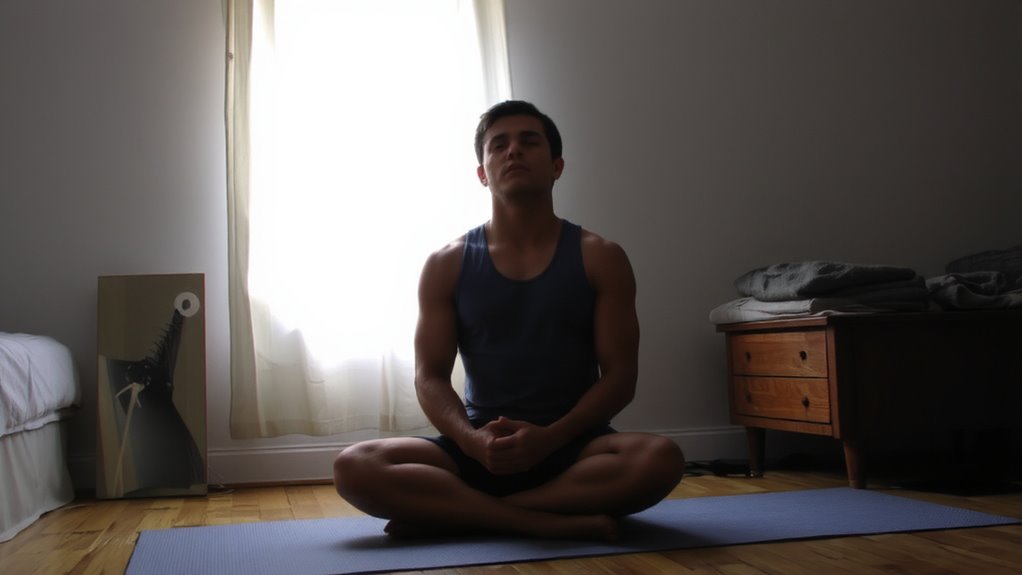
Tightness, fatigue, and subtle movement restrictions-they’re not just signs of a hard workout, they’re your body’s early warnings of overtraining, and body scan meditations help you catch them before performance declines. By systematically focusing on each body region, you tune into residual tension that daily movement masks. This practice sharpens your awareness of muscle memory patterns-how muscles reflexively guard or clench even at rest-indicating chronic overload. Simultaneously, neural feedback becomes clearer; your brain picks up on faint distress signals, like twitching or warmth, that suggest inflammation or nervous system strain. These cues, often ignored, are critical diagnostics. Unlike fitness gear that tracks output, body scans assess internal state-offering a low-tech, high-insight recovery tool. With regular use, you’ll distinguish normal soreness from systemic fatigue, letting you adjust training before injury strikes. It’s preventive insight, rooted in attention, not data.
Step-by-Step: Post-Workout Body Scan Meditation
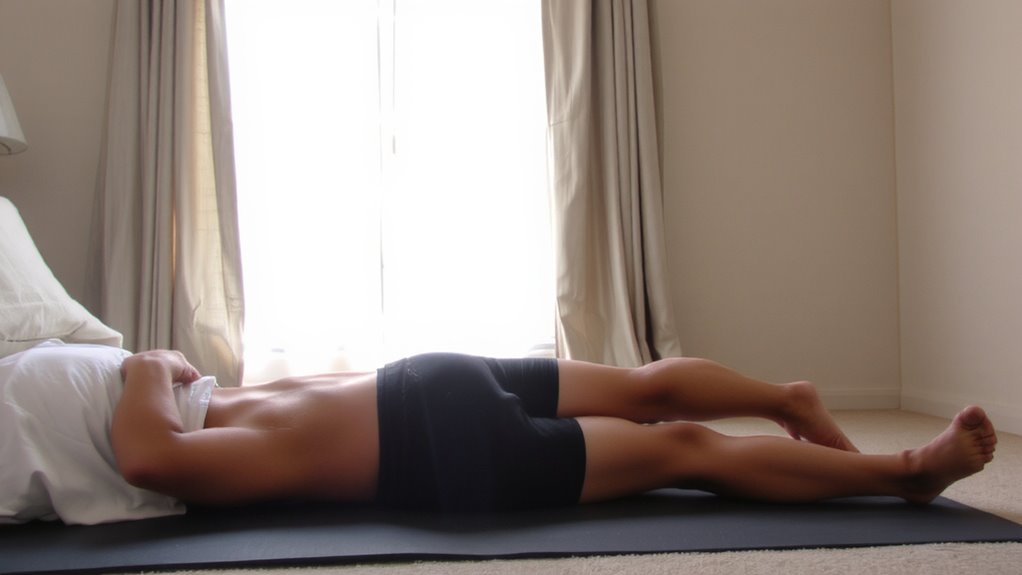
You’ve just finished a tough session, and your body is speaking-maybe not in words, but through tension, warmth, or slight asymmetry in how your limbs respond. Find a quiet space, lie down, and close your eyes. Begin with breath awareness: inhale slowly through your nose, feel your abdomen rise, then exhale fully. Let this rhythm anchor your mental focus. Start scanning from your feet upward, noticing areas of tightness without judgment. Pause briefly at each body segment-calves, thighs, lower back-allowing subtle sensations to surface. This isn’t passive rest; it’s active recovery with purpose. Reliable fitness recovery hinges on such practices, not just gear. While compression wear or foam rollers have uses, they can’t replace the insight gained here. A body scan builds self-awareness, helping you catch strain before injury arises. With consistent practice, you refine both recovery precision and performance longevity. For targeted physical support, consider incorporating one of the Top Recovery Tools recommended by experts.
Where Tension Hides (And How to Find It)
Where does tension really lurk when your muscles aren’t screaming in protest? Often, it lurks in subtle spots-between your shoulder blades, along the jawline, or in the low back-where muscle memory keeps old patterns alive long after a workout ends. These areas quietly hold stress due to repetitive strain or poor movement habits, masking discomfort until it accumulates. Neural fatigue makes it worse, dulling your brain’s ability to detect what’s tense and what’s relaxed. That’s why a disciplined body scan matters: it reestablishes the mind-muscle connection, helping you spot imbalances before they escalate. High-quality recovery gear, like contoured foam rollers or targeted massage tools, supports this process, but only if you know where to look. Without awareness, even the best tools miss the mark. You’ve got to feel it to fix it-consistently, honestly, and early. Choosing the right tool makes a difference, and understanding features like density and texture can help you find the most effective best foam rollers for your specific tension points.
What to Do When You Feel Tightness
Once you notice tightness during a body scan, the next move isn’t to grab the nearest foam roller and go to work-stop and assess first. You’re likely holding tension from overtraining, and rushing into mechanical release can aggravate it. Instead, engage deliberate breathing techniques: inhale deeply through your nose, expand your diaphragm, and exhale slowly to signal relaxation to stressed muscles. Pair this with mindfulness practices by maintaining nonjudgmental awareness of the sensation-don’t react, just observe. This helps differentiate between acute soreness and chronic strain. If tightness persists beyond a few breath cycles, consider light mobility work, but avoid aggressive stretching. Recovery isn’t just physical; neural regulation through mindfulness practices enhances muscle release more effectively than force alone. Tools like massage guns or foam rollers have their place, but only after calming the nervous system. Smart recovery prioritizes awareness over intensity.
On a final note
You’re likely carrying tension without knowing it, especially after intense training. Body scan meditations help uncover hidden tightness, supporting smarter recovery. When paired with quality recovery gear-like foam rollers or percussion massagers-you address both mind and muscle. These tools work best when used mindfully, not just routinely. Recognizing subtle strain early means avoiding overtraining setbacks. Recovery isn’t passive-it’s strategic, attentive, and essential for sustained progress.