Prehabilitation Routine for Preventing IT Band Syndrome in Cyclists
You’re not just overusing your IT band-poor biomechanics and muscle imbalances silently fuel pain with every pedal stroke. Weak glutes and tight hips force your knees out of alignment, increasing strain. Fix this with targeted prehab: activate glutes using banded clamshells, improve hip mobility with dynamic stretches, and stabilize your core through planks and bird-dogs. A consistent weekly routine corrects imbalances, enhances pedal efficiency, and guards against injury. There’s a smarter way to stay pain-free in the saddle.
Notable Insights
- Strengthen glutes with exercises like banded hip thrusts to improve pelvic control and reduce knee strain.
- Maintain proper saddle height and cleat positioning to minimize IT band friction at the knee.
- Perform dynamic hip stretches such as leg swings to enhance mobility and pedaling efficiency.
- Build core stability using planks and dead bugs to prevent compensatory motions during cycling.
- Follow a weekly prehab plan integrating foam rolling, strength work, and mobility for injury prevention.
Why IT Band Pain Hits Cyclists?
While you might think IT band pain stems from overuse alone, it’s often a combination of biomechanical stress and repetitive motion that triggers inflammation in cyclists. Your pedaling creates thousands of repetitive knee flexion-extension cycles, straining the iliotibial band. With an anatomy focus, you’ll see the IT band runs from hip to shin, stabilizing the knee during each stroke. Poor saddle height or cleat positioning increases friction where the band crosses the femoral epicondyle. A biomechanics analysis reveals that subtle imbalances-like pelvic tilt or leg-length discrepancies-amplify strain. These inefficiencies, repeated over miles, degrade tissue resilience. Recovery tools like foam rollers or percussion guns may offer short-term relief, but without addressing root causes, pain returns. Effective prehab hinges on understanding these mechanics. Fitness gear helps monitor form, but only when paired with accurate biomechanical insight does prevention become possible. Choosing the right best foam rollers can enhance myofascial release and support long-term tissue health.
Fix Weak Glutes to Stop Knee Pain
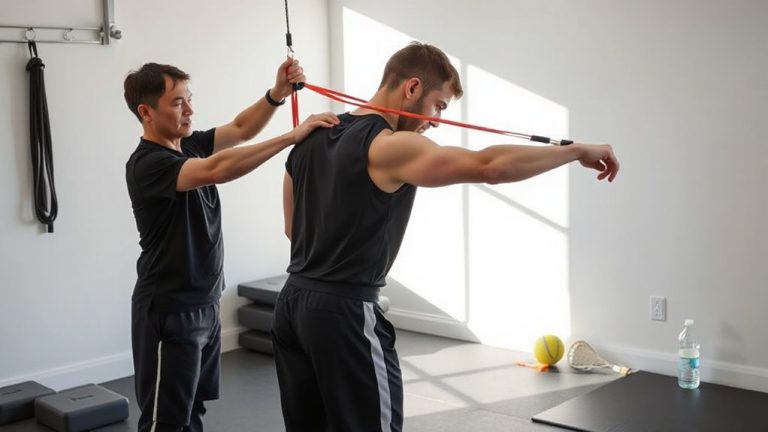
You can adjust your bike fit and foam roll daily, but if your glutes aren’t firing properly, knee pain will likely persist. Weak glutes fail to support proper pelvic alignment, forcing your IT band and quads to compensate, increasing strain on the knee. Effective glute activation is essential-it’s not just about strength, but neuromuscular engagement. Without it, muscle balance along the kinetic chain breaks down, leading to overuse injuries. Cyclists often neglect posterior chain training, yet targeted exercises like banded hip thrusts and single-leg bridges retrain motor patterns efficiently. These moves don’t require gym gear; even compact resistance bands work well at home. Consistent activation work-three times weekly-yields measurable improvements in pedal stability and joint loading. Think of it as preventive maintenance: just as you’d service your drivetrain, your body needs systematic care. Ignoring glute function undermines recovery and performance, no matter your fitness gear.
Free Up Tight Hips for Efficient Pedaling
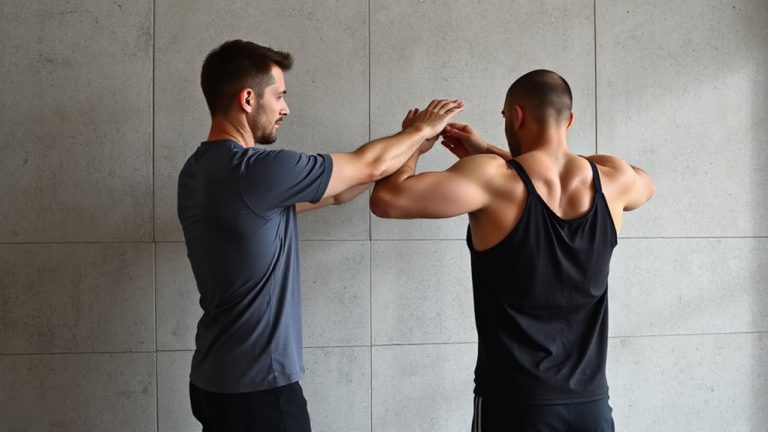
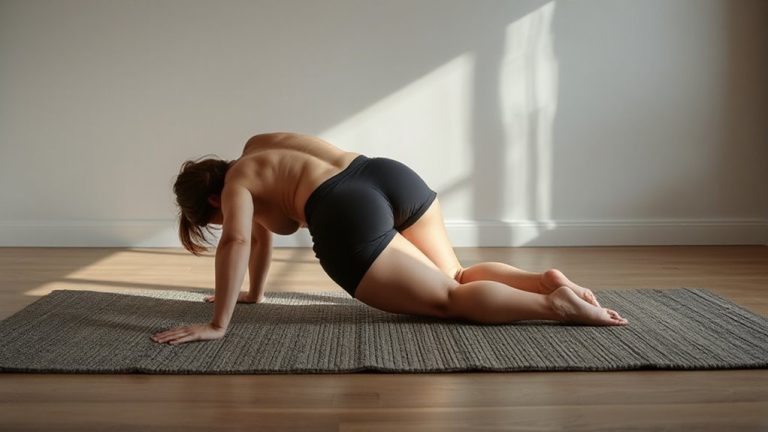
Your hip mobility could make or break every pedal stroke you take, and tight hips are a common yet often overlooked contributor to inefficient cycling mechanics. Limited hip mobility forces your pelvis and legs into compromised positions, disrupting joint alignment and increasing strain on the IT band. When your hips can’t move freely, your body compensates by over-rotating the lower back or flaring the knees outward, both of which diminish power transfer and elevate injury risk. Incorporating dynamic stretches like leg swings and hip circles primes the joints before riding, while foam rolling the glutes and hip flexors post-ride reduces stiffness. Mobility tools like hip hooks or resistance bands can enhance your routine, but consistency matters more than equipment. Prioritizing hip mobility isn’t just about comfort-it’s about creating a stable, aligned foundation that optimizes force production and protects your knees over long miles.
Strengthen Your Core to Stabilize Every Stroke
A strong core is the unsung hero of every powerful pedal stroke, quietly holding your form together mile after mile. Without solid core stability, your hips shift and your lower back strains, forcing your IT band to compensate. That’s where problems start. You need consistent abdominal and lower back engagement to maintain alignment, especially during long rides or intense climbs. Exercises like planks, bird-dogs, and dead bugs build the endurance your core needs to support your pelvis and reduce wasted motion. When your trunk stays stable, your power transfers directly to the pedals, improving pedal efficiency. You’ll notice smoother, more controlled strokes and less fatigue over time. It’s not about having a six-pack-it’s about functional strength that lasts. Consistent core training means fewer adjustments mid-ride and reduced strain on your knees and hips. You’ll ride cleaner, stronger, and with better control, especially when fatigue sets in. Incorporating a best core workout machine can enhance your training by providing targeted resistance and feedback for optimal muscle activation.
Put It All Together: Your Weekly IT Band Prehab Plan
While consistency in training matters, structuring your weekly routine with purpose makes all the difference when targeting IT band health. Pair strength work with mobility and smart recovery to build resilience. Below is your balanced prehab plan:
| Day | Focus | Key Activity |
|---|---|---|
| Monday | Activation & Strength | Clamshells, glute bridges |
| Wednesday | Dynamic Recovery | Foam rolling, light spinning |
| Friday | Strength & Stability | Side planks, single-leg squats |
| Saturday | Pedal Stroke Analysis | Spin with form cues, video check |
| Sunday | Mobility & Flexibility | Hip flexor stretches, yoga flow |
Incorporating dynamic recovery helps maintain tissue quality, while pedal stroke analysis sharpens efficiency and reduces lateral strain on the IT band. Use supportive foam rollers and wearable posture sensors to track progress. This plan balances load and recovery, prioritizing movement quality over volume-ideal for injury prevention and long-term performance. Upgrading to a vibrating foam roller can enhance myofascial release and improve circulation during recovery sessions.
On a final note
You’ve got the tools to prevent IT band syndrome, and consistency makes all the difference. Strengthening glutes, freeing hips, and stabilizing your core directly improve pedaling efficiency and reduce strain. This prehab routine isn’t just preventive-it’s performance-enhancing. Used regularly, it supports long-term joint health and riding comfort. The gear you use, from foam rollers to resistance bands, should be durable and fit your training load. Smart recovery practices and reliable fitness tools aren’t optional extras-they’re essential parts of a sustainable cycling life.