Developing Eccentric Control in the Eccentric Phase of the Bench Press for Shoulder Health
You should control the bar’s descent for 3–4 seconds to reduce shoulder compression and improve joint alignment. Keep your elbows at 45 degrees and lower the bar to your lower chest along a slight arch. Retract your shoulder blades and use a grip just outside shoulder width to avoid strain. This tempo boosts muscle engagement while protecting connective tissues. Strengthening eccentric control and scapular stability builds long-term shoulder resilience-there’s more to optimizing this phase than just slowing down.
Notable Insights
- Control the bench press descent with a 3–4 second eccentric tempo to reduce shoulder compressive forces.
- Follow a slightly arched bar path to the lower chest for optimal shoulder alignment and joint safety.
- Maintain a grip just outside shoulder width to minimize anterior shoulder stress and improve mechanics.
- Retract and depress the scapula throughout the eccentric phase to enhance stability and reduce injury risk.
- Strengthen eccentric control and scapular stabilizers using tempo sets, band pull-aparts, and scapular push-ups.
Control the Descent to Protect Your Shoulders
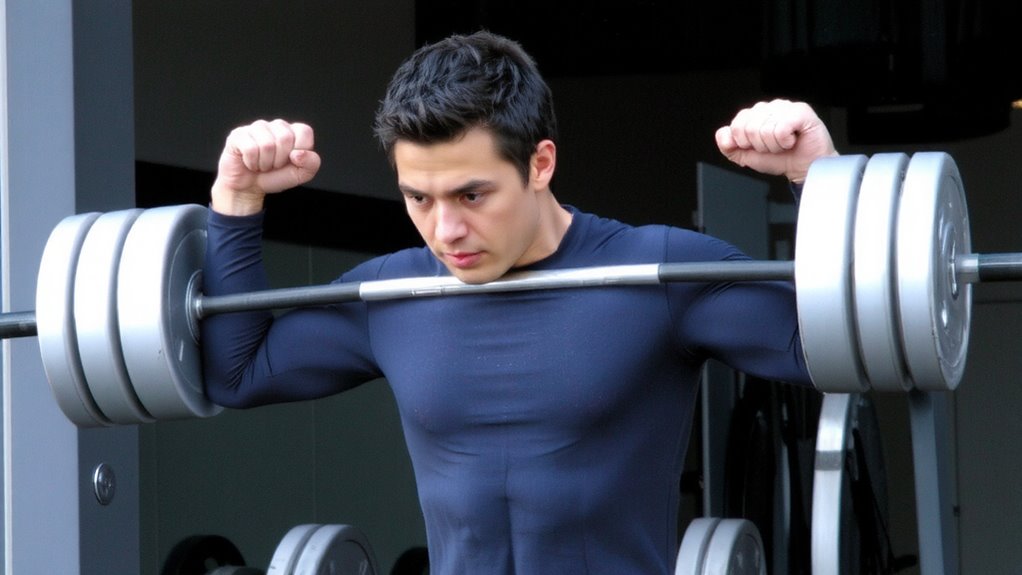
While lowering the bar during a bench press might seem like just the setup for the push back up, it’s actually a critical phase for shoulder health-so don’t rush it. You’re not just dropping weight-you’re controlling tension, and that’s where eccentric tempo matters. A slow, deliberate descent (think 3–4 seconds) reduces compressive forces on the joint while enhancing muscle engagement. This controlled lowering supports proper shoulder alignment by keeping the humeral head centered in the glenoid, minimizing impingement risk. If you collapse at the bottom, you’re likely flouting both tempo and alignment, increasing wear over time. Training this phase consistently builds resilience, especially when paired with supportive gear like compression sleeves that stabilize without restricting motion. You’ll notice better joint feedback and reduced soreness post-lift. Eccentric control isn’t just strength-it’s intelligent loading, and your shoulders will thank you in the long run. Prioritize form, not speed.
Perform the Eccentric Phase With Proper Form
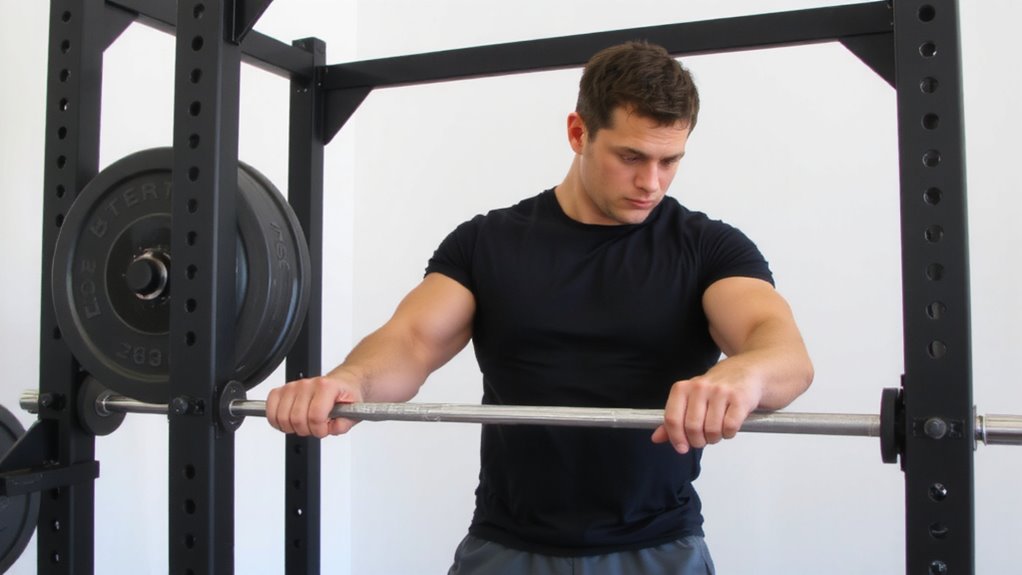
Because the eccentric phase of the bench press places significant demand on shoulder stability, doing it right means more than just slowing down-it requires intentional mechanics. You need to control the bar path so it travels in a slight arch toward your lower chest, not straight down. This reduces shoulder strain and improves muscle engagement. Your grip width matters too: too wide increases joint stress, while too narrow shifts focus off the chest. Aim for a grip just outside shoulder width to maintain joint safety and mechanical efficiency. Keep your elbows at roughly a 45-degree angle to the torso, which aligns with proper bar path and grip width. Your shoulder blades should stay retracted and pressed into the bench throughout. Doing so stabilizes the joint and guarantees the load stays on the muscle, not the connective tissue.
Fix These Common Bench Press Mistakes
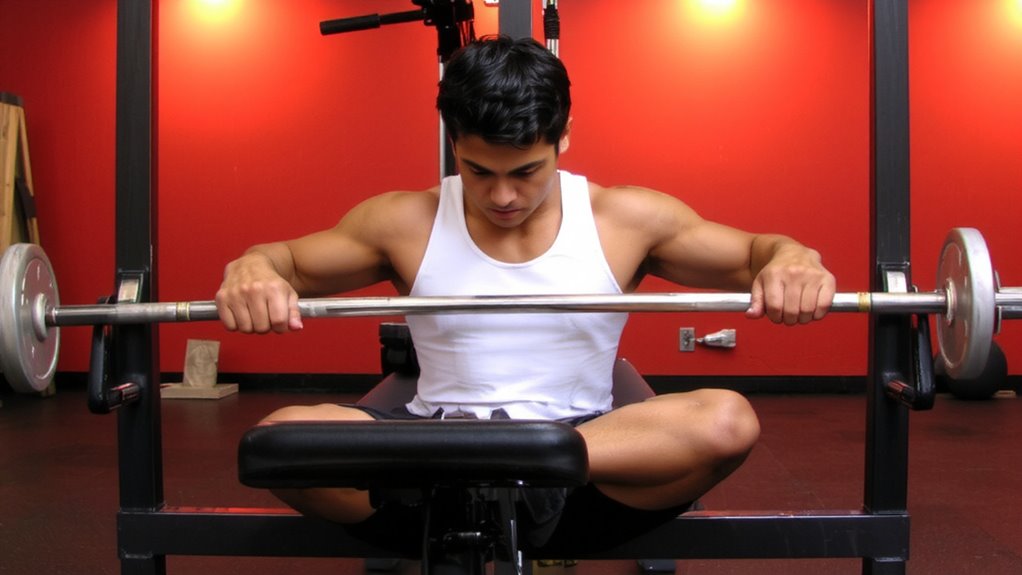
A lot of lifters mess up their bench press without even realizing it, and these mistakes can pile up into serious shoulder trouble over time. Your grip width plays a critical role-too wide increases shoulder strain and reduces control during the eccentric phase, while too narrow shifts excess load to the triceps and limits chest engagement. Aim for a grip just outside shoulder width to optimize joint safety and muscle activation. Another key factor is your bar path: a straight vertical movement is inefficient and risky. Instead, lower the bar at a slight diagonal to your lower chest, creating a natural arc that aligns with shoulder mechanics. This path improves stability and reduces anterior joint stress. You’ll maintain better tension and protect your rotator cuffs over time. Fixing these flaws isn’t just technique tweaking-it’s long-term shoulder health preservation.
Build Strength With Eccentric and Scapular Exercises
If you’ve ever felt shoulder discomfort creeping in after heavy bench sessions, you’re likely neglecting two essential elements: eccentric control and scapular stability. Building eccentric strength means controlling the descent of the bar deliberately, which increases time under tension and enhances muscle resilience. This controlled lowering reduces shear forces on the shoulder joint, decreasing injury risk. Pair this with scapular stability-anchoring your shoulder blades into the bench-and you create a solid foundation for safe, powerful presses. Exercises like scapular push-ups, band pull-aparts, and slow tempo bench press repetitions train both areas simultaneously. You’ll notice improved joint alignment, stronger contractions, and better force transfer. Over time, scapular stability supports ideal shoulder positioning, while eccentric strength boosts muscle coordination and joint integrity. These adaptations don’t just protect your shoulders-they elevate performance. Strengthening these components isn’t optional if you want longevity in your pressing.
Program Eccentric Training Safely and Effectively
How do you make eccentric training both productive and sustainable? You start by programming eccentric loading smartly-too much too soon increases injury risk, especially at the shoulder. Use tempo training to control the bar’s descent, aiming for 3–5 seconds down. This builds time under tension without requiring heavier weights, making it safer for joint health. Begin with lighter loads and progress gradually, allowing connective tissues to adapt. Pair eccentric work with proper scapular stability, and avoid excessive volume-2–3 sets per exercise are enough. Monitor recovery closely, since eccentric loading causes more muscle microtrauma. Use supportive fitness gear like weightlifting belts or sleeves strategically, but don’t rely on them to fix flawed mechanics. Done right, tempo training strengthens the eccentric phase effectively while protecting shoulder integrity long-term.
On a final note
You’ll protect your shoulders and build real strength by mastering eccentric control in the bench press. Lowering the bar with intent boosts muscle engagement and joint stability, especially when you pair it with proper scapular retraction and technique. Tools like resistance bands and weight sleeves improve performance, but only if form comes first. Over time, this approach enhances recovery, reduces injury risk, and delivers better gains-making smart training, not just heavy lifting, your best fitness gear.