Shoulder Mobility Drills With Cross-Body Shoulder Rolls for Posterior Deltoid Release
Tight posterior delts pull your humeral head back, limiting shoulder motion and increasing joint compression during overhead activities. Cross-body shoulder rolls help release this tension by promoting scapular movement and improving joint lubrication. You’ll enhance mobility through controlled circular rolls that sync your deltoid fibers while reducing upper trap dominance. Pair this drill with targeted stretches for best results. There’s more to optimizing your recovery flow than just mobility-you’ll want to explore effective combinations next.
Notable Insights
- Cross-body shoulder rolls release tight posterior delts by promoting controlled humeral head movement and reducing joint compression.
- Perform slow, circular rolls with scapular retraction and internal rotation to enhance posterior deltoid mobility and tissue elasticity.
- Avoid shrugging to prevent upper trapezius dominance and ensure targeted activation of posterior shoulder musculature.
- Pair shoulder rolls with sleeper stretches and cross-body arm stretches for comprehensive posterior deltoid and joint capsule release.
- Maintain neutral spine and core engagement during drills to optimize scapular control and neuromuscular feedback.
Why Tight Posterior Delts Limit Shoulder Movement

While you might not realize it, tight posterior deltoids can silently undermine your shoulder mobility, restricting your ability to move freely during both daily activities and strength training. When these muscles shorten, they pull the humeral head posteriorly, increasing joint compression in the glenohumeral joint-especially during overhead motions. This misalignment reduces range of motion and elevates injury risk. Over time, repetitive strain or poor recovery practices can lead to muscle adhesions, where fascial layers stick together, further limiting glide and elasticity. You’ll likely notice stiffness when reaching across your body or lifting laterally. Without proper release, these restrictions compound, affecting posture and exercise performance. While recovery tools like mobility balls or percussion guns can help break adhesions and restore tissue quality, consistency matters more than intensity. Addressing posterior deltoid tightness isn’t just about comfort-it’s a functional necessity for balanced shoulder health and long-term joint integrity.
How Cross-Body Shoulder Rolls Improve Mobility
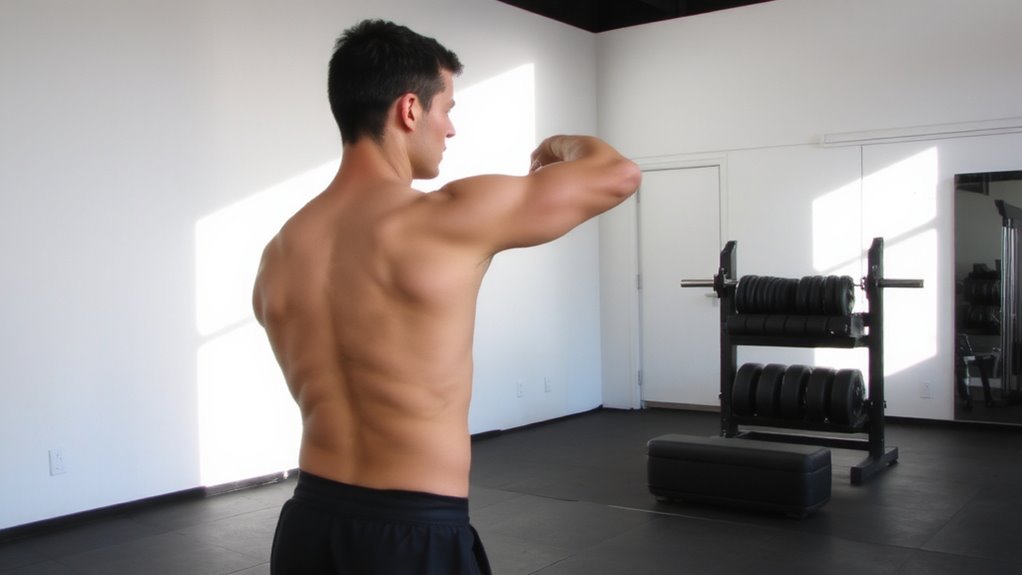
Cross-body shoulder rolls actively combat the stiffness rooted in tight posterior delts by promoting dynamic movement through a frequently restricted range. You’re not just loosening muscle fibers-you’re enhancing joint lubrication, which helps the humeral head glide smoothly within the glenoid cavity. This fluid motion reduces friction and wear over time, supporting long-term joint health. What’s more, the circular motion demands real muscle synchronization between your anterior, lateral, and posterior delts, upper traps, and serratus anterior. When these muscles fire in sequence, your shoulder mechanics improve dramatically. You’ll notice smoother overhead reach and reduced strain during pushing motions. Unlike static stretches, this drill trains movement patterns, not isolated parts. It’s a functional approach that mimics real-world use, making it a smart addition to warm-ups or recovery sessions. Consistent use supports lasting mobility gains.
Do This: Cross-Body Shoulder Roll Technique
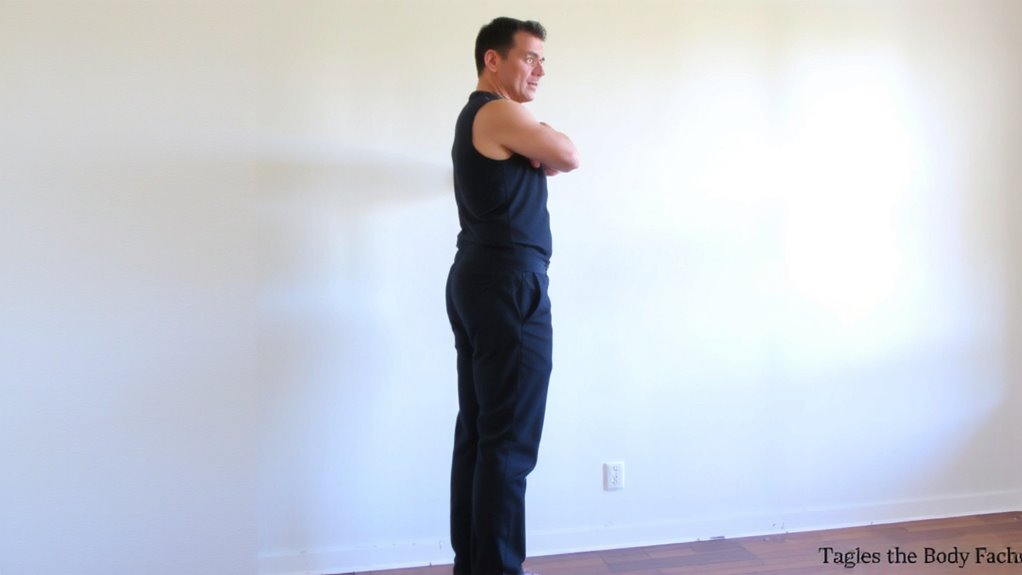
Start by standing tall with your feet shoulder-width apart, arms relaxed at your sides-this isn’t just about movement, it’s about control from the first inch. Begin slowly rolling your shoulders forward in a smooth circle, feeling the rhythm build. As your shoulders lift and move, engage your scapula: each roll should combine elevation, retraction, and controlled internal rotation. When you reverse direction, focus on external rotation-this activates the posterior deltoid and encourages joint centration. Keep movements deliberate; speed sacrifices the precision needed for effective mobility work. You’re not warming up aimlessly-you’re tuning the shoulder complex. Doing this correctly means maintaining a stable core and avoiding shrugging. Reps matter, but so does intent: 10 slow rolls each way is enough to prime tissue and improve feedback from your neuromuscular system.
Fix These 4 Shoulder Roll Mistakes
You’re already moving with purpose, rolling your shoulders in controlled circles to activate the scapular musculature and prime the glenohumeral joint-but even with good form, subtle errors can undermine the benefits. First, avoid shrugging your neck; that shifts load to upper traps and ignores posterior delts, worsening muscle imbalances. Second, don’t rush the motion-jerky rolls reduce joint feedback and can aggravate existing joint restrictions. Third, guarantee full range: cutting circles short limits scapular retraction and upward rotation, reducing drill effectiveness. Finally, maintain a neutral spine; overarching or hunching distorts alignment and diminishes neuromuscular control. These mistakes often stem from poor body awareness or prior imbalances, so correcting them enhances both shoulder stability and mobility. Consistent, mindful execution guarantees you’re not just going through the motions but actually improving function. Fix these, and your drills deliver better results-especially when targeting deeper tissues like the posterior deltoid.
Combine Drills With Posterior Delt Stretches
While mobility drills prime the shoulder complex, pairing them with targeted posterior deltoid stretches greatly enhances recovery and functional range. You’re not just warming up-you’re improving joint articulation and promoting scapular stabilization for lasting shoulder health. Static stretches after dynamic rolls allow deeper release, especially when you maintain proper posture and control. Below are effective pairings to integrate:
| Drill Type | Stretch Companion | Key Benefit |
|---|---|---|
| Cross-body shoulder roll | Sleeper stretch | Enhances joint articulation |
| Internal rotation sweep | Cross-body arm stretch | Releases posterior delt tension |
| Scapular wall slide | Standing pec doorway stretch | Supports scapular stabilization |
| Arm circles (backward) | Towel-assisted shoulder stretch | Improves functional range and recovery |
This combination optimizes elasticity and neuromuscular control, making your recovery routine more effective. You’ll notice better movement quality during upper-body lifts and daily tasks.
How Often to Do Shoulder Mobility Drills?
Regularly incorporating shoulder mobility drills into your routine-about 3 to 5 times per week-tends to yield the best balance between joint adaptation and recovery, especially when aligned with your training volume and daily movement demands. These frequency guidelines help maintain tissue resilience without overstressing the joint capsule. For ideal timing, performing drills when your muscles are warm-post-warm-up or post-workout-enhances tissue response and neuromuscular coordination. You’re more likely to see improvements in range of motion and joint centration if consistency is paired with mindful execution. Overdoing it daily, especially under fatigue, may impair recovery or lead to instability. Treat mobility like skill development: short sessions with quality reps trump long, sporadic efforts. Selecting supportive fitness gear-like proper mats or straps-can assist form but isn’t a substitute for correct mechanics. Stick to evidence-backed frequency guidelines and adjust based on how your shoulders respond week to week.
When to Use These Drills: Workout, Desk, or Recovery
When should you reach for those shoulder mobility drills-during your workout, at your desk, or while recovering? You’ll get the most benefit by using them strategically across all three. Before workouts, they prep the posterior deltoid and improve joint activation, enhancing performance. At your desk, they counteract slouched positioning and help maintain ergonomic posture, reducing strain from prolonged typing or screen time. During recovery, these drills ease muscle fatigue and increase blood flow, speeding up tissue repair without overloading the joint. While fitness recovery tools like foam rollers or massage guns offer passive release, these mobility drills actively retrain movement patterns. They’re not just filler-they’re functional maintenance. Used consistently in the right contexts, they support shoulder health far better than passive gear alone. You don’t need extra equipment, just awareness and timing. That’s practical fitness evolution.
On a final note
You’ll notice improved shoulder mobility and reduced tension by consistently using cross-body shoulder rolls. These drills effectively release tight posterior delts, enhancing recovery and joint function. Combined with proper stretching, they support long-term shoulder health. While no fitness gear replaces technique, foam rollers or massage balls can complement results. Used correctly, this mobility work fits seamlessly into warm-ups, desk breaks, or post-workout routines, offering practical, measurable benefits for daily movement and athletic performance.