Footstrike Awareness Drills on Treadmills to Minimize Ground Reaction Forces
You can reduce ground reaction forces by refining your footstrike on a treadmill, where the moving belt promotes consistent, controlled strides. Try quick step-ups, barefoot-style drills, and high-cadence running with cues like “land soft” to encourage midfoot strikes and better joint alignment. These drills enhance proprioception, especially in minimalist shoes, and help avoid overstriding. Just make sure your form stays relaxed-locked knees or heel slapping counteract the benefits. Treadmill diagnostics add precision, giving real-time feedback so you can adjust and improve with every step.
Notable Insights
- Use treadmill belt feedback to refine footstrike timing and reduce impact forces.
- Perform high-cadence drills to promote midfoot strike and lower ground reaction forces.
- Focus on soft landings with bent knees to enhance shock absorption and joint safety.
- Incorporate barefoot-style running on cushioned treadmills to improve proprioception and foot mechanics.
- Avoid overstriding by shortening stride and aligning foot contact under the center of mass.
Why Your Footstrike Affects Impact
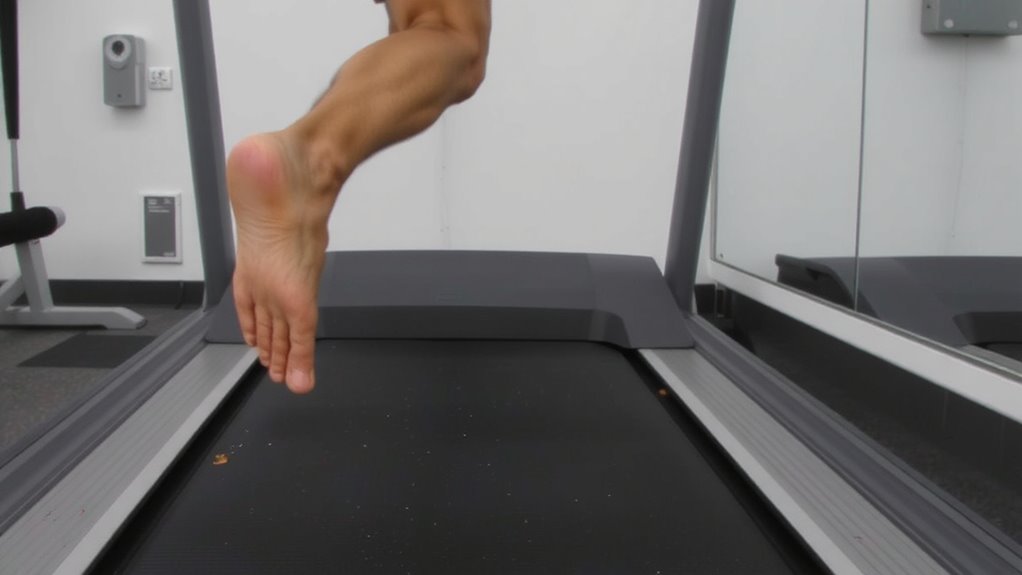
While your foot lands thousands of times during a run, the way it strikes the ground-your footstrike pattern-directly influences how much force travels through your joints, especially when you’re logging miles on a treadmill. Heel striking often amplifies impact peaks, transferring more load to your knees and hips, while a midfoot strike tends to distribute forces more evenly. Biomechanics research shows that modifying your footstrike can reduce ground reaction forces, particularly at higher running speeds. This isn’t just detail-oriented-it’s central to injury prevention. When you consistently endure high-impact loads, your soft tissues and joints pay the price over time. Thoughtful adjustments, supported by form awareness and proper footwear, help mitigate risk. While gear like responsive cushioning can assist, it can’t replace sound mechanics. You’re better off refining your stride than relying solely on recovery tools or high-end fitness gear. It’s not about perfect form-it’s about smarter, sustainable movement.
3 Simple Drills for Lighter Steps
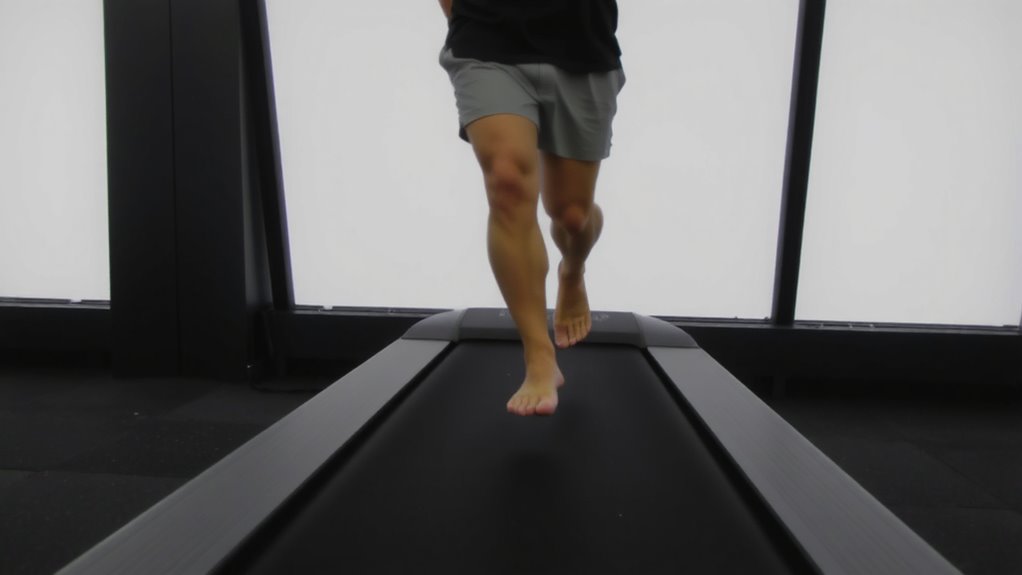
You can’t change your footstrike overnight, but consistent practice with targeted drills reshapes movement patterns more effectively than any recovery foam or high-tech running shoe ever could. Start with barefoot training on soft surfaces to heighten proprioception-feel how your foot lands and rolls. Try quick step-ups: lift knees just enough to shorten your stride, promoting a midfoot strike. Use minimalist cues like “land soft” or “quick feet” to rewire neuromuscular feedback. These verbal triggers work especially well when repeated during short bursts of running or skipping drills. Barefoot training strengthens intrinsic foot muscles, improving arch support naturally. Minimalist cues, though simple, condition your rhythm and reduce overstriding. Over time, this combo sharpens landing precision and cuts ground reaction forces. You’ll notice smoother shifts and less joint strain-proof that form refinement beats gear dependency. Recovery isn’t just post-run; it’s built-in through smarter mechanics.
How Treadmills Train Better Form
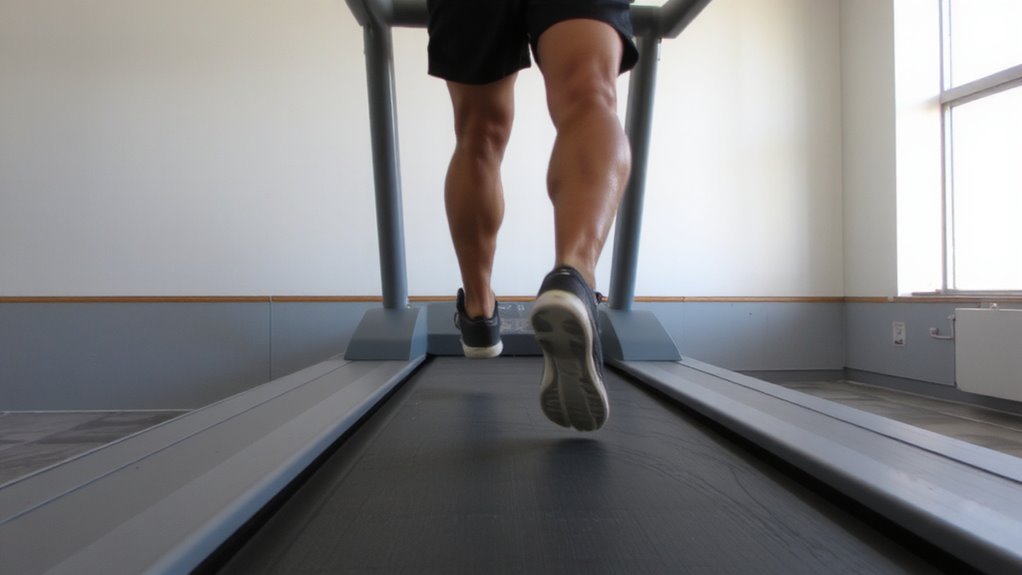
A treadmill isn’t just a tool for logging miles indoors-it’s a feedback-rich environment that helps refine running mechanics in ways overground running often doesn’t. You get instant, repeatable cues from the moving belt, forcing consistency in stride and rhythm. Modern treadmills with built-in Treadmill diagnostics offer real-time data on your speed, cadence, and even foot contact time, giving you a clearer picture of form flaws. When paired with video or wearable-based gait analysis, you can spot asymmetries or inefficient patterns-like overstriding or heel striking-more accurately than on pavement. The controlled setting lets you adjust incline, speed, or form incrementally, making it easier to retrain movement efficiently. Unlike outdoor runs, where terrain and distractions interfere, treadmills create a stable lab-like space ideal for deliberate practice. This mix of precision and accessibility makes them strong tools for shaping better, safer running habits over time.
What Not to Do During Footstrike Drills
How often do you find yourself overcorrecting during footstrike drills, only to create new inefficiencies? Avoid forcing a forefoot strike too hard, as it can lead to overstriding errors when you reach too far forward. That disrupts your natural cadence and increases ground reaction forces instead of reducing them. You also shouldn’t ignore heel slapping-it’s a sign your foot is landing too far ahead of your center of mass, often due to poor timing or excessive stride length. Don’t lock your knees or tense your calves, either; both limit shock absorption and defeat the drill’s purpose. Using a treadmill with inadequate cushioning can exaggerate these mistakes, so choose models with responsive decks that support proper biomechanics. A well-designed heavy-duty treadmill can provide the stability and shock absorption needed for effective footstrike training. Stay relaxed, keep your steps quick, and let your foot land under your body-not in front. Small, controlled motions beat exaggerated changes every time.
Your Weekly Footstrike Practice Plan
Consistency in form reshapes running efficiency over time, and after addressing common missteps in footstrike drills, the next step is building a sustainable weekly practice plan. Start with two treadmill sessions: 10 minutes of high-cad游戏副本 drills focusing on soft landings to promote ideal knee flexion and reduce impact. On days three and five, add 15 minutes of barefoot-style running at a slow pace, using a cushioned treadmill deck to encourage natural ankle stiffness for stability. By day seven, integrate a full 20-minute session combining both elements. Wear minimalist shoes to enhance ground feel, improving proprioception and form feedback. Monitor stride length-overstriding undermines knee flexion and increases loading. Pair each session with dynamic stretches to maintain joint mobility. This structured approach guarantees neuromuscular adaptation, improves impact absorption, and supports long-term running resilience without overuse injury.
On a final note
You’re reducing ground reaction forces by refining footstrike, and treadmills provide consistent feedback to sharpen form. These drills enhance proprioception and promote efficient mechanics, essential for injury prevention. While gear like cushioned shoes may help, overreliance can dull natural feedback. Combine awareness training with smart recovery-compression, hydration, and sleep-for best results. The tech aids, but technique remains central.